What Is an Alien Baby? Sci-Fi Theories Explained
The concept of an alien baby has captivated human imagination for decades, blending scientific curiosity with creative speculation about extraterrestrial life. Whether you’re a devoted science fiction enthusiast, a parent explaining the cosmos to your children, or simply someone intrigued by the unknown, understanding what science fiction proposes about alien offspring reveals much about our own assumptions regarding biology, development, and family structures.
From Hollywood blockbusters to serious scientific discussions, the alien baby represents more than just a creature—it’s a mirror reflecting our deepest questions about reproduction, consciousness, and what it truly means to be “alive.” This article explores the various theories, fictional portrayals, and scientific possibilities surrounding extraterrestrial infants.
Whether you’re curious about pop culture phenomena like the Baby Alien Fan Bus or interested in the legitimate scientific frameworks that inform these imaginative concepts, we’ll cover everything you need to know about this fascinating intersection of science and storytelling.
Defining the Alien Baby Concept
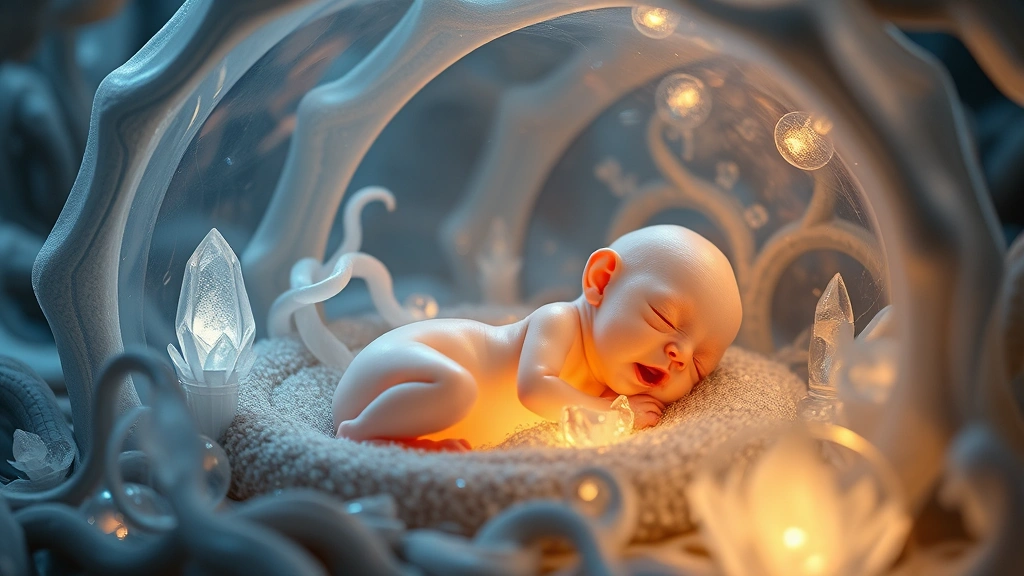
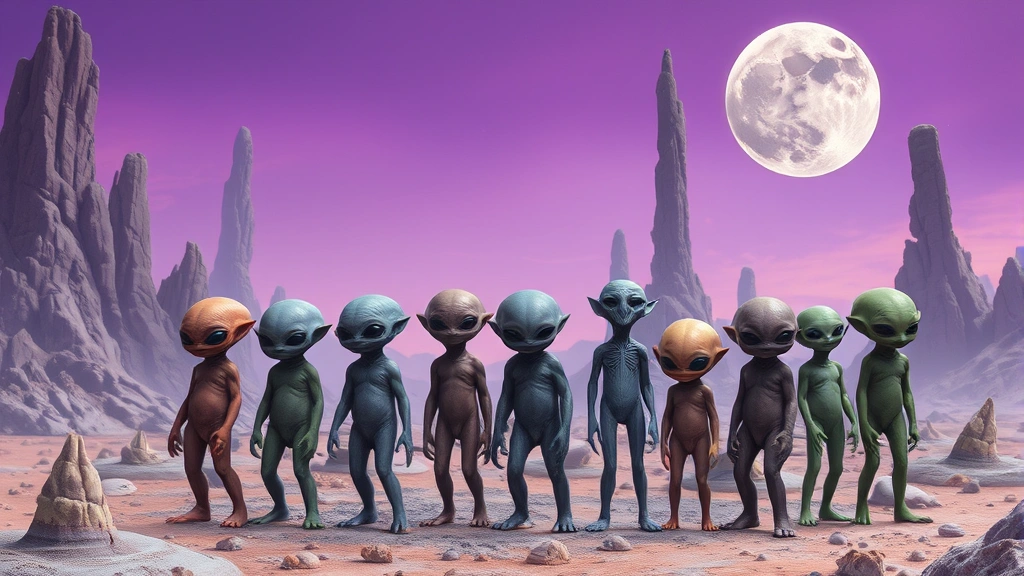
An alien baby, in the broadest sense, refers to the hypothetical offspring of extraterrestrial beings. Science fiction writers and filmmakers have imagined countless variations—some resembling humanoid infants with slight modifications, others depicting radically different forms of juvenile extraterrestrial life. The term encompasses everything from small, gray humanoids to bioluminescent creatures floating in methane atmospheres.
What makes the alien baby concept compelling is that it forces us to question our assumptions about what constitutes “infancy” or “childhood.” On Earth, we understand these stages as periods of rapid development, dependency, and learning. But would an alien species necessarily follow this pattern? The answer depends on their evolutionary history, environmental pressures, and biological composition.
The alien baby exists primarily in our collective imagination, yet it serves a practical purpose: it helps us explore the boundaries of biology and consider how life might adapt to radically different conditions than those found on Earth.
How Science Fiction Portrays Alien Babies
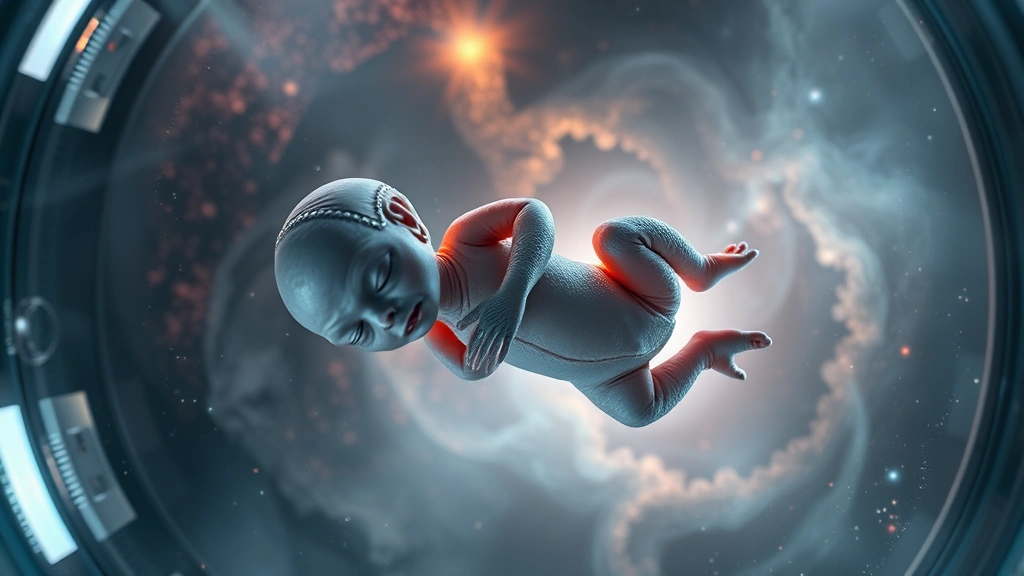
Science fiction has given us remarkably diverse interpretations of extraterrestrial infants. Each portrayal reflects the storyteller’s assumptions about alien physiology and society. Let’s examine some of the most iconic representations:
- The Humanoid Model: Films like “E.T. the Extra-Terrestrial” present aliens with childlike characteristics—curiosity, vulnerability, and emotional intelligence. These beings often resemble diminutive humans, suggesting that convergent evolution might produce similar body plans across different worlds.
- The Insectoid Variant: Science fiction frequently depicts alien babies as larval or juvenile forms of insect-like creatures. These might undergo metamorphosis, developing dramatically different forms as they mature—a concept inspired by Earth’s own insects.
- The Crystalline Entity: Some speculative fiction imagines silicon-based life forms where infants might exist as growing crystalline structures, developing through entirely different mechanisms than carbon-based organisms.
- The Hive-Mind Collective: Advanced science fiction explores whether alien babies might be partial expressions of collective consciousness, with individual identity emerging only as they mature within their species’ social structure.
These diverse portrayals demonstrate that the alien baby concept serves as a canvas for exploring our own understanding of development, consciousness, and what we consider “alive.”
Biological Theories and Possibilities
From a scientific perspective, astrobiology—the study of potential life beyond Earth—offers frameworks for imagining what alien babies might actually be like. Dr. Carl Sagan and contemporary researchers have proposed several biological principles that might apply universally:
Convergent Evolution: Life on Earth has evolved similar solutions to common problems across vastly different species. Wings evolved independently in insects, birds, and bats. Eyes developed multiple times. This suggests that alien babies might possess some recognizable features—sensory organs, protective coverings, mechanisms for nutrient absorption—even if their specific implementation differs dramatically from Earth organisms.
Environmental Adaptation: An alien baby’s biology would be fundamentally shaped by its home world’s gravity, atmospheric composition, temperature range, and radiation levels. A baby born on a high-gravity planet might develop denser bones and stronger musculature from infancy. One from a low-gravity moon might evolve entirely different skeletal structures.
Metabolic Diversity: While Earth life relies on carbon-based chemistry and liquid water, other biochemical systems might support alien babies. Silicon-based metabolism, ammonia solvents, or even plasma-based consciousness remain theoretical possibilities that would radically change what an alien infant might look like.
According to NASA’s Astrobiology Institute, the search for extraterrestrial life guides our understanding of what conditions might support biological development beyond Earth. These frameworks help scientists recognize that alien babies, if they exist, might function according to entirely different biological rules than we’re accustomed to observing.
Cultural Impact and Popular Media
The alien baby has become an enduring cultural icon, appearing in countless films, television shows, books, and now internet phenomena. This cultural penetration reveals something important about human psychology: we’re fascinated by the idea of parenting and development in contexts radically different from our own.
Popular media has given us memorable alien babies that capture our imagination and, surprisingly, our affection. The Baby Alien phenomenon demonstrates how contemporary audiences continue to be captivated by extraterrestrial infants, creating communities around these fictional concepts. Whether through fan art, memes, or dedicated fan pages, people express genuine emotional investment in these imaginary beings.
This cultural phenomenon serves an important function: it allows us to explore parenting anxieties, wonder about different approaches to child-rearing, and consider what truly matters in raising a dependent being. The alien baby becomes a thought experiment wrapped in entertainment.
Interestingly, the appeal of cute babies appears to transcend species boundaries in our collective imagination. We project cuteness onto alien infants, suggesting that vulnerability and developmental potential trigger nurturing responses regardless of the creature’s actual form. This reveals something profound about human empathy and our capacity to bond across boundaries.
The Parenting Perspective on Alien Concepts
For parents and educators, discussions about alien babies offer unexpected value. These conversations encourage children to think creatively about biology, development, and diversity. When you ask a child, “What would an alien baby need to survive?” you’re prompting them to consider the fundamental requirements of any developing organism: nutrition, protection, learning opportunities, and social connection.
Many parents use science fiction concepts, including baby drawing and illustration activities, to engage children’s imagination while teaching biological principles. An activity asking kids to sketch an alien baby and explain its adaptations to a fictional planet combines creativity with scientific thinking.
The alien baby concept also normalizes the idea that different doesn’t mean wrong. If we can imagine accepting and nurturing an extraterrestrial infant, we extend that philosophical flexibility to accepting human diversity. Children who engage with these thought experiments may develop greater empathy and openness to different ways of being.
Additionally, the American Academy of Pediatrics emphasizes that imaginative play and speculative thinking contribute to healthy cognitive development. Discussions about alien babies fall squarely within this developmental benefit.
What Science Actually Says
While science fiction provides entertaining speculation, what does actual science tell us about the possibility of alien babies? The honest answer is that we don’t yet know if extraterrestrial life exists at all, let alone whether it reproduces through stages resembling infancy.
The Drake Equation: Proposed by Frank Drake in 1961, this mathematical framework attempts to estimate the number of communicative civilizations in our galaxy. While the equation can’t determine exact numbers, it acknowledges that numerous factors influence whether life develops and persists. If life exists elsewhere, it might follow entirely different reproductive strategies than Earth organisms.
Extremophiles and Life’s Flexibility: Earth-based extremophiles—organisms thriving in seemingly impossible conditions—demonstrate that life is far more adaptable than once believed. Creatures survive in boiling hot springs, frozen tundra, and deep ocean trenches. This suggests that alien babies, if they exist, might develop under conditions we’d consider completely hostile to life.
The Fermi Paradox: Despite the mathematical probability that extraterrestrial life should exist, we’ve found no confirmed evidence. This contradiction—sometimes called the Fermi Paradox—suggests either that life is extraordinarily rare, that intelligent civilizations don’t survive long, or that we’re simply not looking in the right ways or places.
According to Scientific American’s coverage of extraterrestrial life research, scientists continue developing sophisticated methods to detect biosignatures—evidence of life—in exoplanet atmospheres and other potential habitats.
The NASA Exoplanet Archive tracks the thousands of planets discovered around distant stars, some within habitable zones where liquid water might exist. These discoveries make the question of alien babies less purely speculative and more grounded in actual planetary science.
What we know scientifically is this: if alien babies exist, they would be products of their environment, shaped by millions of years of evolution on their home world. They would likely be adapted to their specific conditions in ways we might find unrecognizable, yet they would follow universal principles of thermodynamics, chemistry, and biology.
Interestingly, the concept of baby memes in internet culture sometimes draws inspiration from these scientific concepts, blending humor with genuine curiosity about extraterrestrial possibilities. These cultural artifacts, while primarily entertaining, often contain kernels of legitimate scientific thinking.
Some researchers, like those associated with the SETI Institute, dedicate their careers to the serious scientific search for extraterrestrial intelligence. Their work reminds us that while alien babies remain theoretical, the search for any extraterrestrial life continues with rigorous scientific methodology.
The intersection of imagination and science becomes particularly clear when considering how anime and illustrated media depict alien infants. These artistic representations, while fantastical, often incorporate genuine scientific principles about adaptation and evolution, making them educational as well as entertaining.
Frequently Asked Questions
Could alien babies actually exist?
Possibly. If extraterrestrial life exists and reproduces sexually or asexually, it would have developmental stages. Whether we’d recognize these stages as “infancy” depends on how similar alien biology is to Earth life. We simply don’t have enough information to say definitively, but the mathematical probability of life elsewhere in the universe makes this question scientifically legitimate.
What would an alien baby need to survive?
Any developing organism requires: energy sources (food or chemical inputs), appropriate environmental conditions (temperature, pressure, atmosphere), protection from harm, and in social species, interaction with others of its kind. Beyond these universal requirements, specific needs would depend entirely on the alien species’ evolutionary adaptations.
How do scientists search for evidence of alien life?
Scientists use multiple approaches: analyzing exoplanet atmospheres for biosignatures, listening for radio signals from intelligent civilizations, studying extremophiles to understand life’s limits, and examining meteorites for evidence of past microbial life. These methods combine astronomy, biology, chemistry, and physics.
Why are alien babies so popular in science fiction?
Alien babies captivate audiences because they represent the unknown combined with the familiar. We project our understanding of childhood, vulnerability, and development onto these imaginary beings. This allows us to explore parenting, ethics, and what we value as a species through an entertaining lens.
Could alien babies look like Earth babies?
It’s possible but unlikely. While convergent evolution might produce some similar features (eyes, appendages, protective coverings), the specific implementation would probably differ dramatically based on environmental pressures. An alien baby would likely appear quite alien to us, though perhaps not incomprehensibly so.
What does studying alien babies teach us about Earth biology?
Speculating about alien development helps us recognize which aspects of Earth biology are universal principles and which are specific adaptations to our planet. This distinction strengthens our understanding of life itself and helps us recognize biological possibilities we might otherwise overlook.