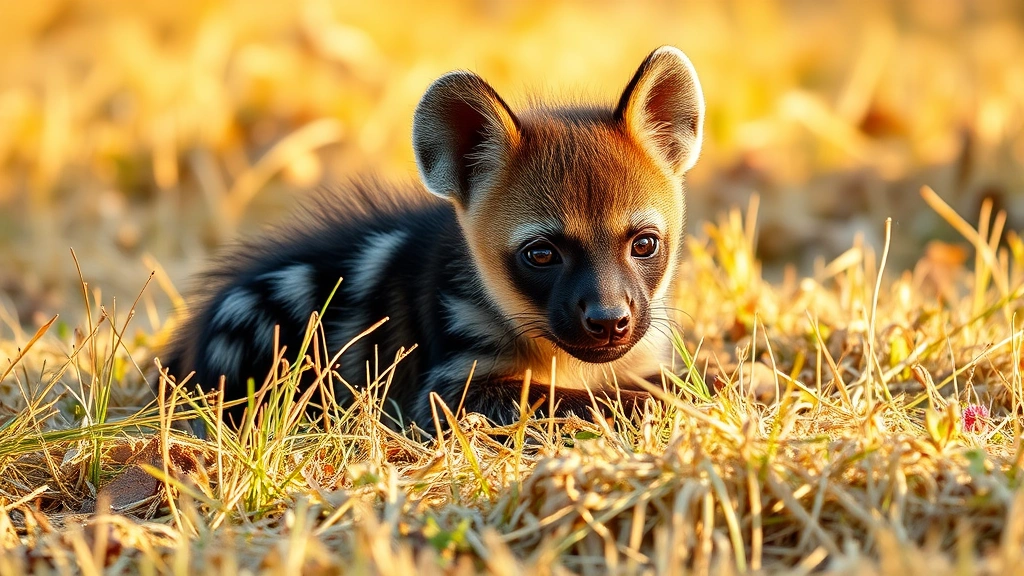
What Is a Baby Hyena Called? Fun Facts About These Misunderstood Cubs
Ever wondered what those adorable spotted pups romping around the African savanna are actually called? If you’ve been curious about baby hyenas and the fascinating world of these often-misunderstood carnivores, you’re in for a treat. The answer is delightfully simple yet opens the door to a world of incredible animal facts that’ll make your next nature documentary night even more entertaining.
Baby hyenas go by the name “cubs”—just like lion and tiger babies. But here’s where it gets interesting: hyenas are far more complex and socially sophisticated than most people realize. These spotted hunters have a matriarchal society that would make anthropologists jealous, and their cubs are born into one of nature’s most intricate family structures. Whether you’re a parent looking to teach your kids about baby animals or simply fascinated by wildlife, understanding hyena cubs reveals just how diverse and remarkable the animal kingdom truly is.
What makes hyena cubs particularly captivating is their development journey. Unlike many other carnivores, hyena cubs face intense competition from siblings from birth, they’re born with their eyes open, and they participate in a social hierarchy that shapes their entire lives. Let’s dive into the wild world of these spotted cubs and uncover the facts that make them genuinely fascinating creatures.
What Is a Baby Hyena Called?
The straightforward answer: a baby hyena is called a cub. Simple enough, right? But the terminology barely scratches the surface of what makes these young animals extraordinary. When a cub is born, it enters a world governed by strict hierarchies, intense sibling rivalry, and a matriarchal system that’s absolutely fascinating from both a biological and social perspective.
The term “cub” applies across several hyena species, including the spotted hyena, striped hyena, and brown hyena. Each species has its own unique characteristics and behaviors, but they all share the common designation of their young as cubs. If you’re exploring baby lion facts or other baby wildlife information, you’ll notice that many African predators use the same terminology, which can sometimes make distinguishing between species’ offspring a bit tricky without additional context.
What’s particularly interesting is how hyena cubs differ from other carnivore young. While a baby elephant is called a calf and benefits from massive herd protection, hyena cubs develop within a more competitive clan structure. The spotted hyena, in particular, is known for its complex social organization that rivals that of primates in many ways.
Physical Characteristics of Hyena Cubs
Hyena cubs are born with surprising physical maturity compared to many other carnivores. Spotted hyena cubs, the most well-studied species, are born with their eyes already open—a rarity among predators. Their ears are also functional from birth, giving them immediate sensory awareness of their surroundings.
At birth, a spotted hyena cub weighs roughly 1.5 kilograms (about 3.3 pounds) and is covered in fine, dark fur. Unlike the distinctive spotted pattern of adults, newborn cubs are born with a uniform dark coat that gradually develops the characteristic spots as they mature. This transition typically takes several weeks as the cubs’ fur pattern develops.
The cubs possess sharp teeth and claws from birth, though these aren’t fully developed. Their bite force, which becomes legendary in adults, develops gradually over their first year. By around three weeks of age, cubs begin to show the muscular build that will eventually make them such formidable hunters. Their neck and shoulder muscles develop particularly quickly, preparing them for the powerful bite they’ll need as adults.
Interestingly, female spotted hyena cubs are typically larger than males from birth—a pattern that continues throughout their lives. This size advantage contributes to the matriarchal nature of hyena society, where females maintain dominance and priority access to food.
The Remarkable Social Structure
Here’s where hyena cubs get genuinely wild: they’re born into one of the most complex social hierarchies in the animal kingdom. Spotted hyena cubs are born into a clan, which is a matriarchal society led by the highest-ranking female. This isn’t just a casual grouping—it’s a strict hierarchy that determines everything from feeding order to mating rights.
Cubs are born knowing their rank based on their mother’s position in the clan. A cub born to the alpha female automatically has higher status than cubs born to lower-ranking females, regardless of age or size. This means a younger cub from a high-ranking mother will outrank an older cub from a subordinate mother. Talk about inheriting privilege—hyena style.
The clan structure can include anywhere from 5 to 80 individuals, depending on prey availability and environmental conditions. Cubs grow up surrounded by their extended family, learning the complex rules of their society from the moment they’re born. This socialization process is crucial to their survival and success within the group.
When exploring baby nature documentary content, the hyena clan dynamics are often highlighted as one of nature’s most compelling social experiments. The way cubs navigate their rank-based world teaches them essential skills for adult life.
Birth and Early Development
Female hyenas have a gestation period of around 110 days, making it slightly longer than humans. Cubs are typically born singly or in pairs, with litters of three or more being quite rare. The birth process itself is uniquely challenging for female hyenas—they give birth through a pseudopenis (a structure that mimics male anatomy), which makes delivery particularly difficult and increases mortality risk during childbirth.
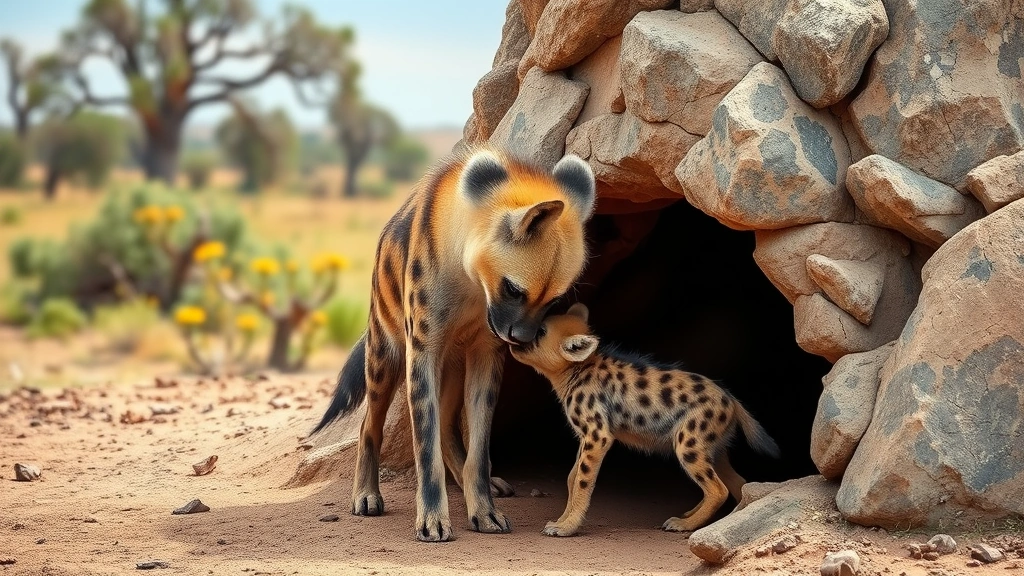
Newborn cubs remain in a den for their first several weeks of life. The den provides protection from predators and harsh weather conditions. During this time, cubs are entirely dependent on their mother for nutrition, nursing approximately every few hours. Mother hyenas are intensely protective during this vulnerable period, and the clan members often help guard the den.
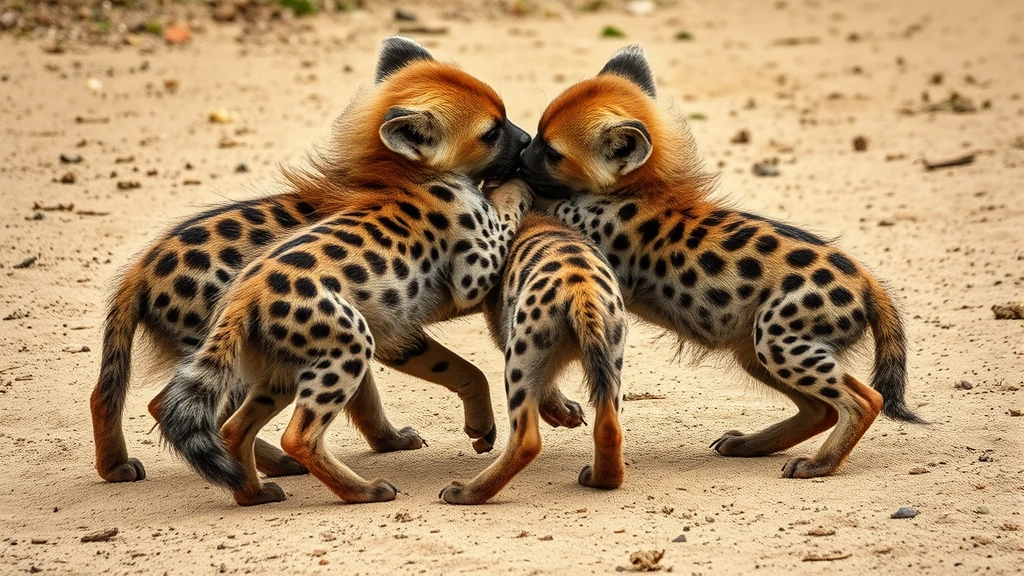
By around three weeks of age, hyena cubs begin to venture outside the den for short periods. Their coordination improves rapidly, and they start engaging in play behavior with littermates—though this play is often quite rough and competitive. This early wrestling and roughhousing serves as crucial practice for the hunting and combat skills they’ll need as adults.
Weaning typically begins around three months of age, though cubs continue nursing for up to a year. As they transition to solid food, they’re introduced to kills made by the clan. Interestingly, cubs don’t have priority access to food despite their youth—their position in the hierarchy determines their feeding order, which can sometimes mean going hungry if high-ranking adults have eaten their fill.
According to the American Academy of Pediatrics, understanding animal development patterns helps parents appreciate the diversity of parenting strategies in nature. The hyena model certainly demonstrates how different species prioritize different survival strategies.
Comparing Hyena Cubs to Other Predators
When you look at baby animals across the African savanna, the differences in development strategies are striking. Hyena cubs develop quite differently from their feline counterparts. Lion cubs, for instance, are born blind and deaf, requiring more intensive maternal care in the early weeks. Hyena cubs’ open eyes and functional ears give them an advantage in awareness but also mean they’re exposed to more environmental stimuli from birth.
Cheetah cubs are born helpless and depend entirely on their mothers for several months. In contrast, hyena cubs develop relatively quickly and participate in social learning within the clan almost immediately. This difference reflects each species’ survival strategy—solitary mothers versus clan-based societies.
African wild dog puppies, another highly social carnivore, share some similarities with hyena cubs in their pack dynamics. However, wild dog packs are more egalitarian, whereas hyena clans maintain strict hierarchies. Both species benefit from communal living, but they organize their societies quite differently.
The development timeline varies significantly too. While lion cubs remain dependent on their mothers for about two years, hyena cubs become more independent around 18 months, though they remain part of the clan structure. This reflects the different environmental demands and prey availability in their respective territories.
Fun Facts That Will Surprise You
Here are some genuinely wild facts about hyena cubs that’ll make you the most interesting person at your next dinner party:
- Cubs are born with teeth: Unlike many carnivores, hyena cubs are born with their deciduous teeth already erupted. They’re ready to bite from day one, even if they can’t yet coordinate the muscles necessary for a powerful bite.
- Sibling rivalry is intense: Spotted hyena cubs often engage in what researchers call “siblicide.” The older or stronger cub may kill its littermate within the first few weeks of life. This brutal competition is actually an evolutionary strategy that ensures the strongest cub survives when resources are scarce.
- Cubs have a unique vocalizations: Baby hyenas make chirping and whimpering sounds that are distinctly different from adult calls. These vocalizations help maintain contact with mothers and clan members and play a crucial role in social bonding.
- Play fighting predicts adult hierarchy: Research has shown that dominance patterns established during cub play sessions often predict the social ranking these individuals will maintain as adults. What looks like simple roughhousing is actually crucial social development.
- Cubs learn hunting through observation: Young hyenas don’t hunt independently until they’re about a year old. Before that, they learn by watching adults and participating in group hunts where they mostly observe and learn technique.
- Mothers sometimes “adopt” cubs: In rare cases, female hyenas have been observed caring for cubs that aren’t biologically theirs. This communal care strengthens clan bonds and ensures orphaned cubs have a chance at survival.
According to CDC wildlife resources, understanding animal behavior helps us appreciate ecosystem complexity and the delicate balance of nature.
Teaching Kids About Hyena Cubs
If you’re a parent looking to engage your children’s curiosity about wildlife, hyena cubs offer a fantastic educational opportunity. Here’s why: they challenge our preconceived notions about nature and demonstrate that the animal kingdom is far more complex than simple good-versus-evil narratives.
Start with the basics: Begin by explaining that baby hyenas are called cubs and live in family groups called clans. Use this as a springboard to discuss how different families organize themselves differently—both in the animal kingdom and in human cultures.
Explore the social hierarchy concept: Hyena clans provide an excellent, age-appropriate way to discuss social structures. You can explain how different members of a group have different responsibilities and roles, and how this organization helps the group survive.
Discuss predator-prey relationships: Rather than portraying hyenas as villains (as they’re often depicted in popular culture), use them as an opportunity to explain the important ecological role predators play. Hyenas are actually incredibly efficient hunters and scavengers, and they help maintain ecosystem balance.
Watch documentaries together: Nature documentaries about hyena clans are engaging and educational. Shows like those from BBC Natural History provide stunning visuals and accurate information that children find captivating.
Connect to parenting themes: Discuss how hyena mothers protect their cubs, how siblings interact, and how the larger family helps raise young. This can prompt interesting conversations about your own family structure and how different families work in different ways.
Encourage critical thinking: Ask your kids why they think hyenas are often portrayed negatively in movies and stories. Help them understand that real hyenas are actually fascinating, intelligent animals deserving of respect and admiration.
Parents Magazine offers excellent resources for teaching children about animals and nature in engaging, age-appropriate ways.
Frequently Asked Questions
How long do hyena cubs stay with their mothers?
Hyena cubs remain with their mothers and the clan for several years. While they become more independent around 18 months to 2 years of age, they typically don’t leave the clan until they reach sexual maturity around 3-4 years old. Some individuals, particularly females, may remain in their birth clan for their entire lives.
Are baby hyenas dangerous?
Newborn hyena cubs are relatively helpless and not dangerous to adult humans. However, they grow quickly and develop powerful jaws. By a few months of age, they can deliver a serious bite. In the wild, they’re protected by their mothers and the clan, making them extremely dangerous if you were to approach them. It’s important to maintain a safe distance from wild hyenas of any age.
What do hyena cubs eat?
Newborn cubs nurse exclusively for the first few months. As they grow, they’re gradually introduced to regurgitated meat from kills made by the clan. By around 6 months of age, they can eat solid meat pieces. Their position in the clan hierarchy determines their access to food, so lower-ranking cubs may have to wait for higher-ranking members to eat first.
How many cubs does a hyena have at once?
Spotted hyena females typically give birth to one or two cubs at a time. Litters of three or more are quite rare. Brown hyenas and striped hyenas may have slightly different litter sizes, but they’re generally small compared to other carnivores.
Do male hyenas help raise cubs?
In spotted hyena clans, males have minimal involvement in cub-rearing. Females do most of the direct care, though other clan members may participate in protection and communal feeding. This is quite different from some other carnivore species where males have more active parenting roles.
What’s the biggest threat to hyena cubs?
The most significant threat to hyena cubs is actually their littermates. Siblicide is common in spotted hyenas, with older or stronger cubs sometimes killing their siblings. Environmental factors like drought and prey scarcity also threaten cub survival, as do predators like lions and larger hyenas from rival clans.
When do hyena cubs learn to hunt?
Hyena cubs begin participating in group hunts around 8-12 months of age, though they don’t actively hunt independently until around 12-18 months old. They learn primarily through observation and participation, gradually developing the skills necessary to hunt effectively.
How do hyena cubs communicate?
Hyena cubs use a variety of vocalizations including chirps, whimpers, and growls. They also use body language such as ear position and tail movement to communicate with their mothers and clan members. As they mature, their vocalizations become more complex, including the famous hyena laugh that’s actually a form of social communication.