Why Are Baby Monkeys So Adorable? The Science Behind Our Irresistible Attraction
There’s something almost magnetic about watching a baby monkey. Whether it’s a tiny primate clinging to its mother’s fur, playfully swinging from branches, or making those impossibly cute facial expressions, we find ourselves utterly captivated. But this isn’t just sentimentality or random cuteness overload—there’s actual science explaining why baby monkeys trigger such powerful emotional responses in us.
The truth is, our brains are wired to find certain features irresistible, and baby primates have evolved to possess many of these exact characteristics. It’s a fascinating intersection of evolutionary biology, psychology, and neuroscience that reveals something profound about how we’re hardwired to respond to vulnerability and youth.
Understanding why baby monkeys are so adorable isn’t just a fun intellectual exercise—it actually tells us something meaningful about human parenting instincts, our connection to the animal kingdom, and the universal signals that transcend species barriers. Let’s explore this delightful phenomenon from multiple angles.
The Kindchenschema Effect: Biology’s Cuteness Formula
In the 1940s, Austrian ethologist Konrad Lorenz identified a pattern in how humans respond to young animals. He called it the Kindchenschema—literally “child schema”—and it’s essentially a biological checklist of features that trigger our nurturing instincts. These aren’t arbitrary preferences; they’re evolutionary mechanisms designed to make us want to protect and care for vulnerable creatures.
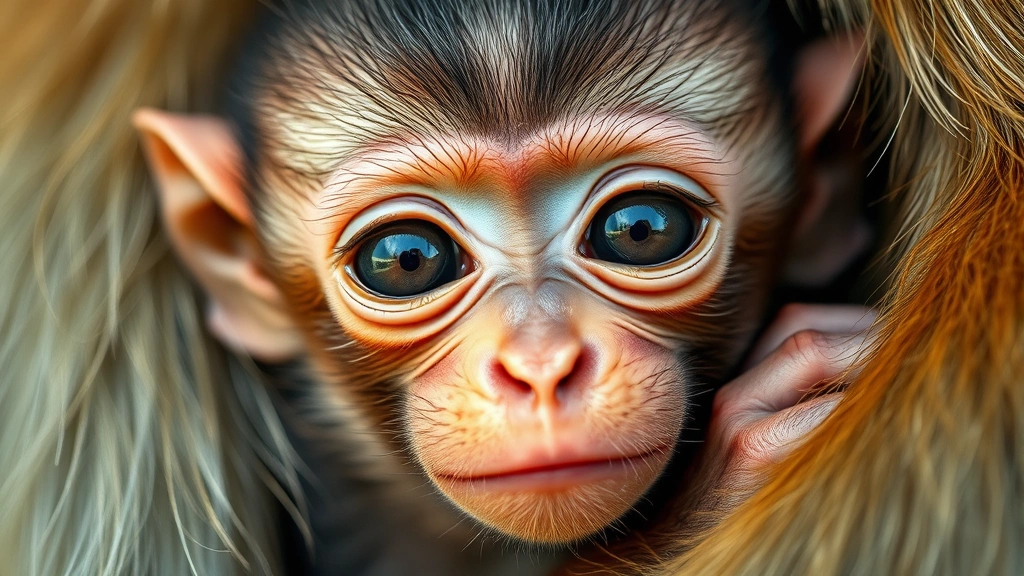
Baby monkeys possess nearly every element on this cuteness checklist. They have disproportionately large heads relative to their bodies, prominent eyes positioned low on their faces, rounded foreheads, and soft, floppy movements. When we see these characteristics, our brains don’t just find them pleasant—they trigger a cascade of neurochemical responses that make us want to nurture and protect.
The fascinating part? This response works across species boundaries. A human looking at a baby chimpanzee experiences nearly identical neural activation as when viewing human infants. Our brains essentially can’t distinguish between the cuteness signals of different primate species, which explains why videos of baby primates go viral with the same intensity as human baby content.
Research on facial proportions has shown that features like large eyes and small noses activate the same reward centers in our brains, regardless of whether we’re looking at a human baby or a baby monkey.
Facial Features That Make Baby Monkeys Irresistible
Let’s break down the specific facial characteristics that make baby monkeys so visually compelling. Understanding these elements helps explain the almost universal appeal of these creatures.
Oversized Eyes: Baby monkey eyes are proportionally enormous compared to their head size. This feature is particularly potent because large eyes signal youth, innocence, and vulnerability. The whites of their eyes are often visible, which adds to the impression of openness and naivety. Our brains interpret large eyes as a plea for protection, triggering immediate caregiving responses.
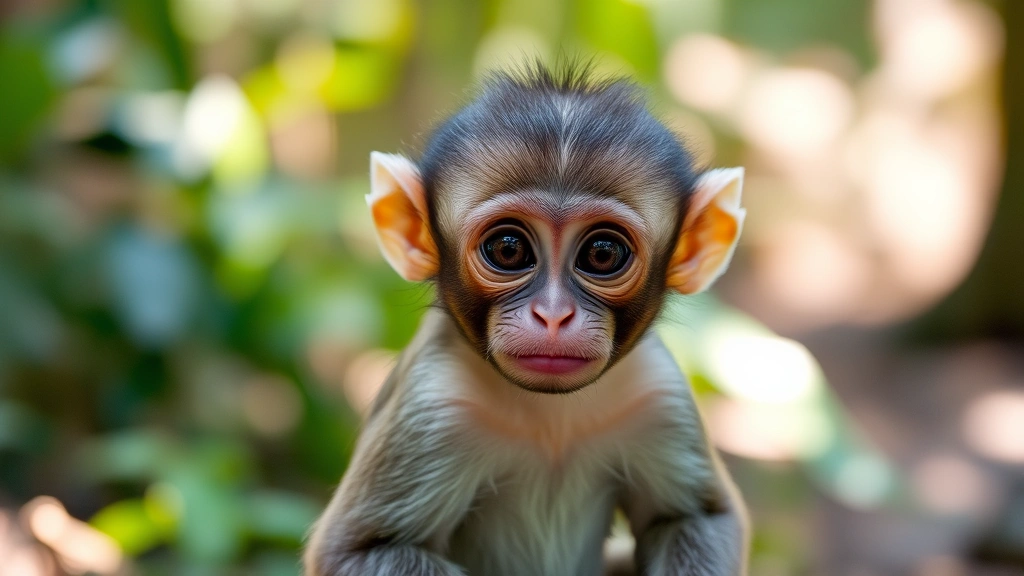
Rounded Facial Structure: Unlike adult monkeys with their pronounced features and angular faces, baby monkeys have soft, rounded contours. This roundness appears throughout their skull structure—rounded cheeks, rounded foreheads, and overall proportions that seem almost cherubic. Roundness is universally perceived as less threatening and more appealing than angular or sharp features.
Prominent Foreheads: Baby primates possess foreheads that bulge outward, creating that distinctive “baby” appearance. This feature is another powerful signal of immaturity and vulnerability. Combined with their large eyes, prominent foreheads create what researchers call the “baby face” configuration—a configuration so powerful it influences how we treat not just animals, but human infants and even adults with baby-like features.
Small, Delicate Noses: The tiny, button-like noses of baby monkeys contrast sharply with the larger, more prominent noses of adult primates. This diminutive feature reinforces the impression of fragility and cuteness. There’s something inherently appealing about small things—we find miniature versions of objects more charming than full-sized ones, and the same principle applies to facial features.
Soft Expressions: Baby monkeys can’t control their facial expressions the way adults can. Their faces often appear innocent, confused, or contemplative—expressions we interpret as endearing rather than threatening. The lack of aggressive expression (no bared teeth or intense stares) makes them appear harmless and sweet.
Behavioral Traits That Amplify the Adorableness Factor
Cuteness isn’t just about static physical features; it’s also about how creatures move and behave. Baby monkeys engage in actions that we find inherently charming.
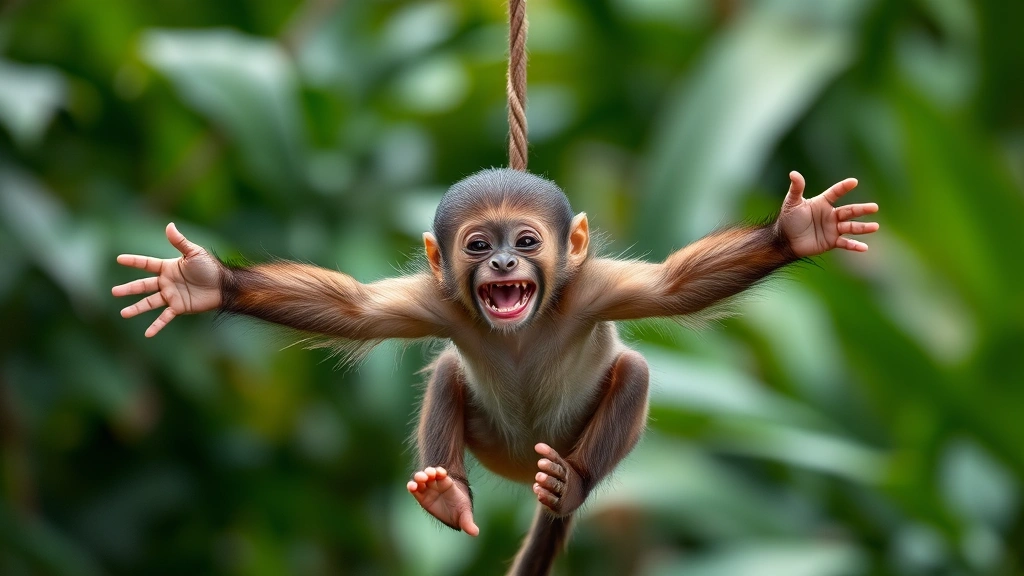
Clumsy, Uncoordinated Movement: Young primates haven’t yet developed the smooth, efficient movements of adults. Instead, they stumble, tumble, and move with uncertain, jerky motions. This clumsiness is endearing because it signals inexperience and vulnerability. When we watch a baby monkey attempt to navigate a branch or climb its mother, the awkwardness of the movement triggers our protective instincts.
Playfulness: Baby monkeys engage in frequent play—with siblings, with their mothers, with objects in their environment. This playfulness appears joyful and innocent, reminding us of human children at play. Playful behavior signals that the creature is thriving and healthy, which paradoxically makes us want to protect it even more.
Dependence on Caregivers: Baby monkeys remain physically attached to their mothers for extended periods, clinging to their fur and following them everywhere. This dependency is visually apparent and triggers our empathetic responses. We recognize the vulnerability inherent in this dependence and feel compelled to protect it.
Vocalizations: The sounds baby monkeys make—chirps, squeaks, and high-pitched calls—are higher in frequency than adult vocalizations. High-pitched sounds are universally perceived as coming from smaller, younger creatures, and they trigger strong emotional responses in us. Even recordings of baby monkey vocalizations can induce the same caregiving impulses as visual cuteness cues.
How Our Brains Respond to Baby Primate Features
When we encounter a baby monkey, our brains don’t just passively observe—they actively respond with specific neurochemical and neurological changes. Understanding this brain response helps explain why the attraction feels so powerful and immediate.
Activation of Reward Centers: Studies using functional MRI have shown that viewing baby animals activates the same reward centers in our brains as viewing human infants. Specifically, the nucleus accumbens—a region associated with pleasure and reward—lights up when we see cute baby primates. This isn’t a learned response; it’s a hardwired neurological reaction.
Oxytocin Release: Often called the “bonding hormone” or “love hormone,” oxytocin increases when we encounter cute stimuli. This neurochemical is the same one that bonds mothers to infants, and it’s released in response to baby monkey cuteness cues. This explains why viewing baby monkeys can feel emotionally moving—our bodies are literally flooded with the same bonding chemicals that create attachment between parent and child.
Dopamine Production: The neurotransmitter dopamine, associated with motivation and pleasure, increases when we view cute baby animals. This dopamine response motivates us to approach, interact with, and care for the cute creature. It’s the same neurochemical response that drives human parenting behavior.
Empathy Activation: Brain imaging studies show that viewing baby animals activates regions associated with empathy and theory of mind—the ability to understand that another creature has feelings and experiences. We don’t just find baby monkeys cute; we actively empathize with them, imagining their experiences and emotions.
Research from the American Psychological Association confirms that cuteness serves as a powerful motivator for caregiving behavior across species boundaries.
Comparing Baby Monkeys to Other Primates
While all baby primates possess cuteness features, there are interesting variations among different species. Exploring these differences helps us understand which specific features are most powerful in triggering our responses.
A baby orangutan displays many similar features to baby monkeys but with some distinct characteristics. Orangutans have more prominent facial hair even as infants, larger ears, and different facial proportions. Yet they’re equally adorable to most observers, suggesting that the specific combination of features matters less than the overall presence of baby-like characteristics.
Baby chimpanzees are perhaps the most humanlike of all primates we find cute. Their facial structure more closely resembles human infants, with larger ears, more expressive faces, and similar eye placement. This similarity to human babies might explain why many people find baby chimps even more compelling than other monkey species—they hit more of the Kindchenschema markers simultaneously.
When comparing baby animals across species, primates consistently rank among the cutest. This is because primates share more facial and behavioral features with humans than most other animals, creating a kind of “uncanny valley” effect in reverse—they’re similar enough to trigger our human-focused cuteness responses but different enough to feel exotic and special.
Cute babies of all species share fundamental characteristics, but primate babies seem to hit the sweet spot of being close enough to human babies to feel relatable while being different enough to feel novel and fascinating.
The Evolutionary Purpose Behind Cuteness
Why did these cuteness features evolve in the first place? The answer lies in the survival advantage of triggering caregiving behavior in adults.
Ensuring Parental Investment: Baby primates are born extremely vulnerable. They require years of intensive care to survive and develop. Cuteness is essentially nature’s insurance policy—by making babies appealing, evolution ensures that parents remain motivated to provide care despite the enormous energy investment required. A baby that triggers strong caregiving responses is more likely to survive to adulthood.
Cross-Species Recognition: Interestingly, cuteness features work across species boundaries because they’re based on universal signals of youth and vulnerability rather than species-specific characteristics. This means that when humans encounter baby monkeys, we instinctively recognize the signals of immaturity and vulnerability, even though these are not our offspring. This cross-species recognition might have evolved because it facilitated social bonding within early human groups and between humans and domesticated animals.
Reduced Aggression Triggers: Cuteness features actively suppress aggressive responses. Features like large eyes and rounded faces are associated with non-threatening creatures. This serves the evolutionary function of protecting young animals from potential predators and aggressive adults of their own species. A baby that looks cute is less likely to be attacked.
Promoting Social Bonds: The emotional response to cuteness promotes social bonding not just between parent and child, but within entire social groups. In primates, individuals who respond positively to babies are more likely to contribute to childcare and group cohesion. This strengthens the entire social structure.
Why This Matters for Understanding Human Parenting
The science of why baby monkeys are adorable isn’t just trivia—it reveals important truths about human parenting and our fundamental nature.
Universal Parenting Instincts: The fact that we respond to baby monkey cuteness with the same neurochemical and emotional responses we have to human infants reveals that parenting instincts are deeply rooted in our biology. We don’t learn to find babies appealing; we’re neurologically programmed to do so. This understanding can help parents recognize their caregiving responses as natural rather than something they need to learn or force.
Connection to Our Evolutionary Past: Our strong response to primate babies connects us to our own evolutionary history. Humans are primates, and our parenting behaviors evolved under similar pressures as those of other primate species. Understanding this can deepen our appreciation for human parenting as part of a long evolutionary continuum.
Empathy Across Species: The ability to empathize with baby monkeys and feel compelled to protect them suggests that empathy is a fundamental human capability that extends beyond our own species. This has implications for how we raise children—emphasizing empathy and compassion for all creatures, not just humans.
Recognizing Manipulation of Cuteness Cues: Understanding the science of cuteness also helps us recognize when cuteness features are being deliberately used to manipulate our responses. Advertising, media, and product design often exploit cuteness cues to influence our behavior. Parents who understand these mechanisms can help their children develop critical thinking about media consumption.
Health organizations increasingly recognize that understanding our biological responses to cuteness can inform better approaches to child development and family wellness.
Frequently Asked Questions
Are baby monkeys actually smarter than they look?
Yes, absolutely. While baby monkeys appear innocent and simple, they’re actually quite intelligent. Their large eyes and round faces might make them look vacant, but their brains are developing rapidly. Baby primates learn complex social behaviors, problem-solving skills, and communication through play and observation. The “simple” appearance is actually an adaptation that makes them appealing to caregivers, not an indication of actual intelligence.
Do baby monkeys stay cute as they grow up?
Baby monkeys gradually lose their cuteness features as they mature. Their faces become more angular, their eyes become proportionally smaller relative to their head size, and their movements become more coordinated and efficient. Adult monkeys are often striking and beautiful, but they trigger different emotional responses than their juvenile counterparts. This change in appearance actually serves an evolutionary purpose—it signals to the group that the individual has matured and is ready for different social roles.
Why do we find baby monkeys cute but adult monkeys sometimes seem threatening?
Adult monkeys possess features that our brains interpret as potentially threatening—larger teeth, more muscular builds, and direct stares. Additionally, adult primates are more likely to display aggressive behaviors, which reinforces our perception of them as dangerous. The contrast between the vulnerability of babies and the apparent strength of adults is actually quite stark in primate species.
Is it okay to keep baby monkeys as pets?
While the cuteness factor makes baby monkeys appealing as pets, this is generally not recommended by wildlife experts and veterinarians. Baby monkeys have complex social and environmental needs that can’t be met in a home setting. Additionally, as they mature, they become stronger and potentially aggressive. Many jurisdictions have laws restricting private ownership of primates. Animal welfare organizations strongly discourage private ownership of primates.
Can baby monkey cuteness affect how we parent human children?
Understanding the science of cuteness can actually improve human parenting. When parents recognize that their caregiving instincts are biologically based and normal, they can feel more confident in their parenting. Additionally, understanding that cuteness features serve evolutionary functions can help parents appreciate the developmental stages of their children and respond appropriately to their changing needs.
Why are there so many videos of baby monkeys online?
Baby monkey videos are enormously popular because they trigger powerful emotional responses in viewers. The combination of cuteness features, playful behavior, and the novelty of observing a different species creates compelling content. However, it’s worth noting that some of these videos depict baby monkeys in exploitative situations, separated from their mothers for entertainment purposes. Choosing to watch ethically sourced wildlife content supports better treatment of primates in the long term.