
Where Is Mama? Understanding Baby Deer Behavior and What It Means for Wildlife Observation
There’s something almost magical about spotting a young fawn alone in a meadow or forest clearing. Those oversized ears, the delicate legs, and those wide, searching eyes create an irresistible urge to help. If you’ve ever wondered, “I am a baby deer, where is mama?”—or more accurately, wondered where mama actually is when you encounter a solitary fawn—you’re not alone in your concern. This question touches on something deeper than curiosity; it reveals our instinctive desire to nurture and protect the vulnerable among us, whether human or animal.
The truth about separated fawns is far more nuanced than it first appears. Understanding baby deer behavior requires us to set aside our human parenting framework and appreciate the remarkably different strategies that white-tailed deer mothers employ to keep their young safe. What looks like abandonment to us is actually a carefully orchestrated survival strategy refined over thousands of years of evolution.
This exploration of fawn behavior and maternal care patterns offers valuable insights not just for wildlife enthusiasts, but for anyone interested in understanding how different species prioritize protection, independence, and bonding. Let’s venture into the woodland world of these vulnerable young creatures and discover why mama’s absence is often the smartest parenting decision she could make.
The Myth of the Abandoned Fawn
Every spring and early summer, wildlife rehabilitation centers receive calls from well-meaning humans convinced they’ve discovered an orphaned fawn in dire need of rescue. The scenario is always similar: a solitary young deer, seemingly distressed, with no mother in sight. The caller’s heart breaks for this apparently helpless creature, and the impulse to intervene feels not just right but morally necessary.
Here’s where understanding baby animals and their natural behaviors becomes crucial. In the vast majority of these cases—experts estimate around 90 percent—the fawn is not abandoned at all. The mother is nearby, often watching from a hidden vantage point. She’s not neglecting her baby; she’s employing one of nature’s most effective survival strategies.
This distinction matters profoundly. When humans intervene based on false assumptions about abandonment, they often inadvertently harm the very creature they’re trying to help. Well-intentioned rescue attempts can separate mother and fawn permanently, disrupt critical bonding periods, and expose the young deer to stress that compromises their immune system and development.
The emotional pull we feel when encountering a seemingly vulnerable creature is rooted in our own biology. As humans, we’re hardwired to respond to signals of helplessness—large eyes, small size, apparent distress. These triggers evolved to help us care for our own human infants. But applying human parenting logic to deer requires us to think beyond our instincts and consider the evolutionary wisdom embedded in different species’ survival strategies.

How Mother Deer Protect Their Young
White-tailed deer mothers face an evolutionary puzzle: their fawns are born virtually defenseless and remain vulnerable for months. Unlike some species whose young can walk and feed independently within hours, fawns require extended care. Yet mother deer cannot remain constantly with their offspring without drawing dangerous attention from predators.
The solution that evolved is elegantly simple and remarkably effective. Mother deer employ what researchers call “maternal concealment strategy.” Rather than staying with their fawns, does deliberately keep their distance during the fawn’s most vulnerable first weeks. The fawn’s spotted coat provides excellent camouflage in dappled sunlight and tall grass. Its natural instinct is to remain absolutely still and quiet when left alone—a behavior so ingrained that even frightened fawns will often freeze rather than flee or cry out.
Meanwhile, the mother visits on a strict schedule, typically nursing her fawn only three to four times daily. These brief encounters provide the nutrition the fawn needs while minimizing the time the pair spends together—and thus the time they’re vulnerable as a recognizable unit. The doe’s presence is so fleeting that predators rarely discover the fawn through her scent or activity patterns.
This strategy is so effective that baby wildlife researchers have documented survival rates that rival or exceed those of species that keep their young constantly nearby. The isolation that appears heartbreaking to human observers is actually a sophisticated protective mechanism.
The doe also employs behavioral strategies beyond simple spatial separation. She varies her approach routes to and from her fawn, avoiding the creation of visible trails. She often leaves the area entirely between nursing sessions, sometimes traveling considerable distances to feed herself—a necessary act since she’s producing milk and needs substantial calories to do so. Her absence isn’t indifference; it’s calculated survival strategy.
The Hiding Strategy: Why Separation Saves Lives
Understanding why mother deer choose separation over constant companionship requires us to think like predators. What attracts a predator’s attention? Movement, sound, and concentration of scent. A fawn moving through the forest with its mother creates all three warning signals. A fawn hidden alone creates none of them.
Predators hunt by pattern recognition. They’re drawn to the sight of animals moving, the sound of hooves or distress calls, and the olfactory trail left by mammals passing through the landscape. A fawn alone and still presents none of these triggers. Its spotted coat dissolves into the visual noise of dappled shade and vegetation. Its silence is absolute—fawns have evolved to remain mute even when hungry or frightened, a behavior that seems counterintuitive to humans but makes perfect survival sense.
The doe’s temporary absence serves another critical function: it prevents the establishment of a visible mother-infant pair that predators could learn to recognize and hunt. Predators, particularly canines, develop search images—mental templates of prey they hunt. If a predator learns to look for “mother deer with young fawn,” it gains a significant hunting advantage. By separating from her fawn except during brief nursing visits, the doe prevents predators from forming this dangerous association.
Research on predation patterns supports this strategy’s effectiveness. Fawns left hidden in tall grass or brush have remarkably low predation rates during their first few weeks of life. As they grow stronger, faster, and more independent—typically around four to six weeks—they begin accompanying their mother more regularly. By this point, their improved mobility and developing awareness make constant maternal vigilance less critical for survival.
The timing of this transition isn’t random. It corresponds precisely with the fawn’s developmental milestones: increased muscle strength, faster running speed, and the emergence of herd awareness that allows the young deer to follow its mother’s directional cues and stay close during potential danger.
Developmental Stages and Maternal Behavior
Fawn development follows a remarkably predictable timeline, and maternal behavior shifts in response to the young deer’s changing capabilities and vulnerabilities. Understanding these stages helps explain why mama deer’s approach to parenting changes so dramatically as her fawn grows.
Birth to Two Weeks: Newborn fawns are at their most vulnerable. They cannot outrun predators, their immune systems are immature, and they’re completely dependent on mother’s milk for nutrition and antibodies. During this period, the doe maintains her strategic separation, nursing briefly three to four times daily. The fawn spends most of its time hidden in dense vegetation, relying on camouflage and stillness for protection. This is when human intervention is most likely to occur—and most likely to be harmful.
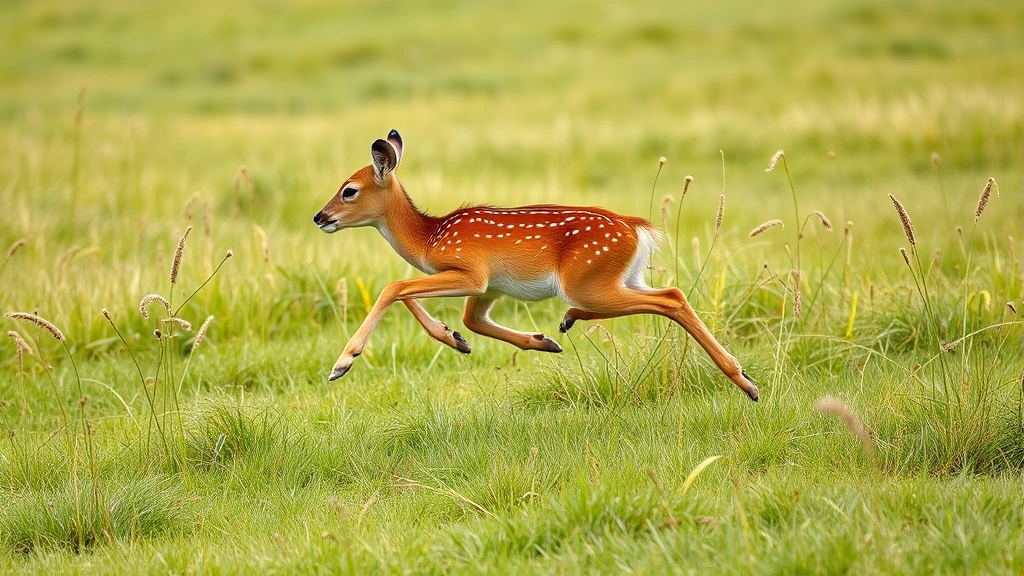
Two to Four Weeks: Fawns begin showing increased alertness and start sampling vegetation, though mother’s milk remains their primary nutrition. The doe gradually allows slightly longer periods of proximity, though still maintains frequent separations. The fawn’s coordination improves noticeably, and it begins displaying the characteristic “stotting” behavior—those bouncy, exaggerated jumps—that will eventually help it escape predators.
Four to Eight Weeks: This marks a transition period. The fawn now spends more time with its mother, gradually learning herd behavior and developing the speed and agility necessary for predator avoidance. Weaning begins around this time, though fawns continue nursing for several months. The mother now actively teaches her fawn where to find food and how to recognize danger signals.
Eight Weeks Onward: Fawns become increasingly independent, though they remain with their mother through their first year and sometimes into their second. The maternal separation strategy that was essential during early vulnerability is no longer necessary or beneficial. Mother and fawn now travel together regularly, and the fawn has developed sufficient skills to survive independently if necessary.
This developmental arc reveals why parenting advice for different species must account for vastly different timelines and strategies. What looks like neglect in week one is actually sophisticated protection. What would be neglect in week twelve is appropriate independence-building.
What to Do If You Find a Fawn Alone
Despite the biological reality that most alone fawns are not abandoned, you may still encounter a situation where human intervention genuinely helps. Distinguishing between a fawn in temporary maternal separation and one that actually needs help requires careful observation and understanding of distress signals.
Signs the Fawn Likely Needs Help:
- Visible injuries, bleeding, or obvious illness
- Extreme lethargy or unresponsiveness lasting hours
- Clear signs of maternal neglect over an extended period (more than 24 hours without nursing)
- The fawn actively following humans or showing no fear response (indicating previous human contact that has compromised its survival instincts)
- Evidence that the mother has been hit by a vehicle or is deceased
Signs the Fawn Is Likely Fine:
- Alert, responsive behavior despite appearing alone
- Clean, well-groomed coat with no visible injury
- Evidence of recent nursing (distended belly, clean rear end)
- The fawn remaining in one location, not wandering desperately
- The fawn’s natural instinct to freeze rather than approach you
If you encounter a fawn that appears healthy and shows no distress signals, the best action is to leave it alone. Seriously. Don’t touch it, don’t try to feed it, and don’t stay in the area. Your presence may prevent the mother from approaching to nurse. If you’re concerned about a specific fawn, mark the location and return after several hours to verify the mother has made contact.
If you genuinely believe a fawn needs help—based on clear evidence of injury or abandonment—contact a licensed wildlife rehabilitator rather than attempting rescue yourself. These professionals have the training and legal authority to intervene appropriately. They also have the resources to provide proper care if intervention is truly necessary.
It’s worth noting that in many jurisdictions, it’s illegal to possess a wild fawn without proper permits, even with good intentions. Wildlife rehabilitation centers exist precisely because they understand when and how human intervention genuinely helps rather than harms.
Comparing Deer Parenting to Other Species
The maternal separation strategy employed by deer isn’t unique in the animal kingdom, though the specific implementation varies. Comparing deer parenting to other species reveals how different evolutionary pressures have shaped dramatically different approaches to keeping young safe.
Ungulates and the Hiding Strategy: Many hoofed mammals employ similar concealment strategies. Elk calves, moose calves, and bighorn sheep lambs are often left hidden while mothers feed and maintain distance. This strategy evolved across multiple species because it’s effective—predators have a harder time finding prey that isn’t moving or making noise.
Primates and Constant Contact: In contrast, primates—including humans—evolved with a parenting strategy emphasizing constant maternal contact. Human infants are born exceptionally helpless and require years of intensive parenting. Our babies are carried, held, and kept in near-constant proximity. Our instincts are calibrated for this reality, which is why seeing a young creature alone triggers such strong protective impulses.
Birds and the Fledgling Paradox: Bird parents face a similar challenge to deer: how to keep dependent young safe while meeting their own survival needs. Many bird species employ a strategy that looks like abandonment to human observers—fledglings are left in the nest or on the ground for extended periods while parents forage. Yet this strategy evolved because it maximizes both parental survival and offspring survival.
Carnivores and Den Protection: Predator species often keep their young in dens or hidden locations, with parents hunting to provide food. This strategy works because the parents’ hunting skills can provision multiple young, and the den provides physical protection that hiding in plain sight cannot.
The diversity of parenting strategies across species reveals a fundamental truth: there’s no single “correct” way to raise young. Evolution has shaped different approaches for different circumstances, predator pressures, and survival challenges. The maternal separation strategy that seems heartbreaking to human observers is actually an elegant solution to the specific survival challenges deer face.
Frequently Asked Questions
How long can a fawn survive without nursing?
Fawns can survive for approximately 24-30 hours without nursing, though they begin experiencing stress and hunger after about 12 hours. However, this doesn’t mean a fawn alone for 12 hours is abandoned—mothers typically nurse their fawns three to four times daily, meaning gaps of 6-8 hours between nursing sessions are completely normal and healthy.
Why doesn’t the mother deer’s scent attract predators to the fawn?
The doe deliberately minimizes her scent trail to and from the fawn’s hiding location. She varies her approach routes, often travels considerable distances away between nursing sessions, and may approach from different directions. Her brief visits create minimal scent concentration, and her absence prevents the establishment of a noticeable trail.
Can a fawn be imprinted on humans if handled?
Yes, absolutely. Fawns are highly susceptible to imprinting, and even brief handling can cause them to lose their natural fear of humans. This is dangerous because it makes them vulnerable to traffic, predators, and inappropriate human interactions. A fawn that has lost its natural wariness of humans is essentially compromised for survival in the wild.
At what age do fawns stop nursing?
Fawns typically begin weaning around 4-6 weeks of age and are usually fully weaned by 8-10 weeks. However, they may continue nursing for comfort and supplemental nutrition even after they’re eating solid food. Mother-fawn bonds typically persist through the fawn’s first year and sometimes into the second year.
How can I tell if a fawn is actually sick or injured versus just resting?
Healthy fawns at rest are alert, with ears positioned to catch sounds and eyes that respond to movement. They may appear sleepy but will show immediate responsiveness to disturbance. Sick or injured fawns display unresponsiveness, shallow breathing, discharge from eyes or nose, or inability to lift their heads. If you observe these signs for an extended period, contact a wildlife rehabilitator.
What should I do if I accidentally touch a fawn?
Don’t panic. A single brief touch is unlikely to cause permanent imprinting or harm, though it’s best avoided. If you’ve touched a fawn, leave the area immediately to allow the mother to approach and re-establish contact. Wash your hands if possible to minimize foreign scent transfer. If the fawn seems distressed or the mother doesn’t return within a few hours, contact a wildlife professional.
Do deer mothers ever truly abandon their fawns?
Genuine abandonment is rare but can occur if the mother is killed, severely injured, or experiences extreme stress. It can also occur in cases of severe fawn illness or deformity, though this is uncommon. The vast majority of “abandoned” fawns are simply in temporary maternal separation, which is normal and healthy.