Heartfelt Baby Shower Messages: What to Write
Standing in front of a blank card at a baby shower, pen in hand, can feel surprisingly daunting. You want to say something meaningful—something that captures the joy of the moment without sounding like you’ve copied it straight from a greeting card factory. The truth is, the best baby shower messages strike a balance between genuine warmth and thoughtful sincerity, reflecting the unique relationship you share with the expecting parents.
Whether you’re attending an elaborate garden party or a cozy intimate gathering, your written words become part of a keepsake the parents will treasure for years. This guide walks you through crafting messages that feel authentic, heartfelt, and genuinely celebratory—without relying on tired clichés or forced sentimentality.
Writing a meaningful message doesn’t require flowery language or poetic expertise. It simply requires thoughtfulness about what you want to communicate and genuine care for the family welcoming a new member. Let’s explore how to create messages that resonate.
Understanding the Purpose of Baby Shower Messages
Before putting pen to paper, it helps to understand what makes a baby shower message meaningful. These aren’t just polite formalities—they’re expressions of love, support, and celebration during a transformative time in someone’s life. When you take time to write something thoughtful, you’re acknowledging the significance of this moment and offering encouragement as the parents embark on their new journey.
A truly impactful message does several things simultaneously. It celebrates the anticipated arrival, offers reassurance about the parenting journey ahead, and reminds the expectant parents they’re not alone in this adventure. The best messages feel personal rather than templated, specific rather than generic, and encouraging rather than prescriptive.
According to parenting experts at Parents Magazine, the emotional support surrounding pregnancy and impending parenthood significantly impacts how prepared and confident new parents feel. Your words contribute to that supportive network in a tangible, lasting way.
Finding Your Authentic Voice
The biggest obstacle to writing a great baby shower message is trying to sound like someone you’re not. If you’re naturally funny, let humor shine through. If you’re more reflective and serious, embrace that. Authenticity resonates far more powerfully than attempting a tone that feels foreign to you.
Consider what you genuinely feel about this pregnancy and the parents-to-be. Are you excited? Moved? Inspired by their journey? Do you remember your own transition to parenthood? Are you witnessing someone you deeply care about reach a lifelong dream? These genuine emotions are the foundation of compelling messages.
Your authentic voice might be:
- Warm and encouraging: Emphasizing your belief in their capabilities as parents
- Humorous and light: Acknowledging the challenges ahead with good-natured humor
- Reflective and poetic: Exploring the beauty and significance of new life
- Practical and supportive: Offering specific ways you’ll be present during their journey
- Deeply personal: Sharing how knowing them has shaped your own perspective on parenthood
The key is choosing the approach that feels most natural to you, not what you think sounds most impressive.
Message Templates for Different Relationships
Your relationship to the parents-to-be should influence the tone and content of your message. A message to your best friend differs from one to a colleague, which differs from one to a family member. Here’s how to adapt your approach:
For Close Friends:
Close friendships allow for more vulnerability and personal reference. You can mention inside jokes, shared history, or specific qualities you admire in them as future parents. These messages often feel most natural because you likely communicate with genuine warmth already.
Example approach: “I’ve watched you navigate every challenge life throws with grace and humor, and I know you’ll bring that same energy to parenthood. I can’t wait to see the incredible parent you’re going to be, and I’m here for all of it—the beautiful moments and the 3 a.m. breakdowns.”
For Family Members:
Family messages often carry deeper emotional weight, particularly if you’re a parent yourself. You can draw on shared family values, generational wisdom, or the specific family traditions you hope will continue. These messages frequently become treasured keepsakes.
Example approach: “Our family is about to grow in the most beautiful way, and I’m honored to watch this next chapter unfold. I see so much of what makes our family special already shining in you both, and I know your child will be blessed by that legacy.”
For Colleagues:
Professional relationships require a slightly more formal tone while still being warm. Focus on celebrating their milestone without overstepping boundaries. These messages should feel supportive without being overly personal.
Example approach: “Congratulations on this exciting chapter ahead. Your dedication and thoughtfulness in everything you do assure me you’ll approach parenthood with the same care and commitment. Wishing you a smooth journey ahead and all the joy this new adventure brings.”
For Acquaintances or Distant Relatives:
When you don’t have a deeply established relationship, focus on universal sentiments about parenthood, the joy of new life, and your well-wishes. Keep it genuine but slightly more general in scope.
Example approach: “What an exciting time in your lives! Parenthood is one of life’s greatest adventures, full of unexpected joys and moments of pure magic. Wishing you both health, happiness, and all the love your growing family deserves.”

Personalizing Your Message
Generic messages fade into the background, but personalized ones stick with parents for years. Personalization doesn’t require elaborate effort—it simply means including details that show you’ve thought specifically about these parents and this child.
When considering what to write in a baby shower card, think about incorporating:
- Specific memories: A time they showed qualities that will make them great parents
- Shared experiences: How knowing them has influenced your perspective on family
- Their values: What matters most to them as people, and how that will shape their parenting
- The baby’s name (if known): Using the child’s name makes the message feel more concrete and real
- Future moments you’re excited about: Specific things you look forward to experiencing with them as parents
- Their unique circumstances: Whether this is their first, a long-awaited arrival, or a different family structure—acknowledge what makes their story special
Personalization might look like: “I’ll never forget when you spent an entire afternoon helping a stranger fix their broken fence, asking nothing in return. That’s the kind of person I know you’ll be as a parent—generous, patient, and endlessly kind. Your baby is already so lucky.”
For those looking for more structured inspiration, exploring baby shower card message examples can help spark ideas for your own personalized version.
Common Mistakes to Avoid
Even with good intentions, certain message approaches can miss the mark. Being aware of common pitfalls helps you navigate around them:
Unsolicited Advice: A baby shower message isn’t the place to share your parenting philosophy or warn them about challenges ahead. Comments like “Just wait until they’re teenagers!” or “Sleep now because you won’t sleep for years!” come across as dismissive of their excitement rather than helpful.
Complaining About Your Own Experience: Avoid using their message space to vent about your parenting struggles. “Parenthood is so hard, I barely survived it” sends the wrong message to excited expectant parents.
Making It About You: While personal connections are valuable, the focus should remain on them and their journey. “This reminds me of when I was pregnant” is fine in moderation, but the message should center on the parents-to-be.
Being Too Casual or Flippant: While humor has its place, messages that minimize the significance of parenthood or treat the moment lightly can feel dismissive. There’s a difference between warmth with humor and humor that undercuts sincerity.
Overusing Clichés: Phrases like “bundle of joy,” “bundle from heaven,” or “blessed beyond measure” appear in thousands of messages. Your own words, however simple, carry more weight than tired expressions.
Making Assumptions: Avoid messages that assume traditional family structures, specific parenting philosophies, or how the parents will feel about various aspects of parenthood. What feels obvious to you might not align with their values or circumstances.
Being Overly Emotional or Heavy: While sincerity matters, messages that are excessively somber or emotionally intense can feel burdensome rather than celebratory. Find balance between genuine feeling and appropriate lightness.
Digital vs. Handwritten Messages
The medium you choose for your message carries its own meaning. Both digital and handwritten approaches have merit—what matters is matching the medium to the message and the relationship.
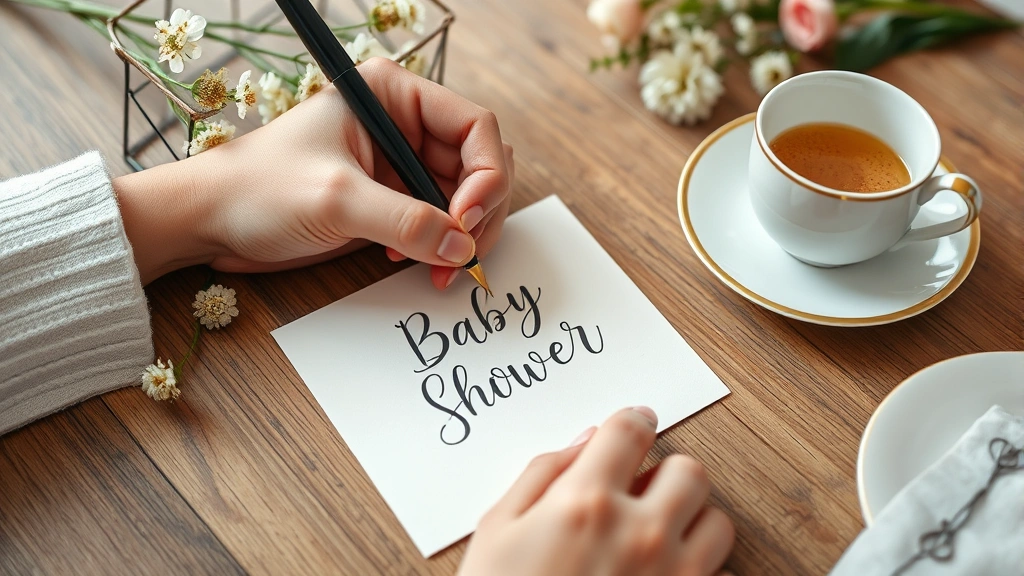
Handwritten Messages: These feel more personal and permanent. They require more effort, which parents recognize and appreciate. Handwritten messages become part of a physical keepsake—a card they might display or keep in a memory box. The imperfections of handwriting actually enhance authenticity.
Handwritten works best when:
- You’re attending the shower in person
- You want to create a lasting, tangible keepsake
- Your relationship warrants the extra effort
- You’re sharing something deeply personal or emotional
Digital Messages: Email, text, or social media messages work well for more casual relationships or when circumstances prevent handwritten notes. They’re immediate, accessible, and appropriate for colleagues or distant connections. Digital messages can also be easier when you want to include photos or more substantial content.
Digital works best when:
- You’re unable to attend in person
- Your relationship is primarily digital or professional
- You want to share a photo, video, or multimedia content
- Timing is urgent or you’re responding to a last-minute shower
Regardless of medium, the authenticity of your words matters far more than the format they arrive in.
If you’re attending the shower and want to offer physical support alongside your words, exploring options like best baby shower gifts can help you choose something meaningful to accompany your heartfelt message.
Frequently Asked Questions
How long should a baby shower message be?
There’s no rigid word count requirement. A heartfelt message can be three sentences or three paragraphs—what matters is that it feels complete and genuine. If you’re using a card, aim for enough to fill the space without feeling cramped or overwhelming. Quality matters infinitely more than quantity. A short, sincere message beats a long, generic one every time.
What if I don’t know the baby’s gender or name?
This is perfectly fine. Many showers happen before names are announced or when parents prefer gender-neutral celebrations. You can simply refer to “your baby” or “your little one” without any awkwardness. Avoid making assumptions about gender or pushing for information they’re not sharing.
Is it appropriate to mention challenges of parenthood?
Yes, but with care. Acknowledging that parenthood includes difficult moments alongside joyful ones feels realistic and supportive. However, frame it as “I know you’ll navigate challenges with the same grace you bring to everything” rather than warnings or complaints. The focus should remain on their capability and your confidence in them.
Can I use a template or quote?
Absolutely, but personalize it. A beautiful quote paired with your own specific thoughts creates something more meaningful than the quote alone. If you’re using someone else’s words, make sure they align with your authentic voice and add your personal touch to make it feel genuinely from you.
What should I do if I’m attending the shower but also sending a written message?
This is lovely—doing both shows genuine thoughtfulness. Your in-person words can be warm and conversational, while your written message can be more reflective and lasting. They serve different purposes and both have value. Just avoid repeating the exact same sentiments word-for-word in both instances.
How do I write a message if the pregnancy was unexpected or complicated?
Focus on the present and future rather than the past. Acknowledge their strength and resilience if appropriate, and emphasize your excitement about their family growing. You don’t need to reference the circumstances unless they’re something the parents themselves have openly discussed and would appreciate acknowledgment of.
Is it okay to ask about their parenting philosophy or plans in my message?
Better to save those conversations for after the baby arrives or in separate communication. A shower message should celebrate and support rather than open dialogue about parenting approaches. Save the deeper conversations for moments when you can have back-and-forth discussion.
What if I’m struggling with infertility or loss while attending this shower?
Your feelings are valid and important. You can still attend and write a supportive message while honoring your own emotions. Keep your message genuine but brief—you don’t need to share your personal struggles in a shower message. Take care of yourself, and consider having a separate conversation with the parents if you have an established relationship where that feels appropriate.
Should my message reference the baby shower decorations or theme?
Only if it feels natural. If the theme is particularly meaningful or the parents have put significant thought into it, a brief acknowledgment can be nice. However, the focus should remain on them and their baby, not the party logistics. A simple “What a beautiful celebration” works if you want to reference it at all.
Can I include a special request or offer of help in my message?
Yes—this can actually be one of the most meaningful additions. Offering specific help (“I’d love to bring meals the first two weeks” or “Count on me for midnight cuddle sessions when you need rest”) transforms your message from celebratory to actively supportive. Make sure your offer is genuine and something you’ll follow through on.
For more comprehensive guidance on crafting the perfect message, you might explore resources about baby shower messages that provide additional examples and approaches. Additionally, understanding the broader context of shower etiquette, such as baby shower decorations and baby shower guest outfits, can help you feel more confident attending and participating in the full shower experience.
Final Thoughts on Writing Meaningful Baby Shower Messages
The perfect baby shower message doesn’t exist—but your message can be perfect for the specific people you’re writing to. Stop worrying about sounding eloquent or impressive. Instead, focus on being genuine, specific, and supportive. Think about what you actually admire in these parents-to-be, what you genuinely believe about their capacity for parenthood, and what you’re excited to witness.
Your words, written with care and authenticity, become part of the memory they’ll carry forward. Years from now, when they’re reading through cards or reminiscing about the shower, your message will remind them of the love and support surrounding them as they welcomed their child into the world.
According to the CDC’s maternal and infant health resources, strong social support networks significantly impact parental wellbeing and child development outcomes. Your thoughtful message contributes to that vital support network in a meaningful way.
Write from the heart. Be specific about what makes these parents special. Offer genuine encouragement. And trust that your authentic words—however simple—will matter far more than you realize. That’s what makes a baby shower message truly heartfelt.