Baby Banana Pancakes: A Nutritionist’s Guide to Healthy First Foods
Introducing solid foods to your baby is an exciting milestone that marks the beginning of their culinary journey. Among the most popular first foods, banana pancakes stand out as a nutritious, delicious, and easy-to-prepare option that parents across the world trust. These simple yet wholesome pancakes combine the natural sweetness of bananas with the protein and carbohydrates of eggs and grains, creating a balanced meal that supports your baby’s growth and development.
As a nutritionist and parent myself, I’ve seen firsthand how baby banana pancakes can become a family favorite while meeting your little one’s nutritional needs. Whether you’re starting your baby on solids or looking to expand their menu, this comprehensive guide will walk you through everything you need to know about preparing, serving, and optimizing these pancakes for your baby’s health.
Before diving into recipes and preparation methods, it’s worth noting that establishing healthy eating habits early sets the foundation for lifelong nutrition. If you’re new to parenting and want broader guidance, our comprehensive parenting advice guide covers many aspects of infant care and development.
Table of Contents
- Nutritional Benefits of Baby Banana Pancakes
- When Baby is Ready for Pancakes
- Simple Baby Banana Pancake Recipe
- Delicious Variations and Add-Ins
- Safe Serving and Portion Guidelines
- Storage and Make-Ahead Tips
- Frequently Asked Questions
Nutritional Benefits of Baby Banana Pancakes
Baby banana pancakes are nutritional powerhouses disguised as a treat. Bananas provide essential potassium, which supports heart function and muscle development in growing infants. They’re also rich in vitamin B6, crucial for brain development, and contain natural pectin, a soluble fiber that aids digestion. The soft texture of bananas makes them ideal for babies transitioning to more textured foods.
Key nutritional components:
- Carbohydrates: Quick energy for active babies and toddlers
- Protein: From eggs, supporting muscle and tissue growth
- Healthy fats: Essential for brain and nervous system development
- Fiber: Promotes healthy digestion and prevents constipation
- Vitamins and minerals: Including vitamin C, potassium, and manganese
According to the American Academy of Pediatrics, introducing varied foods early helps develop diverse palates and reduces picky eating later. Bananas are particularly valuable because they’re rarely allergenic and gentle on developing digestive systems.
When combined with whole grains and eggs, banana pancakes become a complete breakfast that sustains your baby through morning activities. The natural sweetness means you can avoid added sugars entirely, supporting healthy taste preferences from the start. This is especially important as CDC guidelines recommend limiting added sugars for infants and young children.
When Baby is Ready for Pancakes
Not all babies are ready for pancakes at the same age, and it’s crucial to recognize your individual baby’s developmental readiness. Most babies can begin exploring soft foods around 6 months old, but pancakes specifically are better introduced around 8-10 months when babies have developed better chewing and swallowing skills.
Signs your baby is ready:
- Sits upright with minimal support
- Has lost the tongue-thrust reflex (pushing food out with tongue)
- Shows interest in foods others are eating
- Can rake food into their mouth with fingers
- Has developed a pincer grasp (thumb and finger)
Before introducing banana pancakes, ensure your baby has already been introduced to bananas and eggs individually without allergic reactions. If there’s a family history of allergies, consult your pediatrician. Our guide on when babies start cooing covers developmental milestones, though pancake readiness comes later in the developmental timeline.
Always supervise eating closely and have your baby sit upright during meals. Never leave them unattended with food, and ensure they’re well-rested and not overly tired, as fatigue increases choking risk.
Simple Baby Banana Pancake Recipe
Ingredients:
- 1 ripe banana (mashed)
- 1 egg
- 1/4 cup whole wheat flour (or oat flour for gluten-free)
- 1/4 teaspoon vanilla extract (optional)
- Pinch of cinnamon (optional)
- Water or breast milk (1-2 tablespoons as needed)
Instructions:
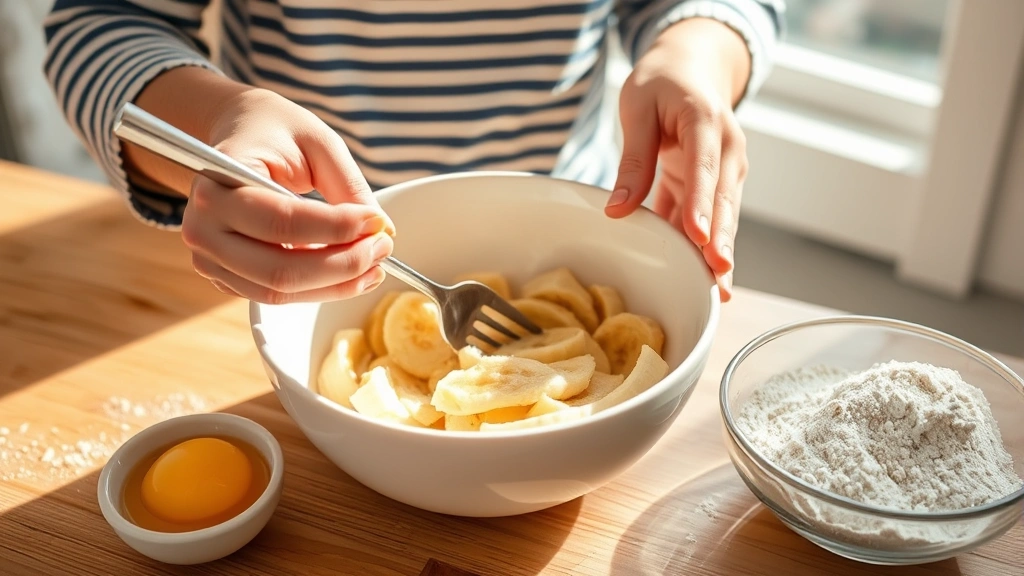
- Peel and mash banana thoroughly in a bowl until completely smooth with no lumps
- Crack egg into bowl and whisk together with banana until well combined
- Add flour gradually, stirring to combine. Batter should be thick but pourable
- If too thick, add water or breast milk one tablespoon at a time
- Heat non-stick skillet or griddle over medium-low heat. Lightly oil with coconut oil
- Pour small amounts of batter (2-3 inch pancakes work best for babies)
- Cook 2-3 minutes until edges look set, then gently flip
- Cook other side 1-2 minutes until golden. Pancakes should be soft, not crispy
- Cool slightly before serving to baby
Yield: Makes approximately 8-10 small pancakes
This recipe is intentionally simple because babies don’t need added sweeteners, salt, or complex flavors. The banana provides all the sweetness needed, and the egg contributes protein without requiring additional ingredients. The whole wheat flour adds fiber and nutrients compared to white flour.
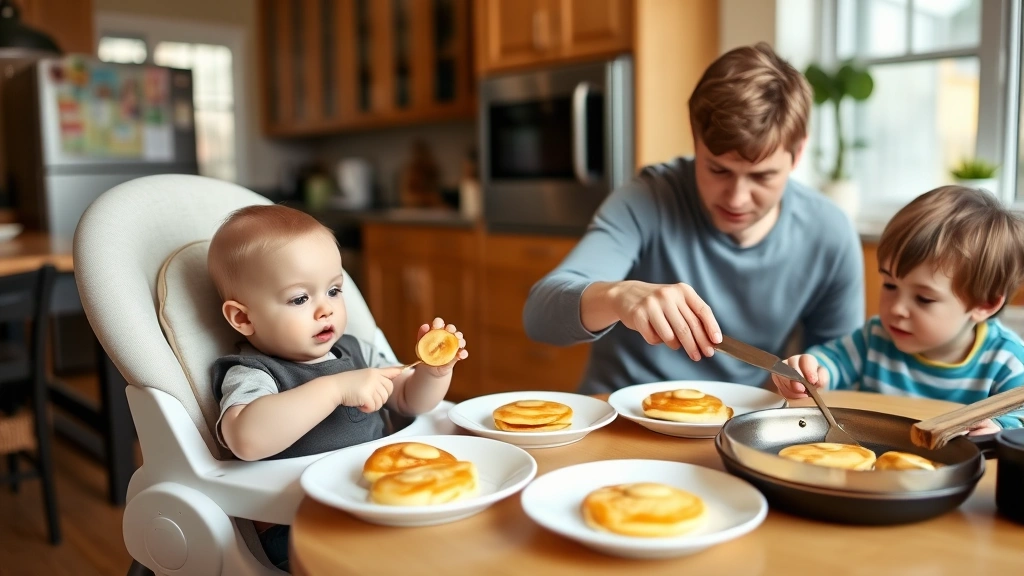
For parents juggling multiple responsibilities, batch cooking is a game-changer. Make a double or triple batch and freeze extras for quick breakfasts. Our baby bags guide includes tips for portable meals, and pancakes pack wonderfully for on-the-go eating during outings.
Delicious Variations and Add-Ins
Once your baby masters the basic recipe, you can introduce variations to expand their palate and nutritional intake. Each variation maintains the simplicity and safety that makes banana pancakes ideal for babies while adding new flavors and nutrients.
Protein-boosted version: Add 2 tablespoons plain Greek yogurt to the base recipe for extra protein and calcium. The yogurt makes pancakes slightly fluffier and tangier.
Berry banana pancakes: Mash 1/4 cup blueberries or raspberries into the batter. Berries add antioxidants and natural tartness that balances banana sweetness. Introduce berries individually first if not previously tried.
Apple cinnamon version: Replace half the banana with finely grated apple. Cinnamon adds warmth and aids digestion. Use only a small pinch for babies under 12 months.
Peanut butter pancakes: Mix 1 tablespoon natural peanut butter into batter for older babies (12+ months) without nut allergies. Peanut introduction guidelines have evolved; consult your pediatrician about early introduction benefits.
Sweet potato blend: Combine 1/2 banana with 1/4 cup cooked, mashed sweet potato. Sweet potatoes provide beta-carotene and slightly different flavor profile that many babies enjoy.
Oat flour version: Replace wheat flour with oat flour for a milder taste and gluten-free option. Oats are naturally soothing and rarely cause allergies.
When introducing new variations, follow the three-day rule: introduce one new ingredient every three days and watch for allergic reactions. This helps identify which foods might cause issues if your baby has a reaction.
Safe Serving and Portion Guidelines
Proper serving techniques are essential for preventing choking and ensuring your baby enjoys pancakes safely. How you present and serve these pancakes matters as much as how you prepare them.
Portion sizes by age:
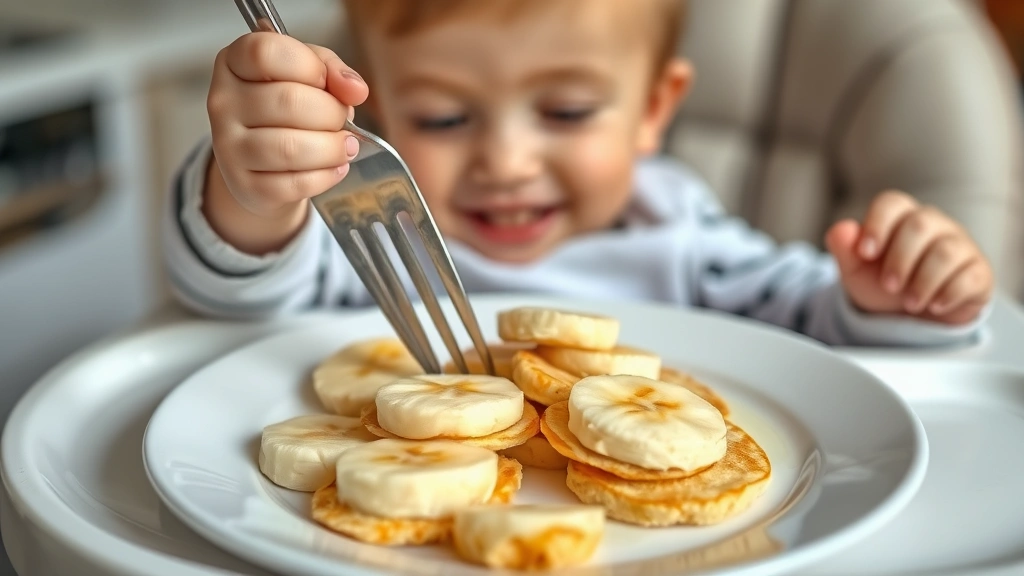
- 8-10 months: 1-2 small pancakes, cut into quarters or eighths
- 10-12 months: 2-3 small pancakes, cut into quarters
- 12+ months: 2-4 small pancakes, cut into appropriate sizes
Safety preparation:
- Always cut pancakes into small pieces appropriate for your baby’s chewing ability
- Ensure pancakes are soft enough to mash between your fingers before serving
- Remove any crispy edges that could be choking hazards
- Serve at room temperature or slightly warm, never hot
- Supervise eating at all times; never use pancakes as a distraction or entertainment
- Avoid adding honey to babies under 12 months due to botulism risk
Babies have a natural gag reflex that helps prevent choking, but this doesn’t eliminate risk. Always ensure your baby sits upright in a high chair or appropriate seating, never in a car seat or stroller while eating. The Safe Kids organization provides additional choking prevention resources for parents.
If your baby shows signs of choking (inability to cry or cough, difficulty breathing), learn infant CPR. Many pediatric offices offer classes, and online resources provide visual instruction in emergency techniques.
Storage and Make-Ahead Tips
One of the greatest advantages of banana pancakes is how well they store, making them perfect for busy parents. Strategic storage extends the usefulness of a single batch throughout the week.
Refrigerator storage: Place cooled pancakes in an airtight container with parchment paper between layers. They’ll keep 3-4 days. Reheat gently in a low oven or microwave before serving, ensuring even warming.
Freezer storage: Flash freeze pancakes on a baking sheet for 2 hours, then transfer to freezer bags. They’ll keep up to 3 months. This method prevents sticking and allows you to remove only what you need. Thaw at room temperature or reheat from frozen in the oven at 300°F for 10 minutes.
Make-ahead strategy: Dedicate one afternoon to making a large batch. Cool completely, freeze, and you’ll have quick breakfasts ready for weeks. On busy mornings, simply reheat and serve—no mixing, cooking, or cleanup required.
Meal prep tips:
- Make pancakes in smaller batches if you notice they dry out before finishing
- Label frozen containers with date and contents
- Keep some in the fridge for the next 2-3 days and freeze the rest
- Pair with other foods like yogurt, fresh fruit, or avocado for complete meals
For parents managing multiple children with different food preferences, our Parent Path Daily Blog regularly features meal planning strategies and time-saving cooking tips that apply across age groups.
Frequently Asked Questions
Can I make banana pancakes without eggs?
Yes! Eggs primarily provide protein and help bind ingredients. Substitute with 2 tablespoons unsweetened applesauce or mashed avocado. The texture will be slightly different but still soft and suitable for babies. You might need to reduce added liquid slightly with applesauce as it contains more moisture.
Are banana pancakes safe for babies with banana allergies?
Absolutely not—banana allergies, though rare, are serious. If your baby shows any signs of allergy to bananas (rash, swelling, vomiting, diarrhea), avoid this recipe entirely. Work with your pediatrician to identify safe alternatives. Other soft fruits like pears, peaches, or apples can create similar pancakes.
Can I add sugar or syrup to banana pancakes?
Bananas provide ample natural sweetness, making added sugars unnecessary and undesirable for babies. The World Health Organization recommends avoiding added sugars in infant foods. If your baby finds the pancakes bland, introduce them to more varied flavors rather than adding sweeteners.
How do I know if my baby is ready to move from purees to pancakes?
Watch for developmental milestones: sitting independently, showing interest in grabbing food, and attempting to self-feed. These typically appear around 8-10 months. Your pediatrician can assess readiness during check-ups and address individual concerns.
Can older toddlers and preschoolers eat these pancakes?
Definitely! This recipe works for the entire family. Older children can enjoy whole pancakes without cutting, and you can add toppings like plain yogurt, fresh fruit, or nut butters (for those without allergies). This is a wonderful way to ensure everyone eats similar foods at family meals.
What if my baby doesn’t like banana pancakes?
Not all babies enjoy every food, and that’s normal. Try a different variation—perhaps adding berries or using oat flour changes the flavor enough to appeal to your baby. Alternatively, move on to other soft foods and revisit banana pancakes in a few weeks. Taste preferences develop over time, and repeated exposure helps.
Are store-bought pancakes acceptable alternatives?
Homemade pancakes are preferable because you control ingredients and avoid additives, preservatives, and excess sodium. However, if time is extremely limited, some organic, unsweetened store-bought options exist. Always check labels for added sugars and ingredients, and serve in appropriate portions with supervision.
Baby banana pancakes represent more than just a convenient meal—they’re an investment in your child’s lifelong relationship with food. By introducing whole, recognizable ingredients early and avoiding processed foods and added sugars, you’re teaching your baby that food is nourishing, delicious, and something to be enjoyed mindfully. As your little one grows, these foundational eating experiences shape their preferences and health habits.
Remember that every baby develops at their own pace, and what works for one child might not work for another. Trust your instincts, observe your baby’s cues, and don’t hesitate to consult your pediatrician with questions about nutrition or development. For broader parenting support and strategies, explore our tips for parents guide, which covers various developmental stages and parenting approaches.
Happy cooking, and enjoy watching your baby discover the joy of banana pancakes!