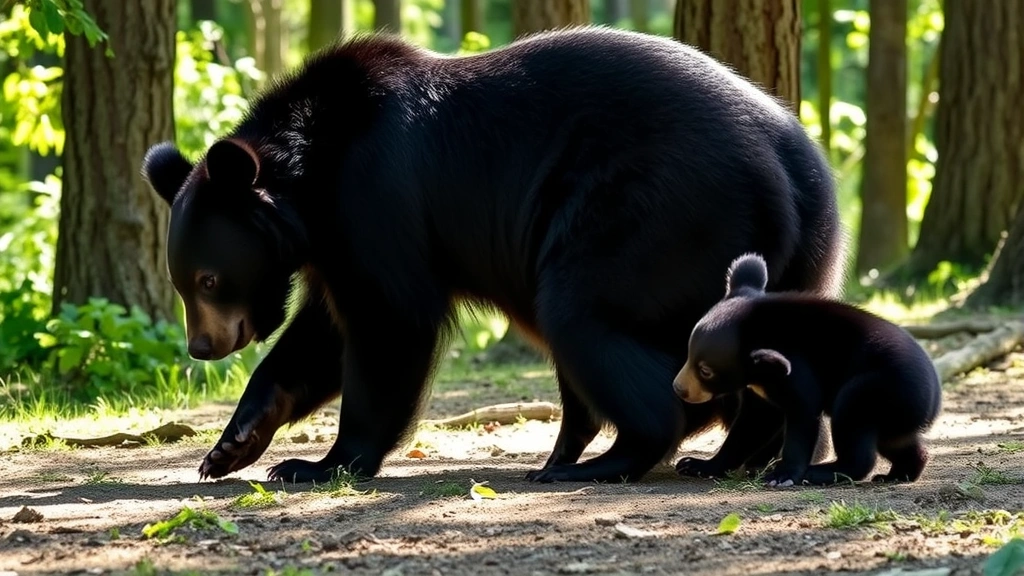
Baby Black Bear Behavior: Wildlife Expert Insights
Understanding wildlife behavior fascinates many families, especially those living near natural habitats or planning outdoor adventures. While most parents focus on raising their own cubs, learning about baby black bears—called cubs—offers surprising parallels to child development and family dynamics in the animal kingdom. This guide explores the behaviors, development stages, and survival strategies of baby black bears through the lens of wildlife experts, providing insights that might inspire your own parenting approach.
Baby black bears demonstrate remarkable intelligence, social learning, and maternal bonding that captivates researchers and nature enthusiasts alike. From their first moments in winter dens to their independence in the wild, these young animals navigate complex social hierarchies and survival challenges. Whether you’re a wildlife enthusiast, educator, or simply curious about nature, understanding baby black bear behavior enriches your appreciation for animal development and family structures.
Birth and Early Development Stages
Baby black bears are born during winter hibernation, typically between December and January, in specially prepared dens. A mother bear—called a sow—gives birth to one to four cubs, though two or three is most common. At birth, cubs are remarkably tiny, weighing only 8-16 ounces, roughly the size of a guinea pig. They are born blind, deaf, and nearly hairless, completely dependent on their mother for warmth and nutrition.
The first weeks of a cub’s life are spent nursing in the den while the mother hibernates lightly. Cubs remain in the den until spring, typically March or April, when they emerge weighing 2-3 pounds. This protected environment mirrors the importance of safe, nurturing spaces for developing young—a concept central to essential parenting advice for healthy children. The den provides controlled temperature, protection from predators, and exclusive access to mother’s milk, which is exceptionally rich in fat and nutrients.
Cubs develop rapidly during their first year. By summer, they’ve grown to 10-15 pounds and are actively exploring their environment. Their senses sharpen dramatically—vision improves, hearing becomes acute, and their sense of smell develops into one of nature’s most sophisticated olfactory systems. This sensory development parallels human infant development, where babies gradually learn to perceive and interact with their world.

Maternal Care and Family Bonds
Black bear mothers are intensely devoted to their cubs, exhibiting protective behaviors that rival any mammal. A sow remains vigilant against threats, including other bears, and will aggressively defend her cubs if she perceives danger. This fierce protectiveness lasts throughout the den period and extends well into the cubs’ second year. Mother bears teach their cubs through example, demonstration, and correction—a teaching methodology that experts recognize as highly effective.
The mother-cub relationship involves constant communication. Cubs vocalize frequently—chirping, bleating, and crying—to signal hunger, distress, or location. The mother responds to these calls and uses her own vocalizations to guide her cubs, call them to safety, or establish boundaries. This two-way communication system establishes the foundation for the cubs’ social development and learning capacity.
Cubs nurse for approximately 18 months, though they begin supplementing mother’s milk with solid food around 5-6 months of age. During this extended nursing period, the mother bear invests enormous energy in her offspring. She teaches them where to find food, how to climb trees for safety, and which areas to avoid. This extended parental investment demonstrates the importance of positive parenting techniques and strong parent-child relationships across species.
Research from wildlife biologists shows that cubs separated from their mothers prematurely struggle significantly in the wild. They lack essential survival knowledge, show behavioral problems, and have lower survival rates. This emphasizes that maternal presence and teaching cannot be replaced by instinct alone—learned behavior is critical for success.
Learning Survival Skills Through Play and Observation
Baby black bears learn primarily through play and observation of their mother. Cubs engage in rough-and-tumble play with siblings, which serves multiple developmental purposes: it builds physical strength and coordination, establishes social hierarchies, and provides safe practice for behaviors they’ll need as adults. Play-fighting between littermates teaches them about force, boundaries, and conflict resolution in a low-stakes environment.
As cubs mature, they follow their mother on foraging expeditions, learning to identify edible plants, insects, and other food sources. She demonstrates how to flip logs and rocks to find grubs and ants, how to strip bark from trees, and how to catch fish in streams. Cubs watch intently, then practice these skills with guidance and correction from their mother. This observational learning is remarkably efficient—cubs quickly master complex foraging techniques by watching and imitating.
Tree climbing is another critical skill that mother bears teach. Cubs learn to climb trees for safety, to escape danger, and to access food sources like tree nuts. Young cubs are naturally adept climbers, but they refine their technique through practice and maternal guidance. A mother bear will demonstrate climbing to her cubs and reward their attempts with her presence and protection.
According to research published by the American Academy of Pediatrics, observational learning and guided practice are fundamental to child development as well. Cubs and human children both benefit from safe opportunities to practice new skills with parental supervision and encouragement.
Social Behavior and Sibling Dynamics
Littermate cubs develop complex social relationships characterized by play, competition, and cooperation. Siblings engage in frequent play-wrestling, which establishes dominance hierarchies and teaches important social lessons. The larger or more assertive cub typically becomes dominant, but this hierarchy remains relatively flexible during the cubs’ first year. As they mature, dominance becomes more established, influencing feeding order and resource access.
Competition among littermates is natural and healthy. Cubs compete for mother’s milk, for position during feeding, and for access to food resources. However, this competition rarely becomes violent because mother bears intervene to ensure all cubs receive adequate nutrition and care. She may position herself to allow weaker cubs access to milk or redirect more dominant cubs to allow siblings feeding time.
Despite competition, littermates also show cooperation and affiliation. Cubs huddle together for warmth, play together for entertainment and skill development, and often remain within sight of each other during foraging expeditions. This balance between competition and cooperation teaches cubs to navigate complex social environments—a skill essential for their eventual integration into broader bear populations.
Interestingly, when cubs are weaned and begin their independence, littermates often separate gradually rather than abruptly. They may maintain proximity for weeks or months after their mother effectively stops nursing, gradually increasing their distance and independence. This slow transition allows cubs to test their survival skills while still having access to maternal support if needed.

The Journey to Independence and Dispersal
By 18-24 months of age, young bears are technically capable of surviving independently, though mother bears typically remain with their cubs into the second year. During the second hibernation, cubs den separately or remain in the den but rely less on mother’s milk. In spring, when the family emerges from the den, the mother bear gradually distances herself from her cubs, reducing active teaching and guidance.
This separation process is gradual and natural. The mother bear becomes less tolerant of the cubs’ proximity, may rebuff nursing attempts, and spends increasing time away from them. Cubs initially follow, but as their mother’s behavior shifts, they learn to forage independently and establish their own territories. By late summer or early fall of their second year, most cubs have separated from their mother and begun their independent lives.
Young bears face significant challenges during this transition. They must establish territories, find adequate food sources, and avoid confrontations with larger, established bears. Mortality rates are highest during the first independent year, as inexperienced bears struggle with survival tasks and sometimes conflict with humans. Bears that had attentive, skilled mothers show better survival rates, demonstrating the lasting impact of quality parental teaching.
The dispersal process varies by sex. Young females often establish territories close to their mother’s range, while young males typically disperse much farther, sometimes traveling 50+ miles to find available territory. This dispersal pattern reduces inbreeding and distributes the population across suitable habitat.
Understanding these developmental stages provides valuable perspective on how teaching, protection, and gradual independence support successful maturation in the animal kingdom. Parents interested in parenting insights and family development may find parallels in these natural processes.
Frequently Asked Questions
How long do baby black bears stay with their mother?
Baby black bears typically remain with their mother for 18-24 months. They stay in the den through their first winter and emerge in spring. Cubs nurse for approximately 18 months and gradually become independent during their second year, with most cubs separating from their mother by late summer or early fall of their second year of life.
What do baby black bears eat?
Newborn cubs nurse exclusively on mother’s milk for 5-6 months. As they age, cubs begin eating solid food including berries, insects, grubs, nuts, fish, and vegetation. By their second year, cubs eat primarily solid food though they continue nursing. The exact diet depends on seasonal availability and regional food sources where they live.
Are baby black bears dangerous?
Baby black bears themselves are not inherently dangerous, but their mothers are extremely protective and will attack perceived threats. It’s critically important never to approach baby black bears in the wild, as the mother bear is likely nearby and will defend her cubs aggressively. Keep a safe distance of at least 50 yards from any wild bear.
How much do baby black bears weigh at birth?
Newborn black bear cubs weigh only 8-16 ounces at birth, roughly the size of a guinea pig. They are born blind, deaf, and nearly hairless. By the time they emerge from the den in spring (around 3-4 months old), they typically weigh 2-3 pounds.
Can baby black bears climb trees?
Yes, baby black bears are natural climbers and can climb trees from a very young age. Cubs use trees for safety, to escape danger, and to access food sources. Mother bears teach cubs to climb and reward their climbing attempts. Adult black bears retain climbing ability, though large adult males may have difficulty climbing very thin branches.
What threats do baby black bears face?
Baby black bears face threats from predators (primarily other bears and occasionally cougars), human activity, vehicle strikes, and habitat loss. Cubs separated from their mothers have significantly lower survival rates. The primary threat to wild bear populations is habitat destruction and human-wildlife conflict.
How do baby black bears communicate?
Baby black bears communicate through vocalizations including chirps, bleats, and cries. They also use body language, scent marking, and physical contact. Cubs vocalize to signal hunger, distress, or location to their mother. Mother bears respond with vocalizations and physical guidance, creating an ongoing communication system essential for cub development and safety.
When do baby black bears open their eyes and ears?
Baby black bears are born with their eyes and ears closed. Their eyes typically open around 4-6 weeks of age, while their ears open shortly after. Hearing and vision develop gradually during the first months of life, with significant improvement by the time cubs emerge from the den in spring.
Additional Resources: For more information on wildlife behavior and development, consult resources like The Nature Conservancy, state wildlife agencies, and peer-reviewed wildlife research journals. Parents seeking guidance on child development may also explore comprehensive parenting guides and pediatrician resources for human-specific developmental information.