Why Are Baby Bunnies So Cute? The Science Behind Nature’s Irresistible Appeal
There’s something almost magnetic about a baby bunny. Those oversized ears, the tiny pink nose, the soft fur—they seem engineered by nature itself to make us go absolutely weak in the knees. But here’s the thing: that overwhelming urge to cuddle a fluffy bunny isn’t just about aesthetics. There’s actual science happening behind those big, dark eyes, and understanding it reveals something fascinating about how our brains are wired to respond to cuteness itself.
If you’ve ever found yourself scrolling through endless photos of baby rabbits online or felt an irresistible urge to visit a petting zoo just to hold one, you’re not alone. This isn’t a quirk or a personality flaw—it’s a deeply rooted biological response that humans share across cultures and generations. The cuteness factor of baby bunnies taps into something primal within us, something that connects to our own parenting instincts and our evolutionary history.
Let’s dig into why these adorable creatures have such a powerful grip on our hearts and what that tells us about ourselves as parents and humans.
The Science of Cuteness: Baby Schema Explained
In the 1940s, Austrian ethologist Konrad Lorenz developed a concept that would forever change how we understand our attraction to baby animals. He called it “baby schema” or “kindchenschema”—a set of physical characteristics that triggers an instinctive caregiving response in adults. When Lorenz studied this phenomenon, he identified specific features: a large head relative to body size, big eyes positioned low on the face, a rounded body, and soft textures.
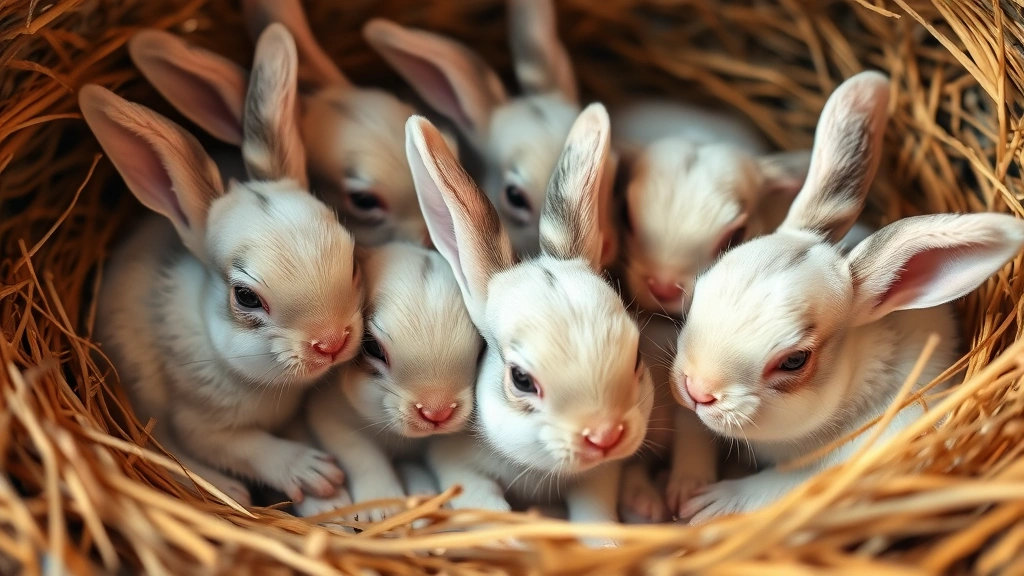
A baby bunny is essentially a walking, hopping embodiment of every single one of these characteristics. Their heads are disproportionately large compared to their tiny bodies. Their eyes are enormous and positioned prominently on their faces. Their bodies are round and compact. Their fur is impossibly soft. From a biological standpoint, they’re almost too perfect at triggering our cuteness receptors.
What makes this even more interesting is that this response isn’t learned—it’s hardwired. Neuroimaging studies have shown that when people view images of baby animals with pronounced baby schema features, specific regions of the brain light up, particularly areas associated with reward, motivation, and caregiving. It’s not a choice we’re making consciously; our brains are literally rewarding us for paying attention to cute things.
Physical Features That Trigger Our Nurturing Response
Let’s break down exactly what makes a baby bunny so visually compelling. Every feature works together in a symphony of cuteness that’s almost impossible to resist.
The Ears: Baby bunnies have ears that seem comically oversized relative to their heads. These aren’t just cute—they serve a practical purpose for thermoregulation, helping young rabbits shed excess heat. But for us, those floppy or upright ears create an impression of vulnerability and innocence. They make the bunny look perpetually alert yet helpless, a combination that activates our protective instincts.
The Eyes: Those big, dark, glossy eyes are positioned to look directly at us, creating what researchers call the “baby-face overgeneralization effect.” Our brains interpret forward-facing eyes as a sign of friendliness and trustworthiness. Baby bunnies’ eyes are proportionally enormous—sometimes taking up a significant portion of their face—which amplifies this effect dramatically.
The Size: A newborn bunny weighs only about an ounce or two. This extreme smallness triggers something primal in us. Throughout human evolution, we’ve been conditioned to protect things that are small and vulnerable. A baby bunny’s diminutive size automatically signals “needs protection” to our brains.
The Texture: Run your fingers across a baby bunny’s fur and you’re experiencing one of nature’s most tactilely pleasant experiences. That softness isn’t accidental—it’s part of the design. Soft textures activate the same reward pathways in our brains as sweet tastes or pleasant smells. We literally feel rewarded for touching a baby bunny.
The Movement: Baby bunnies don’t move with aggressive or threatening gestures. Their hopping is clumsy and endearing. Their movements are slow and deliberate. This non-threatening quality of motion is another crucial component of baby schema. Anything that moves slowly and without sudden jerks reads as “safe” and “friendly” to our brains.

How Baby Bunnies Compare to Other Young Animals
Baby bunnies aren’t alone in their cuteness appeal, of course. If you’ve ever seen a baby squirrel with its fluffy tail and tiny paws, or an adorable baby beaver with its compact body, you know that nature has blessed many young animals with serious cuteness credentials. Even a baby elephant with its oversized ears and clumsy gait triggers similar responses in us.
But baby bunnies have something special. Research comparing human responses to different baby animals shows that rabbits consistently rank among the highest in perceived cuteness. Part of this is cultural—in Western societies, rabbits are strongly associated with gentleness and innocence. But there’s also a biological component. Baby bunnies hit every marker of baby schema more intensely than many other animals. Their proportions are almost exaggerated in how perfectly they align with cuteness triggers.
A baby monkey might be cute, but it’s also slightly unsettling to some people because it’s too similar to human babies—it triggers what researchers call the “uncanny valley” effect in some observers. A baby bunny, by contrast, is cute without being uncanny. It’s cute without ambiguity.
The Evolutionary Purpose Behind Cuteness
Here’s where things get really interesting: cuteness isn’t just about aesthetics or random design. It serves a critical evolutionary function, particularly for species with extended periods of dependency during infancy.
Baby animals that are cute are more likely to survive because they’re more likely to be cared for. When a baby bunny triggers our cuteness response, we’re more inclined to protect it, feed it, and nurture it. For wild rabbits, this means mothers are more motivated to invest energy in caring for their young. For domesticated rabbits, it means humans are more likely to keep them alive and healthy.
This creates an evolutionary feedback loop. Rabbits with more pronounced baby schema features got cared for better and survived more frequently, passing those genes along to their offspring. Over generations, this resulted in baby rabbits becoming increasingly cute—because cuteness equals survival.
From an anthropological perspective, the same principle applied to humans throughout our evolutionary history. Babies with features that triggered strong caregiving responses in adults—big eyes, round faces, small size—were more likely to be protected and nurtured by their communities. Those who were less cute faced a harder road. Over hundreds of thousands of years, this shaped human infants to become increasingly cute as well.
Understanding this helps explain why we react so strongly to baby bunnies. We’re not being irrational or overly sentimental. We’re responding to millions of years of evolutionary programming that tells us: This thing is vulnerable and needs protection. Take care of it.
Why Parents Respond So Strongly to Baby Animals
Parents and people who want to become parents often show the strongest responses to baby animals, including baby bunnies. This isn’t coincidental. The same neural pathways that activate when you see your own baby light up when you see a baby bunny. If you’re thinking about parenting or already parenting, your brain is essentially saying, “This looks like something that needs nurturing. I should nurture it.”
This is why creating a baby book full of memories often includes photos of cute animals alongside photos of your own children. We’re unconsciously recognizing that both trigger similar emotional responses.
For parents specifically, exposure to baby animals can actually be beneficial. Research shows that viewing images of cute animals can temporarily reduce stress and anxiety. It can increase feelings of patience and nurturing. In other words, spending time with or looking at baby bunnies can actually make you a calmer, more patient parent. That’s not just feel-good pseudoscience—that’s measurable neurobiology.
The Psychology of Bonding Through Cuteness
The cuteness of baby bunnies creates a bonding mechanism that goes beyond simple aesthetics. When we interact with something cute, we’re engaging in what psychologists call “approach behavior.” We move toward it, we want to touch it, we want to spend time with it. This approach behavior is the foundation of all bonding.
For humans, this bonding mechanism evolved primarily to ensure parent-child attachment. Babies are cute so parents will bond with them. But this same mechanism can be triggered by baby animals. When a child interacts with a baby bunny, they’re practicing the same bonding skills they’ll eventually use in human relationships. They’re learning empathy, gentleness, and the rewards of caregiving.
This is why many child development experts recommend that children have positive interactions with animals during their developmental years. Not only does it teach them responsibility, but it also activates and strengthens the neural pathways associated with empathy and nurturing—skills that will serve them well throughout their lives.
The cuteness of baby bunnies isn’t a bug in our psychological system; it’s a feature. It’s a tool that nature uses to teach us how to care for vulnerable things, to bond with others, and to develop the emotional capacities that make us fully human.
Frequently Asked Questions
What is baby schema and why do baby bunnies have it?
Baby schema refers to a collection of physical characteristics—large head, big eyes, rounded body, soft texture—that trigger caregiving responses in adults. Baby bunnies possess all of these traits in pronounced ways, making them exceptionally cute. This isn’t accidental; it’s an evolutionary adaptation that increases the likelihood that adults will protect and care for young rabbits.
Is the cuteness response to baby bunnies universal across all cultures?
Research suggests that baby schema responses are largely universal across human cultures, though cultural factors do influence which specific animals we find most appealing. Baby bunnies are consistently rated as highly cute across diverse populations, though cultural associations with rabbits (such as their connection to Easter or folklore) can amplify this response in some cultures.
Why do baby bunnies have such large ears?
The large ears serve a thermoregulatory function—they help baby rabbits shed excess heat. However, from a cuteness perspective, those oversized ears also make baby bunnies look perpetually alert and vulnerable, which triggers our protective instincts. Nature has essentially engineered a feature that serves a practical purpose while also maximizing cuteness.
Can looking at cute baby animals actually reduce stress?
Yes. Neuroimaging studies have shown that viewing images of cute animals activates reward centers in the brain and can temporarily reduce cortisol levels (the stress hormone). This effect is particularly pronounced in people who are already inclined toward nurturing behaviors, such as parents or people who work in caregiving professions.
At what age do baby bunnies stop being considered cute?
As rabbits mature, they lose many of the baby schema characteristics. Their ears become proportionally smaller relative to their heads, their eyes become less prominent, and their bodies become less rounded. Most rabbits begin losing their peak cuteness factor around 8-12 weeks of age, though individual preferences vary.