
What Is a Baby Cardinal? Your Complete Identification Guide
There’s something genuinely magical about spotting a baby cardinal for the first time. Whether you’re an avid birdwatcher, a curious parent looking to teach your kids about wildlife, or simply someone who appreciates nature’s small wonders, these young birds deserve your attention. Unlike their brilliantly red adult counterparts, baby cardinals present a fascinating puzzle—they’re often overlooked, mistaken for entirely different species, or simply unrecognized in their early stages of development.
If you’ve ever wondered what a baby cardinal actually looks like, you’re not alone. Many people encounter these fledglings without realizing they’re observing one of North America’s most iconic bird species in its infancy. Understanding how to identify a baby cardinal enriches your outdoor experiences and opens up wonderful teaching opportunities for the entire family. Let’s dive into the details that make these young birds unique and help you spot them with confidence.
This guide walks you through everything you need to know about identifying baby cardinals, from their physical characteristics to their behavior patterns and the best times to observe them. Whether you’re setting up a backyard bird feeding station or planning nature walks with your children, this knowledge will transform how you see the birds around you.
Physical Characteristics of Baby Cardinals
Baby cardinals, scientifically known as Cardinalis cardinalis, emerge from their eggs as helpless nestlings covered in sparse, downy feathers. At this stage, they’re practically unrecognizable compared to the striking adult birds most people picture when they think of cardinals. These hatchlings are tiny, weighing less than a penny, with closed eyes and minimal feathering—they’re entirely dependent on their parents for survival.
The real transformation begins as these young birds develop. Within their first week, baby cardinals start to grow juvenile feathers, which gradually replace the natal down. What makes identifying them challenging is that their appearance varies dramatically depending on their age and development stage. A nestling looks nothing like a fledgling, which looks different still from a juvenile cardinal preparing for adulthood.
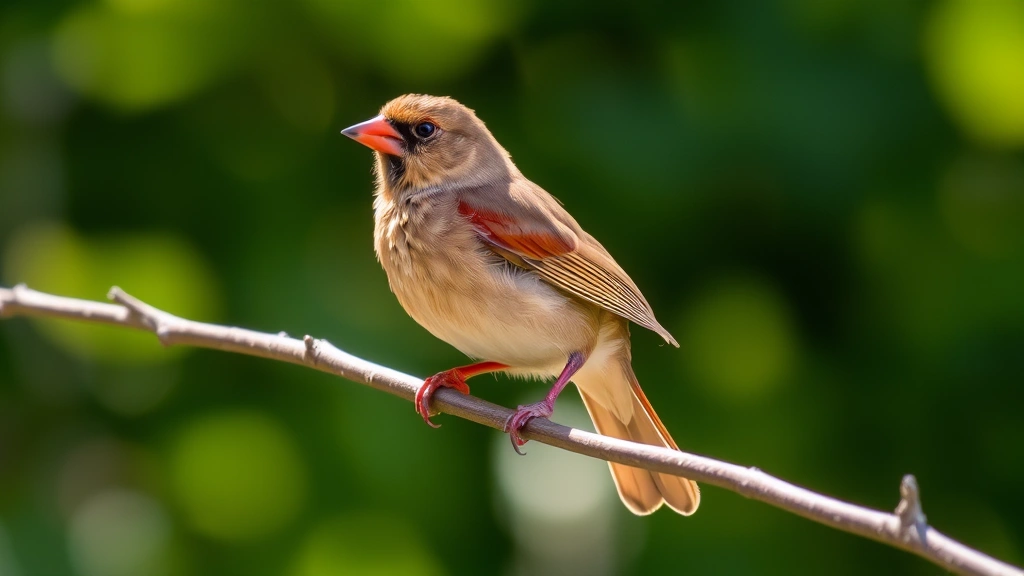
One of the most distinctive features of baby cardinals is their beak structure. Even at a young age, you’ll notice they possess the characteristic thick, conical bill that defines the cardinal family—perfectly adapted for cracking seeds. Their beak is typically grayish or pale at first, gradually darkening as they mature. This beak is one of your best identification tools, even when other features remain ambiguous.
Plumage and Color Development
Here’s where baby cardinals become truly interesting from an identification standpoint. Unlike their parents, young cardinals don’t sport the brilliant red plumage that makes adults so visually striking. Instead, baby cardinals display a much more subdued color palette dominated by browns, buffs, and tans with subtle reddish tinges, particularly on their wings and tail.
Female cardinals are naturally brown rather than red, and baby cardinals—regardless of sex—initially resemble the adult female coloring. This is actually nature’s clever camouflage strategy. The muted tones help young birds blend into their surroundings, providing protection from predators during their vulnerable development period. It’s worth noting that all baby birds face significant challenges during their early weeks, and cardinals are no exception.
The color development timeline matters significantly for identification. Nestlings are mostly bare or covered in fluffy down with hints of their eventual plumage colors beginning to show. Fledglings—birds that have just left the nest—display fuller juvenile plumage with noticeable brown and buff coloring. Young males won’t develop their full red plumage until they’re several months old, sometimes not until their first winter or even into their second year.
You might observe reddish patches on the wings and tail of juvenile cardinals, which can be your first hint that you’re watching a young cardinal rather than a completely different species. These reddish tinges intensify over time, eventually developing into the full red coloration adult males are famous for. Female cardinals maintain their brown coloring throughout their lives, making them easier to distinguish by gender once you understand this pattern.
Size and Growth Stages
Baby cardinals grow remarkably quickly, which affects how you’ll identify them at different stages. Hatchlings are minuscule—about the size of a jellybean—and completely vulnerable. By their second week, they’ve grown substantially, though they’re still confined to the nest. By the time they fledge (leave the nest for the first time), young cardinals are nearly adult-sized, though still noticeably smaller and lankier than fully mature birds.
Adult cardinals typically measure 8.5 to 9 inches in length, with males slightly larger than females. A recently fledged baby cardinal might be 7 to 8 inches long, with a more delicate frame and proportionally larger head compared to their body. This size difference is subtle but noticeable once you know what to look for. The wingspan of adult cardinals ranges from 9.8 to 12 inches, and young birds display proportionally similar measurements during their fledgling stage.
Understanding these size relationships helps distinguish baby cardinals from similar-looking species. Juvenile baby animals in the bird world often follow similar growth patterns, but cardinals’ specific proportions and beak shape help differentiate them. Young cardinals also develop their characteristic crest—that distinctive pointed crown of feathers—relatively early in their development, though it’s less pronounced than in adults.
Behavioral Traits and Habits
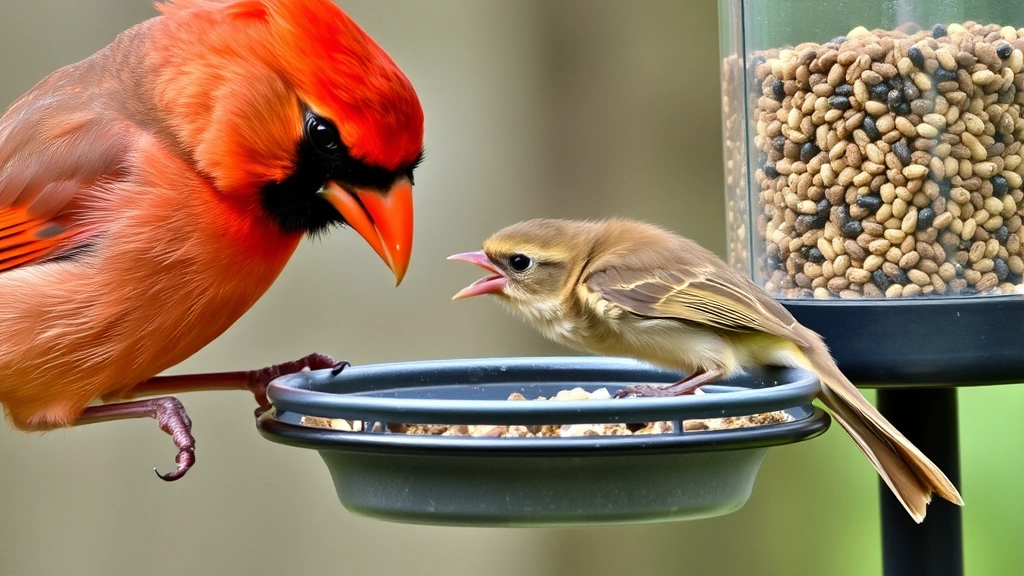
Behavior offers crucial clues for identifying baby cardinals, especially once they’ve fledged from the nest. Fledgling cardinals typically remain in family groups for several weeks after leaving the nest, staying within the territory established by their parents. You might observe a fledgling cardinal being fed by its parents—a sight that’s absolutely charming and highly informative for identification purposes.
Baby cardinals exhibit different vocalizations than adults. Instead of the clear, whistled “cheer-cheer-cheer” song adult males are famous for, young cardinals produce softer, less developed calls. These quieter vocalizations serve to keep the family group connected while remaining less conspicuous to predators. Learning to recognize these calls helps you identify baby cardinals even when visual confirmation is difficult.
The feeding behavior of fledgling cardinals is particularly distinctive. Unlike adults that are relatively self-sufficient at the feeding station, young cardinals often flutter their wings and beg persistently when an adult approaches, even if they’re capable of eating independently. This dependency behavior can last for several weeks after fledging. Parents continue provisioning their offspring during this critical transition period, teaching them foraging skills through example.
You’ll notice baby cardinals spend considerable time perching low in shrubs and dense vegetation, gradually becoming more confident and venturing into open areas. They’re naturally cautious and will retreat quickly into cover when startled. This behavior differs from the relatively bold demeanor of adult cardinals, which often visit feeders in broad daylight with less apparent concern.
Distinguishing Baby Cardinals from Other Species
The most common misidentification involves confusing baby cardinals with other songbirds, particularly young baby chickens in domestic settings or other wild species. However, several distinguishing features make accurate identification possible. The thick, conical beak is your most reliable identifier—no other common North American songbird possesses this distinctive bill shape.
Young female cardinals are sometimes confused with adult females of other species, particularly tanagers or finches. However, the cardinal’s heavier build, larger head, and that unmistakable beak separate them clearly. Additionally, the slight reddish tones on the wings and tail of young cardinals—even in their brownish juvenile plumage—provide helpful distinguishing marks absent in similar species.
Baby cardinals might occasionally be confused with young baby eagles or baby penguins in educational contexts, though in reality, these species inhabit entirely different environments and are vastly different in size and behavior. The confusion typically arises in educational materials or when discussing cute babies across different animal groups rather than in actual field identification scenarios.
One helpful comparison: if you’re observing a young bird with brown plumage, a thick seed-cracking bill, reddish tinges on the wings, and a slight crest forming on its head, you’re almost certainly looking at a baby cardinal. The combination of these features is quite specific to cardinals and rarely matches other species in North American habitats.
Habitat and Where to Find Them
Baby cardinals inhabit the same environments as their parents: brushy areas, dense shrubs, woodland edges, and suburban gardens with adequate vegetation. During nesting season (typically March through September in most regions), you’re most likely to encounter young cardinals in areas with suitable nesting cover. Cardinals prefer habitats with dense shrubs at least 4 to 6 feet tall, which provide protection for their cup-shaped nests.
Suburban yards with ornamental shrubs, native plantings, and natural areas adjacent to developed land offer excellent cardinal habitat. If your property includes dogwood, serviceberry, hawthorn, or similar shrubby plants, you’re likely to attract nesting cardinals. During fledging season—typically late May through July, depending on your location—young cardinals become more visible as they leave the nest and explore their territory.
Backyard bird feeders attract cardinals of all ages, particularly during fall and winter months. Baby cardinals that fledged earlier in the season may visit feeders with their parents, learning to forage independently. Offering appropriate foods like black oil sunflower seeds, safflower seeds, and nyjer seeds encourages cardinal families to visit regularly, providing excellent observation opportunities.
Understanding cardinal habitat preferences helps you predict where to look for young birds. Wetland edges, brushy fence lines, and areas with dense native vegetation all support cardinal populations. During early morning hours when birds are most active, you’ll have the best chance of spotting baby cardinals as they forage and explore with their parents.
Feeding and Diet Patterns
Baby cardinals transition from an entirely diet of regurgitated food provided by parents to independent foraging over several weeks. During the nestling phase, parents feed young cardinals insects high in protein—essential for rapid growth. Caterpillars, beetles, and grasshoppers comprise a significant portion of the nestling diet, supplemented with some seeds as the young birds mature.
Once fledged, baby cardinals continue receiving food from parents while gradually learning to forage independently. You might observe a fledgling cardinal persistently begging while an adult picks seeds at a feeder, the adult eventually offering food to the youngster. This teaching process is crucial for the young bird’s development and eventual independence.
By late summer and early fall, juvenile cardinals become increasingly independent, though they may still receive occasional food from parents. The diet shifts toward seeds as the birds mature, with sunflower seeds, safflower seeds, and native plant seeds becoming dietary staples. Cardinals possess strong jaw muscles and the characteristic conical bill precisely adapted for cracking tough seed hulls—a skill young birds develop gradually.
Providing diverse food sources supports cardinal families throughout the year. Native plants that produce seeds in fall and winter—like coneflowers, black-eyed Susans, and various grasses—offer natural food sources. Supplementing with bird feeders ensures consistent nutrition, particularly important during harsh winter months when natural food sources become scarce.
According to the Audubon Society, understanding bird dietary needs helps create supportive habitats for both adults and young birds. The Cornell Lab of Ornithology provides comprehensive information about cardinal behavior and ecology. Additionally, the Cornell University bird research program offers evidence-based guidance for bird observation and habitat creation.
Frequently Asked Questions
What does a baby cardinal look like when it first hatches?
Newly hatched baby cardinals are tiny—about the size of a jellybean—and nearly naked except for sparse, fluffy natal down. Their eyes remain closed, and they’re completely helpless, entirely dependent on parental care. Within days, juvenile feathers begin emerging, gradually replacing the down and revealing the bird’s true appearance.
How long does it take for a baby cardinal to turn red?
Baby male cardinals don’t develop their distinctive red plumage immediately. Young males display brown and buff coloring similar to adult females during their first several months. The red coloration gradually develops over months, with full adult red plumage typically appearing by late fall or winter of their first year, sometimes not until their second year.
Can baby cardinals survive outside the nest?
Yes, fledgling cardinals leave the nest before they can fully fly—a normal part of their development. Parents continue feeding them for several weeks while they learn to forage and fly proficiently. This fledgling stage, typically lasting 7 to 10 days in the nest followed by 2 to 3 weeks of parental care after leaving, is critical for their development.
Where do baby cardinals sleep?
Nestling cardinals sleep in the nest, huddled together for warmth and protection. Once fledged, young cardinals roost in dense shrubs and vegetation, similar to adults. They gradually develop the roosting behaviors and site preferences of adult cardinals, typically selecting protected areas within their established territory.
How can I help baby cardinals in my yard?
Create suitable habitat by maintaining dense shrubs and native vegetation for nesting and roosting cover. Provide water sources like bird baths or shallow dishes. Offer appropriate foods through feeders or native plants. Avoid pesticides, which eliminate the insects baby cardinals need for protein. Keep cats indoors to prevent predation on vulnerable fledglings.
What time of year are baby cardinals most visible?
Baby cardinals are most visible from late May through August, when fledglings leave the nest and explore their territory with parents. Early morning hours offer the best observation opportunities. Late summer and early fall provide additional viewing opportunities as juveniles become more independent and visit feeders regularly.
How can I tell male baby cardinals from females?
This is genuinely challenging during the juvenile stage since both sexes display brown and buff plumage. The best indicator is observing the bird over time—males gradually develop red coloration while females retain brown coloring throughout their lives. Young males may show reddish tinges on wings and tail earlier than overall body coloration develops.