Is Baby Ear Piercing Safe? Expert Insights on This Parenting Decision
The question of whether to pierce your baby’s ears sits somewhere between practical parenting decision and deeply personal choice. Some families view it as a cultural tradition passed down through generations. Others see it as an unnecessary procedure best delayed until children can consent. Either way, if you’re considering baby ear piercing, you deserve accurate information—not just opinions from well-meaning relatives at family gatherings.
This isn’t about judgment. It’s about understanding the real risks, the best practices if you proceed, and what pediatric experts actually recommend. We’ll walk through the safety considerations, infection prevention, timing questions, and everything else you need to make an informed decision for your little one.
Whether you’re leaning toward piercing or still on the fence, let’s dig into what the evidence says and what experienced parents and professionals have learned along the way.
What Pediatricians Say About Baby Ear Piercing
The American Academy of Pediatrics doesn’t issue a blanket prohibition on infant ear piercing, but they’re not exactly enthusiastic about it either. Their position centers on informed consent—the idea that a child should be old enough to participate in decisions affecting their body. That’s the crux of the professional hesitation.
Most pediatricians acknowledge that if parents decide to proceed, the timing and method matter enormously. The American Academy of Pediatrics emphasizes that any piercing carries infection risk, and babies have developing immune systems that are still learning to fight off bacteria effectively.
The consensus among child development experts leans toward waiting until children are at least old enough to understand basic aftercare instructions—typically around age 4 or 5. However, many families pierce earlier for cultural reasons, and that’s a legitimate choice when done safely.
What matters most isn’t the age itself, but rather having a clear plan for sterile technique, appropriate jewelry, and diligent aftercare. Think of it like any parenting decision: knowledge and preparation reduce risks significantly.
If you’re exploring baby jewelry options more broadly, understanding the safety framework helps with any adornment choice you make.
The Real Health Risks to Consider
Let’s be direct about what can go wrong. Infection is the primary concern—bacterial infections at the piercing site can develop within days or weeks. For babies, this matters because they can’t tell you their ear hurts, and infections can escalate quickly in young children.
Beyond infection, here are the legitimate risks:
- Keloid formation: Raised scar tissue that develops at the piercing site, more common in people with darker skin tones
- Allergic reactions: To metals in the jewelry, causing redness, swelling, or discharge
- Jewelry migration: The earring can shift through the earlobe tissue, requiring re-piercing
- Earlobe tearing: If a baby grabs the earring or it catches on clothing, the earlobe can tear painfully
- Granuloma formation: Small bumps of tissue that form around the piercing as a reaction to the jewelry or irritation
- Nerve or blood vessel damage: Rare but possible if the piercing isn’t done precisely
Here’s what’s important to understand: these risks aren’t automatically catastrophic. They’re manageable complications that occur in a small percentage of piercings—especially when proper technique and aftercare are followed. The key is knowing what to watch for and acting quickly if problems develop.
Parents choosing to pierce should view this decision the same way they approach other medical choices: weigh the risks against their family’s values, and commit to the preventive steps that minimize complications.
Age Recommendations: When Is It Safe?
The ideal age for ear piercing remains debated among pediatricians, but several factors influence the decision:
Immune system development: Babies’ immune systems are still maturing at birth. By 6 months, they’ve developed some infection-fighting capacity. By 12 months, their immune response is significantly stronger. This is why many professionals suggest waiting until at least 6 months, with 12 months being even safer.
Earlobe development: Earlobes continue growing and changing shape throughout childhood. A piercing placed at 6 months might not be perfectly positioned as the ear grows. This is less critical than infection risk but worth considering.
Ability to participate in care: Babies can’t help with aftercare, which means parents bear full responsibility for keeping the piercing clean and infection-free. Older children can at least understand basic instructions about not touching it or removing jewelry without permission.
Cultural timing: Many cultures have traditional timing for ear piercing—sometimes performed within weeks of birth as part of religious or family practice. These families often have generations of experience with safe techniques adapted to their traditions.
If you’re exploring gift options for babies at different ages, understanding developmental milestones helps inform all choices. Consider looking at baby boy gifts or baby girl gifts that align with their developmental stage if you’re not pursuing piercing.

Professional Piercing vs. At-Home Methods
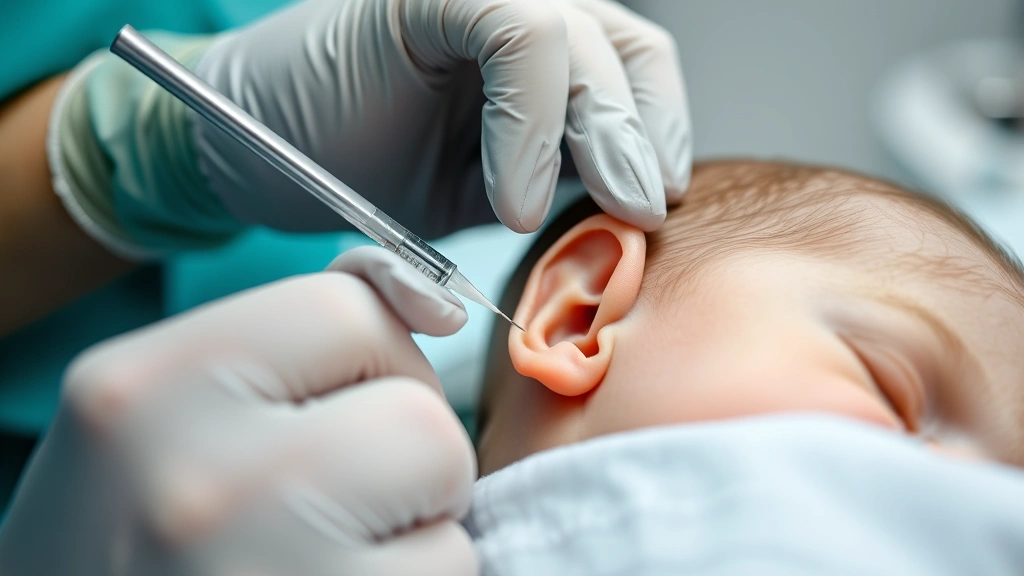
This is non-negotiable: if you pierce your baby’s ears, use a professional. Full stop.
The “gun vs. needle” debate comes up constantly. Professional piercers typically use hollow needles, which create a cleaner hole and reduce tissue trauma. The piercing gun—often used in jewelry stores and pharmacies—uses a spring-loaded mechanism that can cause more tissue damage and carries higher infection risk.
Here’s what matters when selecting a professional:
- They use single-use, sterile needles (never reused equipment)
- They follow proper sterilization protocols for any reusable equipment
- They’re experienced with infant piercings specifically
- They use appropriate jewelry for the initial piercing (surgical steel, titanium, or 14K+ gold)
- They provide clear aftercare instructions in writing
- They’re willing to discuss your concerns and answer questions thoroughly
At-home piercing with a needle or gun is risky. You can’t sterilize equipment to professional standards in a home setting. The risk of infection, improper angle, and tissue damage increases substantially. It might seem cheaper, but complications cost far more in medical care and your baby’s discomfort.
If you’re considering piercing as part of a broader grooming or adornment approach, professional expertise matters across all decisions. Even something like baby headbands should be chosen with safety in mind—no tight elastic that restricts circulation.
Aftercare Essentials for Healing
The piercing itself is just the beginning. What happens in the next 6-8 weeks determines whether your baby’s ears heal beautifully or develop complications.
The first 24-48 hours: Some bleeding and swelling is normal. Gently clean with saline solution using a clean cotton ball. Avoid touching the piercing unnecessarily.
Ongoing care (weeks 1-6): Clean twice daily with sterile saline solution. Many professionals recommend using a spray saline rather than dabbing, which reduces the urge to touch the area. Pat dry with a clean tissue—never cloth, which can harbor bacteria.
Jewelry care: Don’t remove the initial jewelry during the healing period, even to clean it. Gently rotate it slightly if instructed to do so by your piercer, but many modern professionals recommend avoiding rotation entirely.
What to avoid:
- Swimming or submerging in water until fully healed
- Sleeping on the pierced side during early healing
- Allowing other children to touch the piercing
- Using alcohol, hydrogen peroxide, or antibiotic ointments (these can actually delay healing)
- Changing jewelry before complete healing (typically 6-8 weeks minimum)
Parents often underestimate how committed they need to be to aftercare. This isn’t a set-it-and-forget-it procedure. You’re committing to twice-daily cleaning for weeks. If that feels overwhelming, it’s worth reconsidering the timing.
Infection Signs and When to Seek Help
Knowing what normal healing looks like versus what signals a problem is crucial. The CDC provides guidance on hygiene practices that directly apply to piercing aftercare.
Normal healing includes:
- Slight redness around the piercing site
- Minimal clear or yellowish discharge
- Mild tenderness
- Slight swelling that decreases over days
Signs of infection requiring medical attention:
- Increasing redness, warmth, or swelling after day 3
- Yellow or green discharge with an odor
- Red streaks extending from the piercing toward the neck or face
- Fever or your baby seeming unusually fussy or uncomfortable
- Pus collection around the jewelry
- The earlobe feeling hot to the touch
If you notice any of these signs, contact your pediatrician. Ear infections can escalate quickly in babies, and professional evaluation ensures appropriate treatment. Don’t delay—bacterial infections respond best to early intervention.
Some parents use over-the-counter antibiotic ointments at the first sign of trouble, but dermatologists often recommend against this during the healing phase. Instead, increase saline cleanings and contact your doctor. If antibiotics are needed, your pediatrician can prescribe appropriate options.
Jewelry Selection and Hypoallergenic Options
The metal you choose matters significantly for safety and comfort. Babies have sensitive skin, and the wrong jewelry can trigger allergic reactions that complicate healing.
Best choices for initial piercing:
- Surgical steel: Hypoallergenic and durable, though technically contains small amounts of nickel that rarely cause problems
- Titanium: Excellent choice for sensitive skin, nickel-free, and biocompatible
- 14K or higher gold: Pure enough to minimize allergic reactions; avoid lower karat gold which contains more alloy metals
- Niobium: Similar benefits to titanium, hypoallergenic and durable
Metals to avoid:
- Nickel (causes allergic reactions in many people)
- Plated jewelry (plating wears off, exposing base metals)
- Costume or fashion jewelry
- Sterling silver (can oxidize and irritate skin)
- Unknown metal compositions
When exploring best baby shower gifts, jewelry should always prioritize safety over aesthetics. A simple, quality piece beats elaborate designs that might contain problematic materials.
Initial studs should be small and smooth with secure backs that won’t come loose. Many professionals recommend leaving the initial jewelry in place for 6-8 weeks before changing to other styles. After healing, you have more flexibility, but always choose hypoallergenic options for daily wear.
Cultural and Family Considerations
Ear piercing carries deep meaning in many cultures and families. It’s not just a cosmetic choice—it’s often tied to identity, tradition, and heritage. This cultural context is important and valid.
Many families pierce infants’ ears as part of religious or cultural practice. In these communities, the decision isn’t whether to pierce, but how to do it safely and respectfully. These traditions often come with accumulated knowledge about timing, technique, and aftercare that’s been refined over generations.
The key is respecting both the cultural significance and the medical safety considerations. These aren’t mutually exclusive. You can honor tradition while also prioritizing sterile technique, professional expertise, and careful aftercare.
Conversations within families about piercing can get complicated. Grandparents might have strong opinions. Extended family members might want input. As the parent, you get to make the final decision based on your values, your baby’s wellbeing, and what feels right for your family.
If you’re navigating family opinions about baby care decisions, remember that you’re the one managing day-to-day care and consequences. Your informed choice deserves respect, whether you decide to pierce or wait.
Frequently Asked Questions
At what age can you safely pierce a baby’s ears?
Most pediatricians suggest waiting until at least 6 months, with 12 months being even safer for immune system maturity. However, many families pierce younger for cultural reasons. If you choose to pierce before 6 months, prioritize professional technique and meticulous aftercare. Parents Magazine offers additional age-related guidance on various parenting milestones.
Can babies get infections from ear piercing?
Yes, infection is the primary risk. Babies have developing immune systems, and they can’t communicate pain or discomfort clearly. However, infection risk decreases significantly with professional piercing, sterile technique, and proper aftercare. Most piercings heal without complications when these factors are in place.
Should I use a piercing gun or needle?
Professional piercers typically use hollow needles, which create cleaner holes with less tissue trauma. Piercing guns (common in jewelry stores) carry higher infection risk and can damage tissue more. If you pierce your baby’s ears, choose a professional piercer with needle experience.
How long does it take for baby ear piercings to heal?
Initial healing typically takes 6-8 weeks. However, complete healing of the fistula (the channel created by the piercing) can take several months. During this time, keep the initial jewelry in place and avoid changing earrings.
What if my baby’s pierced ear gets infected?
Contact your pediatrician immediately if you notice signs of infection: increasing redness, swelling, yellow or green discharge, fever, or red streaks. Don’t wait to see if it improves on its own. Early medical intervention prevents complications.
Can I remove the earring if my baby grabs it?
Babies and toddlers will grab at earrings. This is developmentally normal and one reason some professionals recommend waiting until children are older. If you pierce a baby’s ears, consider small studs with secure backs that are harder for tiny fingers to grab. Once healed, you might choose to remove jewelry during sleep or active play.
What jewelry should I choose for my baby?
Surgical steel, titanium, 14K+ gold, or niobium are best choices. Avoid nickel, plated jewelry, costume jewelry, or sterling silver. Start with small, smooth studs with secure backs. After healing, continue choosing hypoallergenic options for daily wear.
Is there a difference between piercing boys’ and girls’ ears?
Medically, no. Safety considerations are identical regardless of gender. The decision to pierce is personal and cultural, not determined by your baby’s sex. Whether you’re shopping for baby boy gifts or baby girl gifts, jewelry safety standards remain the same.
What if I change my mind after piercing?
If you remove the jewelry before the piercing is fully healed, the hole can close relatively quickly—sometimes within days or weeks. If the piercing is fully healed and you want to close it, you can simply stop wearing jewelry and the hole will gradually close over months or years, though it might not disappear completely.