When you walk into any baby store or browse online for infant toys, you’ll likely notice an overwhelming selection of stuffed animals. Among these cuddly companions, stuffed monkeys consistently rank as one of the most popular choices for babies and toddlers alike. But what makes these particular plush primates so irresistible to our little ones?
The fascination with stuffed monkeys goes far beyond their adorable appearance. These toys tap into fundamental aspects of child development, offering comfort, promoting learning, and providing endless opportunities for imaginative play. From their soft textures and friendly faces to their perfect size for tiny hands, stuffed monkeys possess unique qualities that make them ideal companions for babies during their crucial early years.
Understanding why your baby gravitates toward that beloved stuffed monkey can help you appreciate the important role these toys play in your child’s emotional and cognitive development. Let’s explore the science and psychology behind this common preference and discover how these simple toys contribute to your baby’s growth and happiness.
The Developmental Benefits of Stuffed Monkeys
Stuffed monkeys offer numerous developmental advantages that make them exceptional choices for babies and young children. These toys serve as more than simple entertainment – they become tools for learning and growth. The anthropomorphic features of monkeys, with their expressive faces and human-like limbs, make them particularly appealing to babies who are naturally drawn to faces and familiar shapes.
Research from the American Academy of Pediatrics shows that babies begin recognizing faces within the first few months of life, and the friendly, non-threatening appearance of stuffed monkeys provides an ideal introduction to social interaction. Unlike more abstract toys, monkeys have clear features that babies can identify and relate to, supporting their developing visual perception skills.
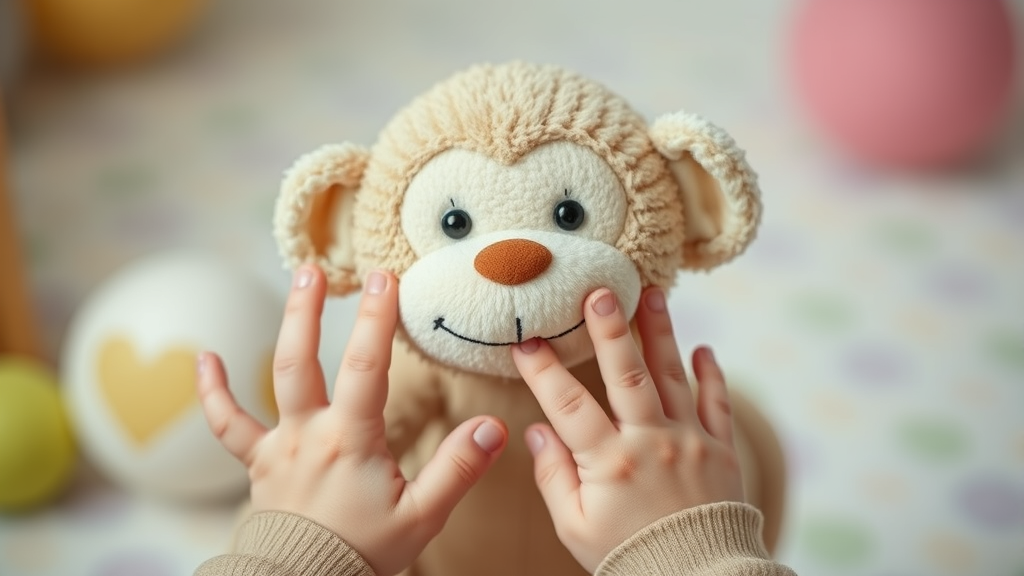
The physical characteristics of stuffed monkeys also promote fine and gross motor skill development. Their arms and legs provide perfect grasping opportunities for babies learning to coordinate their hand movements. As infants practice reaching, grabbing, and manipulating these toys, they strengthen the small muscles in their hands and fingers that will later be crucial for activities like writing and self-feeding.
Emotional Comfort and Security
One of the most significant reasons babies gravitate toward stuffed monkeys is their ability to provide emotional comfort and security. These toys often become what child psychologists call “transitional objects” – items that help children cope with separation anxiety and navigate the emotional challenges of growing up.
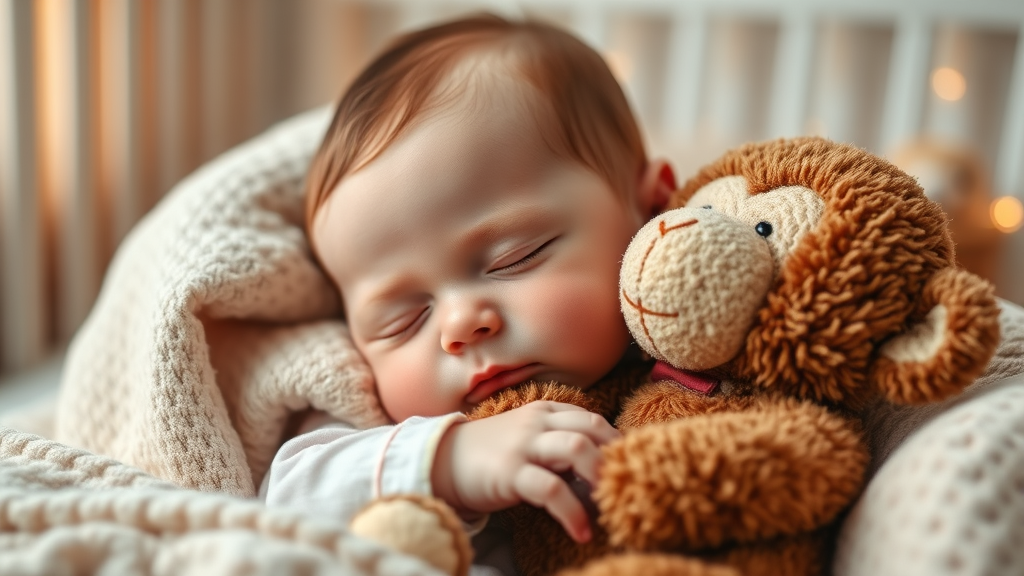
The soft, huggable nature of stuffed monkeys makes them perfect for snuggling, especially during bedtime routines. Many parents find that their babies sleep better when they have their favorite stuffed monkey nearby, much like how a comfortable baby blanket provides security. The consistent presence of this familiar object helps babies feel safe in their environment, even when parents aren’t immediately present.
Stuffed monkeys also serve as emotional regulators, helping babies learn to self-soothe during times of stress or overstimulation. When babies feel overwhelmed, they often turn to their stuffed animals for comfort, practicing important coping mechanisms that will serve them throughout their lives. This emotional attachment is completely normal and healthy, representing a crucial step in emotional development.
The non-judgmental nature of stuffed monkeys allows babies to express emotions freely. They can hug their monkey when happy, throw it when frustrated, or whisper secrets to it without fear of criticism. This emotional outlet supports healthy psychological development and helps babies process their feelings in a safe, supportive way.
Sensory Development Through Touch and Play
Sensory development is crucial during a baby’s first years, and stuffed monkeys provide rich tactile experiences that support this growth. The varied textures found on quality stuffed monkeys – from soft fur to textured paws – offer babies opportunities to explore different sensations and develop their sense of touch.
According to Zero to Three, sensory play is fundamental to brain development in infants and toddlers. When babies run their fingers through a monkey’s fur, squeeze its body, or explore its different parts, they’re building neural connections that support learning and cognitive development.
Many modern stuffed monkeys include additional sensory features like crinkly sounds in the ears, squeakers in the belly, or different fabric textures on various body parts. These multi-sensory elements engage babies’ developing nervous systems and encourage exploration and discovery. The combination of visual, tactile, and auditory stimulation helps babies make sense of their world and develops their sensory processing abilities.
The three-dimensional nature of stuffed monkeys also supports spatial awareness development. As babies manipulate these toys, turning them around, looking at them from different angles, and exploring their proportions, they’re developing important spatial reasoning skills that will later support mathematical thinking and problem-solving abilities.
Building Social Skills and Empathy
Stuffed monkeys serve as excellent tools for developing social skills and empathy in babies and toddlers. Through pretend play with their stuffed companions, children learn to practice social interactions in a safe, non-threatening environment. They might feed their monkey, put it to bed, or have conversations with it, all of which help develop social understanding.
This type of nurturing play helps babies develop empathy by encouraging them to consider the needs and feelings of others, even if that “other” is a stuffed animal. When a toddler comforts their crying monkey or shares their snack with it, they’re practicing the caring behaviors they observe in their parents and caregivers.
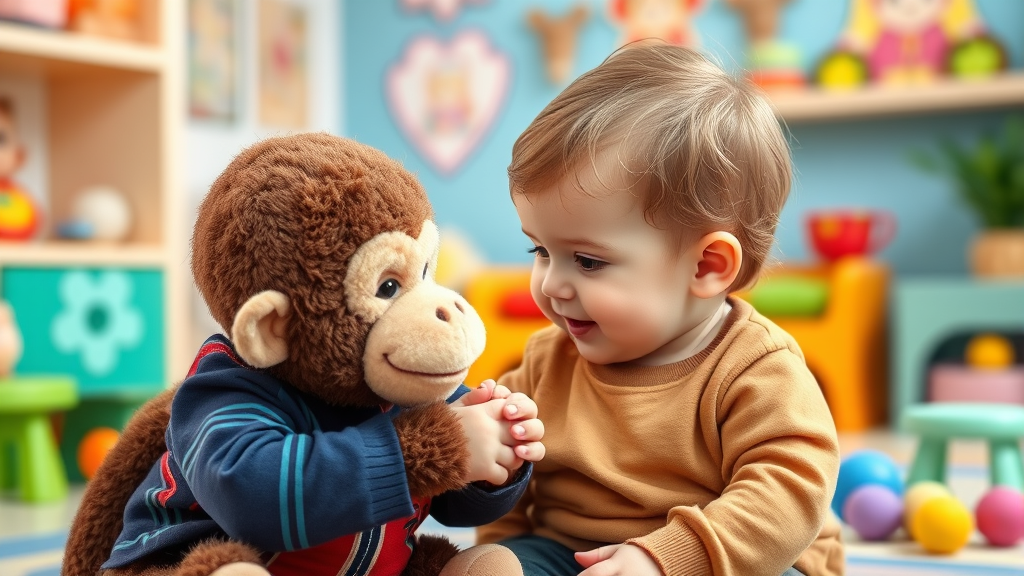
Unlike interactive toys like a baby alive doll that might have predetermined responses, stuffed monkeys allow for completely open-ended social play. Children can project any personality or emotion onto their stuffed companion, giving them complete control over the social interaction and allowing them to work through various social scenarios at their own pace.
Group play with stuffed monkeys also supports social development. When children play together with their stuffed animals, they learn to share, take turns, and collaborate in creating imaginative scenarios. These early social experiences lay the foundation for healthy peer relationships as children grow older.
Cognitive Growth and Imagination
The cognitive benefits of stuffed monkey play extend far beyond simple entertainment. These toys serve as catalysts for imaginative thinking and creative problem-solving. When babies and toddlers engage in pretend play with their stuffed monkeys, they’re exercising their developing imagination and practicing abstract thinking skills.
Language development is another significant cognitive benefit. Babies often “talk” to their stuffed monkeys, practicing sounds, words, and eventually full conversations. This self-directed speech helps develop language skills and builds confidence in verbal communication. Parents can enhance this benefit by engaging in conversations that include the stuffed monkey as a participant.
Stuffed monkeys also support memory development. Babies learn to remember where they left their favorite toy, recognize it among other objects, and recall the games they’ve played with it. These memory exercises strengthen neural pathways and support overall cognitive development.
The open-ended nature of stuffed monkey play encourages creative thinking and problem-solving. Children might create elaborate scenarios involving their monkey, work through challenges in their pretend play, or use their stuffed animal to help process real-life experiences. This type of cognitive exercise is crucial for developing flexible thinking skills.
Choosing the Right Stuffed Monkey
Not all stuffed monkeys are created equal, and selecting the right one for your baby requires careful consideration of several factors. Safety should always be the top priority when choosing any baby toy. Look for monkeys with securely attached features, no small parts that could pose choking hazards, and high-quality construction that can withstand regular washing and heavy play.
Size matters when selecting a stuffed monkey for a baby. The toy should be large enough that small parts won’t pose a choking hazard but small enough for little hands to grasp and manipulate easily. Generally, a monkey that’s about the same size as the baby’s torso works well for snuggling while still being manageable for play.
Material quality is crucial for both safety and durability. Look for hypoallergenic materials that are soft to the touch but durable enough to withstand frequent washing. Organic cotton or other natural fibers are often good choices for babies with sensitive skin. Avoid toys with long fur that might shed or create breathing hazards.
Consider the monkey’s design features carefully. Simple designs with embroidered or securely attached features are generally safer than those with buttons, beads, or other small decorative elements. The monkey’s expression should be friendly and non-threatening, as babies are naturally drawn to positive facial expressions.
Safety Considerations for Baby Toys
Safety is paramount when selecting stuffed monkeys or any toys for babies. The Consumer Product Safety Commission provides guidelines for toy safety that all parents should understand. Regular inspection of stuffed toys is essential to ensure they remain safe for continued use.
Check for loose threads, torn seams, or damaged areas that might create safety hazards. Pay particular attention to areas around the eyes, nose, and mouth where features are attached. Any loose or damaged parts should be repaired immediately or the toy should be replaced.
Washing instructions are important for maintaining both safety and hygiene. Choose stuffed monkeys that can be machine washed and dried, as babies’ toys need frequent cleaning. Some toys may require special care, so always follow manufacturer guidelines for cleaning and maintenance.
Age appropriateness is another crucial safety consideration. While stuffed monkeys are generally safe for babies, always check manufacturer age recommendations and ensure the toy is appropriate for your child’s current developmental stage. What’s safe for a toddler might not be safe for an infant, and vice versa.
Storage and care of stuffed toys also impact safety. Keep toys clean and dry, store them in appropriate locations, and regularly rotate toys to prevent excessive wear on favorites. This rotation also helps maintain your child’s interest and provides variety in their play experiences.
Frequently Asked Questions
At what age can babies safely play with stuffed monkeys?
Babies can typically enjoy stuffed monkeys from birth, provided the toys meet safety standards for newborns. For very young infants, ensure the monkey has no small parts, is made from safe materials, and is appropriately sized. Always supervise play time and remove any toys that show signs of wear or damage. As babies grow and develop better motor control, usually around 3-6 months, they can more actively engage with their stuffed companions.
How do I clean and maintain my baby’s stuffed monkey?
Most quality stuffed monkeys can be machine washed on a gentle cycle with mild, baby-safe detergent. Check the care label for specific instructions. For spot cleaning, use a damp cloth with mild soap. Ensure the toy is completely dry before returning it to your baby. Regular washing helps maintain hygiene and removes allergens. For toys that can’t be machine washed, consider using fabric-safe disinfectant sprays designed for children’s toys.
Is it normal for my baby to become very attached to their stuffed monkey?
Yes, it’s completely normal and healthy for babies to form strong attachments to stuffed animals. This attachment represents an important developmental milestone called forming a transitional object relationship. These attachments help babies develop emotional regulation skills, cope with separation anxiety, and build confidence. The American Academy of Pediatrics recognizes this as a normal part of child development that shouldn’t be discouraged.
Can stuffed monkeys help with my baby’s sleep routine?
Stuffed monkeys can be excellent sleep aids for babies, providing comfort and security during bedtime. The familiar scent and feel of their favorite toy can help babies self-soothe and fall asleep more easily. However, follow safe sleep guidelines: for infants under 12 months, remove all toys from the crib during sleep time to reduce SIDS risk. For older babies and toddlers, a special sleep monkey can become an important part of the bedtime routine.
How many stuffed animals should my baby have?
There’s no magic number of stuffed animals a baby should have. Some children prefer one special companion, while others enjoy variety. The key is quality over quantity – a few well-made, safe toys are better than many poor-quality ones. Consider your storage space, cleaning capabilities, and your child’s preferences. Rotating toys can help maintain interest without overwhelming your baby with too many choices at once.
What should I do if my baby’s stuffed monkey gets lost or damaged?
Losing or damaging a beloved stuffed monkey can be distressing for both baby and parents. If possible, try to repair minor damage with child-safe materials. For lost toys, having a backup can be helpful, though it may not provide the same comfort as the original. If replacement isn’t possible, gradually introduce a new comfort object while acknowledging your child’s feelings about the loss. This experience, while difficult, can also be a learning opportunity about attachment and loss.
Are there any concerns about stuffed monkeys affecting my baby’s development?
Quality stuffed monkeys generally support healthy development rather than hinder it. However, ensure balanced play that includes various types of toys and activities. While stuffed animals are wonderful for emotional development and imaginative play, babies also need toys that promote different skills like stacking blocks for problem-solving or musical toys for auditory development. The key is variety and moderation, ensuring your baby has access to diverse learning opportunities throughout their day.