What Are Baby Moose Called? Fun Facts & Insights for Curious Families
Ever wondered what to call a baby moose? If you’ve got kids who love animals—or you’re simply curious about the natural world—you’re in for a treat. The answer is delightfully simple: a baby moose is called a calf. But that’s just the beginning of an absolutely fascinating journey into the world of these magnificent creatures.
Whether you’re planning a family nature trip, homeschooling your children, or just satisfying those endless “why” questions from inquisitive minds, understanding baby moose and their behavior opens up a wonderful window into wildlife education. These gentle giants start their lives remarkably vulnerable, yet they grow into some of the largest land mammals in North America. It’s a transformation worth exploring.
Let’s dive into everything you need to know about baby moose, from their adorable first days to their impressive growth trajectory. This guide combines fun facts with practical insights that’ll make your family’s nature conversations even richer.
What Is a Baby Moose Called?
A baby moose is known as a calf—the same term used for young deer, elk, and other cervids. The word “calf” comes from Old Norse and has been used for centuries to describe young hoofed mammals. If you’re exploring baby animals in general, you’ll notice this terminology appears across several species, though each has its own unique characteristics.
The term “calf” works beautifully whether you’re talking about a single young moose or multiple offspring. Interestingly, while moose calves share the same name with baby deer, they develop quite differently and reach vastly different sizes. A baby moose calf will eventually dwarf its deer cousins, but in those first moments of life, they’re surprisingly delicate.
Male calves are sometimes called “bull calves,” while females are “cow calves,” mirroring the adult terminology. However, in casual conversation, most people simply refer to them as calves, and that’s perfectly appropriate.
Birth Timeline and Early Development
Baby moose calves are born in late May through early June in most North American regions. The timing is crucial—it ensures that calves arrive when vegetation is abundant and weather conditions are warming, giving them the best possible start in life. A mother moose’s pregnancy lasts approximately 230 days, making it one of the longer gestation periods among North American mammals.
At birth, a calf typically weighs between 24 to 35 pounds—substantial for a newborn, but still tiny compared to what it will become. Within hours of birth, a healthy calf can stand and follow its mother, an essential survival skill in the wild. This rapid development is typical for prey animals; they must be mobile to escape predators.
The first few days are critical. Calves remain hidden in tall grass or dense vegetation while their mothers forage nearby. This “hiding strategy” keeps them safe from predators like wolves and bears. The mother returns multiple times daily to nurse and check on her offspring.
Physical Characteristics of Calves
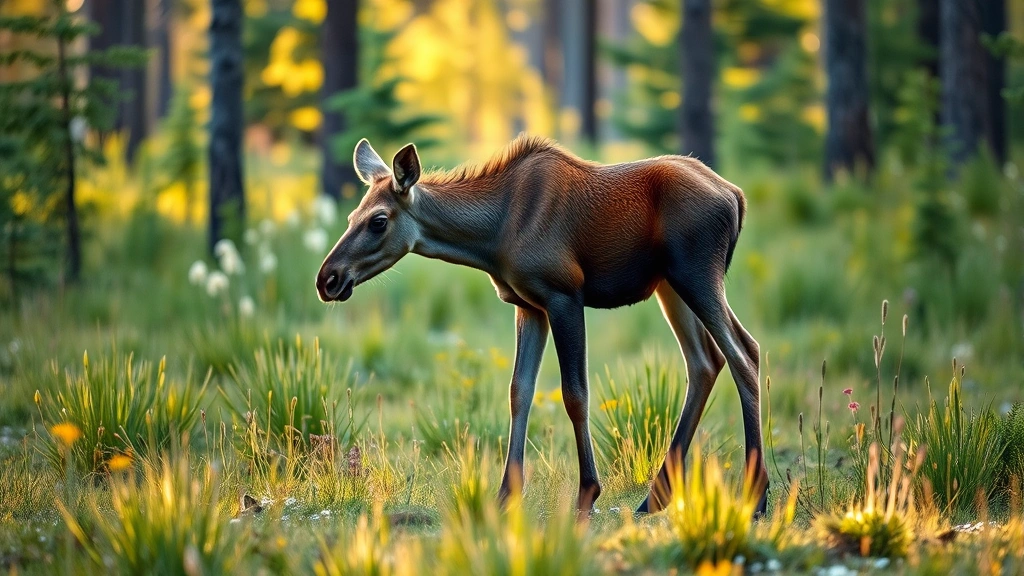
When you first glimpse a baby moose calf, several features might surprise you. Their legs appear disproportionately long relative to their body—a characteristic they share with other baby elk and cervids. These elongated legs are actually an adaptation that helps them navigate their forest and wetland habitats, even when water levels are high.
Newborn calves display a reddish-brown coat that gradually darkens as they mature. By their first winter, they’ll have developed the darker brown coloring typical of adult moose. Their ears are proportionally large and incredibly mobile, allowing them to detect sounds from multiple directions—a crucial survival trait.
One striking feature is their lack of spots. Unlike many deer species, moose calves are born without the distinctive white spots seen in fawns. This is one way to distinguish them from their smaller relatives. Their eyes are dark and alert, and they’re born with a natural curiosity that serves them well as they explore their environment.
The average calf stands about 3 to 4 feet tall at birth. Within a few months, they’ll have grown substantially, and by their first year, they’ll be approaching the size of an adult deer.
The Mother-Calf Relationship
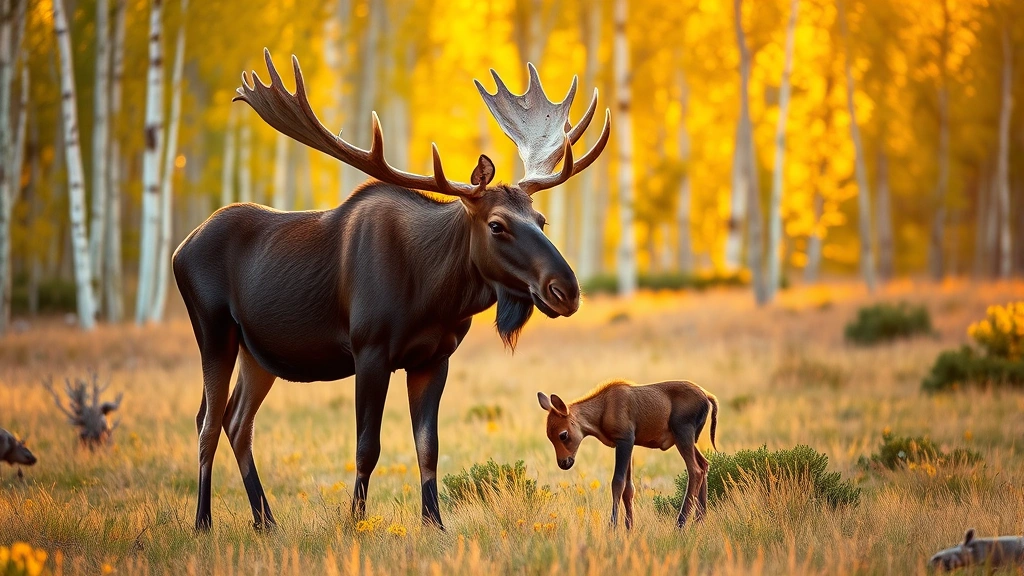
Mother moose are remarkably protective and fiercely devoted to their calves. A cow moose will aggressively defend her young against any perceived threat, including humans. This protective instinct is so strong that wildlife experts consistently warn people to maintain distance from cow moose with calves—they’re far more dangerous than they appear.
The bond between mother and calf is intense and develops immediately. Within minutes of birth, the calf recognizes its mother’s scent and calls, creating a communication system that keeps them connected even when separated by vegetation. The mother responds to her calf’s bleating, a high-pitched call that signals hunger, distress, or a desire for reassurance.
Moose typically give birth to one calf, though twins occasionally occur. In rare cases, a cow might raise three calves, though this is exhausting and less common. Single calves receive undivided maternal attention, which significantly increases their survival chances.
The weaning process begins around 4 to 5 months of age, though calves may continue nursing into their first winter. By spring of their second year, calves are fully independent and typically driven away by their mothers to establish their own territories.
Growth Milestones and Development
The growth trajectory of a moose calf is genuinely impressive. Here’s a timeline of major milestones:
- Week 1: Calf follows mother, begins learning feeding locations and water sources
- Weeks 2-4: Starts sampling vegetation; nursing remains primary nutrition
- Month 2-3: Becomes more adventurous; swimming skills develop
- Month 4-5: Weaning begins; vegetation comprises 50% of diet
- Month 6-12: Rapid growth continues; calf reaches 300-400 pounds by year’s end
- Year 2: Independence achieved; continues growing toward adult size
By their first birthday, a moose calf has transformed from a 30-pound infant to a 300-400 pound juvenile. This growth rate rivals some of the fastest-growing land mammals. To support this expansion, calves must consume increasing quantities of vegetation as they age.
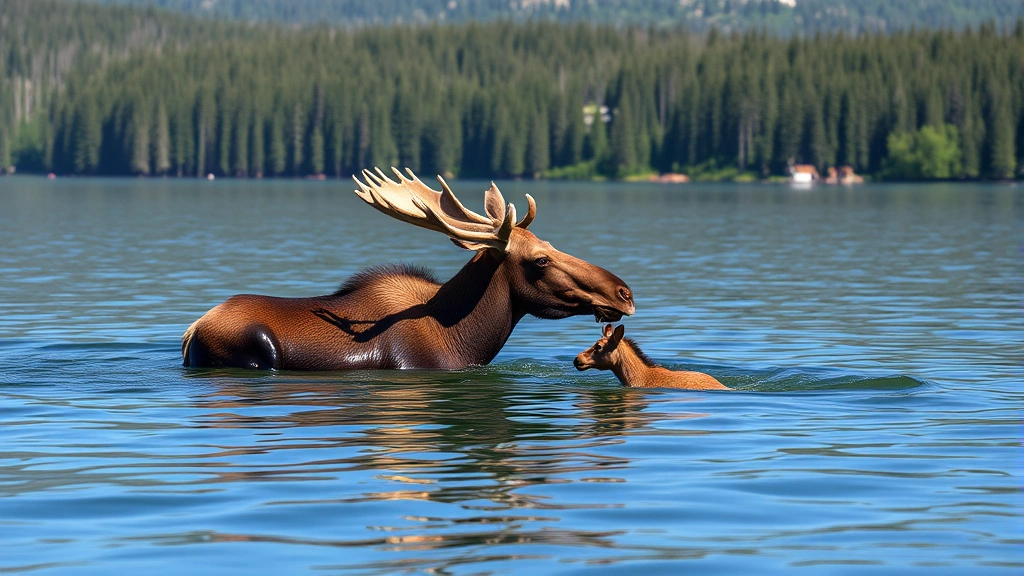
The development of swimming ability is particularly important. Young moose are natural swimmers, and by summer, calves eagerly follow their mothers into water to feed on aquatic vegetation and escape insects and heat. This skill becomes essential for their survival in wetland habitats.
Diet and Nursing Habits
Newborn calves rely exclusively on their mother’s rich milk, which contains the nutrients necessary for rapid growth. Moose milk is notably fat-rich compared to many other mammals, providing the concentrated calories calves need.
Nursing occurs multiple times daily—typically 5 to 8 times—and each session lasts just a few minutes. Despite the brief duration, calves consume substantial quantities of milk. A mother moose must increase her own food intake significantly to maintain adequate milk production while also nourishing her own body.
Around 2 to 3 weeks of age, calves begin investigating vegetation, though nursing remains their primary food source. Initially, they sample leaves, aquatic plants, and twigs, learning which foods are safe and nutritious through observation and trial. This educational process is crucial—calves essentially learn what to eat by watching their mothers.
Aquatic vegetation becomes increasingly important as calves age. Moose are excellent swimmers, and they spend considerable time in water feeding on water lilies, pondweed, and other aquatic plants. Calves learn these feeding techniques by imitating their mothers, a process that strengthens the bond while ensuring survival skills are properly transmitted.
By fall, a calf’s diet consists primarily of vegetation, though nursing continues. This transition supports the calf’s independence and prepares it for winter when food becomes scarcer and more difficult to obtain.
How Baby Moose Compare to Relatives
Understanding how baby moose fit into the broader cervid family provides valuable context. While baby deer fawns are born spotted and weigh 4 to 8 pounds, moose calves are unspotted and weigh 24 to 35 pounds. The size difference reflects the dramatic difference in adult body mass—adult moose are nearly three times heavier than adult white-tailed deer.
Comparing moose calves to baby elk calves reveals interesting similarities. Both are born relatively large and mobile, both lack spots, and both develop rapidly. However, elk calves are typically smaller at birth (around 30-35 pounds for elk versus 24-35 for moose) and reach adult size more quickly in terms of timeline, though adult moose still surpass adult elk in overall mass.
The protective instincts of mother moose exceed those of mother deer and elk. Cow moose are notoriously aggressive in defense of their calves, making them genuinely dangerous animals. This heightened protectiveness likely reflects the vulnerability of single calves compared to the often-successful twin births in deer and elk.
Caribou calves, another cervid relative, are born in larger groups and display different migration patterns. Their development timeline is similar to moose calves, but the social structure differs significantly—caribou calves grow up in herds, while moose calves experience a more solitary existence.
Viewing Baby Moose Safely
If you’re interested in observing moose calves in their natural habitat, safety and respect for wildlife must be your primary concerns. Early morning and late evening are optimal times for wildlife viewing, as moose are most active during these hours. Spring and early summer offer the best opportunities to observe calves.
For families interested in wildlife photography tips, remember that photographing from a safe distance protects both you and the animals. Use binoculars or telephoto lenses rather than approaching directly. Maintain at least 50 yards of distance from moose, and substantially more from cow moose with calves.
Never attempt to touch, feed, or interact with wild moose calves. Even young animals can injure humans, and interference with wild animals violates most wildlife protection laws. Additionally, human scent on a calf can cause the mother to reject it—a tragic consequence that could be prevented by maintaining distance.
Consider visiting wildlife rehabilitation centers or zoos where moose are kept. These facilities provide educational opportunities and allow for observation in controlled environments where safety is managed professionally. Many centers offer nature education for kids, specifically designed to foster appreciation for wildlife while teaching appropriate interaction boundaries.
If you encounter a cow moose with calves while hiking or camping, back away slowly and quietly. Never position yourself between the mother and her offspring. If the mother appears agitated (ears pinned back, hair raised on neck), move away more quickly and take shelter behind a tree or vehicle if available.
Frequently Asked Questions
How much does a baby moose weigh at birth?
A newborn moose calf typically weighs between 24 to 35 pounds at birth. This substantial weight at birth—compared to many other mammals—reflects the advanced development stage of moose calves and their need for rapid mobility to survive in the wild.
Can baby moose survive without their mother?
Newborn and very young moose calves cannot survive without their mothers. They depend on maternal milk for nutrition and protection from predators. However, by around one year of age, calves have developed sufficient independence to survive on their own, though they typically remain with their mothers until spring of their second year.
How long do moose calves nurse?
Moose calves typically nurse for 4 to 5 months, though some nursing may continue into their first winter. The exact duration varies depending on food availability and individual circumstances. By their first birthday, calves are almost entirely independent from nursing.
Are baby moose calves born with their father present?
No. Moose are solitary animals outside the breeding season, and bulls (male moose) play no role in raising calves. Mothers care for their offspring entirely alone. After mating in fall, bulls and cows separate, and mothers carry calves through pregnancy and birth without paternal involvement.
What predators threaten baby moose calves?
Primary predators of moose calves include wolves, bears, and cougars. Wolves are particularly significant predators, hunting calves in coordinated packs. This predation threat is why cow moose are so protective and aggressive in defense of their young. In areas without large predators, calves face fewer threats from wildlife.
How fast do moose calves grow?
Moose calves grow remarkably quickly, reaching 300 to 400 pounds by their first birthday. This rapid growth rate is supported by their mothers’ nutritious milk and the calves’ increasing vegetation intake. By age 3 to 4 years, moose reach adult size, though bulls continue growing until around age 5.
Do moose calves stay with their mothers year-round?
Moose calves typically remain with their mothers through their first winter and into spring of their second year. Once they’re driven away by their mothers in spring, they become independent. Some siblings may remain together briefly, but they soon establish separate territories.
Can you tell if a moose calf is male or female?
Distinguishing sex in young moose calves is difficult without close examination. As they age, developing antler buds on males become visible, but newborn calves show little external sexual dimorphism. Experienced wildlife biologists can make determinations, but casual observers typically cannot reliably distinguish sex in very young calves.