What Is a Baby Penguin Called? Adorable Facts That’ll Melt Your Heart
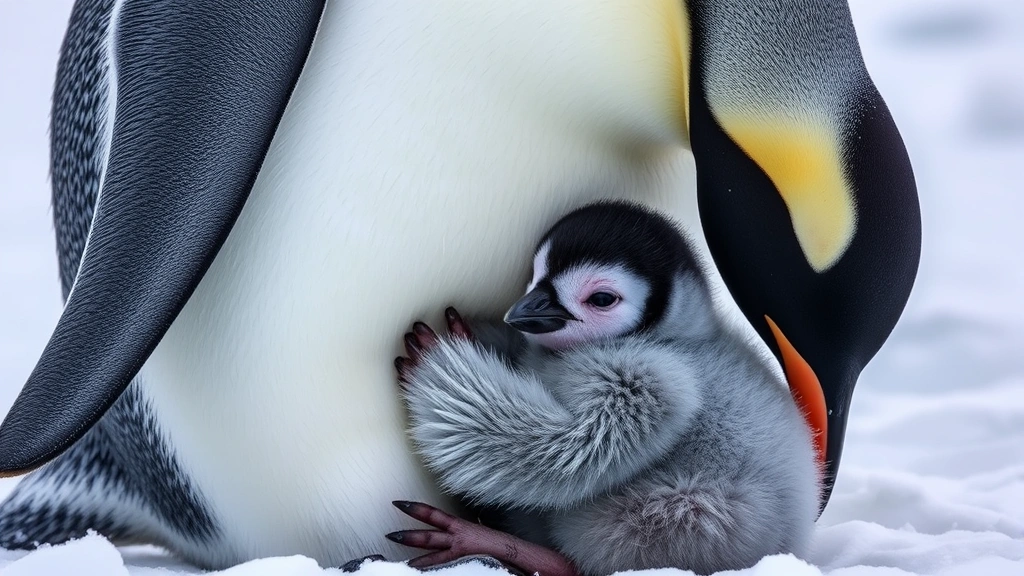
If you’ve ever watched a nature documentary featuring penguins waddling across ice floes, you’ve probably wondered: what do we actually call those impossibly cute little fluffballs? The answer is delightfully simple yet carries a charm all its own. A baby penguin is called a chick—a term that applies to all penguin species, from the towering Emperor penguins to the diminutive Little penguins of Australia.
But here’s where it gets interesting: understanding penguin terminology opens up a fascinating window into how these remarkable birds live, parent, and thrive in some of Earth’s most extreme environments. Whether you’re a wildlife enthusiast, a parent looking to share animal facts with curious kids, or simply someone captivated by these tuxedoed wonders, there’s something genuinely magical about learning how penguin families operate. The journey from egg to independent chick reveals lessons about resilience, dedication, and the intricate bonds that hold families together—themes that resonate deeply with human parenting too.
Let’s dive into the world of penguin chicks and discover what makes these creatures so utterly fascinating.
What Is a Baby Penguin Called?
The term chick is the standard name for a baby penguin across all seventeen species. This nomenclature isn’t unique to penguins—many bird species use this term for their young—but it feels particularly fitting for these charming creatures. In scientific contexts, you might also encounter the term pullus, which is the Latin term for a young bird, though this is less commonly used in casual conversation.
What’s particularly interesting is that penguin chicks don’t have breed-specific names the way some animals do. Unlike a baby kangaroo (joey) or a baby elephant (calf), penguin chicks are simply chicks, regardless of whether they’re Emperor, Adelie, Chinstrap, or Gentoo penguins. This universality speaks to the shared biological characteristics across penguin species, even though they inhabit vastly different regions and have evolved distinct adaptations.
The simplicity of the term belies the complexity of what goes into raising a penguin chick. From the moment an egg is laid, penguin parents embark on one of nature’s most demanding parenting journeys, involving extreme temperatures, lengthy fasting periods, and unwavering dedication to their offspring.
The Penguin Lifecycle: From Egg to Independent Chick
Understanding the penguin lifecycle gives us profound appreciation for these birds’ resilience. The journey begins when a breeding pair comes together, typically returning to the same nesting site year after year. This fidelity to location mirrors human attachment to home and family—a concept that resonates with parents everywhere.
The Egg Stage: Most penguin species lay one to three eggs, though Emperor penguins typically lay just one. The incubation period varies by species, ranging from approximately 35 days in smaller species to about 65-67 days in Emperor penguins. During this time, parents take turns balancing the egg on their feet, covered by a fold of skin called a brood pouch. This remarkable adaptation keeps the egg warm in conditions that would otherwise be lethal.
The Hatching Process: When a chick is ready to emerge, it uses a specialized tooth on its beak called an egg tooth to break through the shell. This process, called pipping, can take 24-48 hours. Parent penguins provide encouragement through vocalizations, and once the chick emerges, it’s typically wet, exhausted, and utterly dependent on parental care.
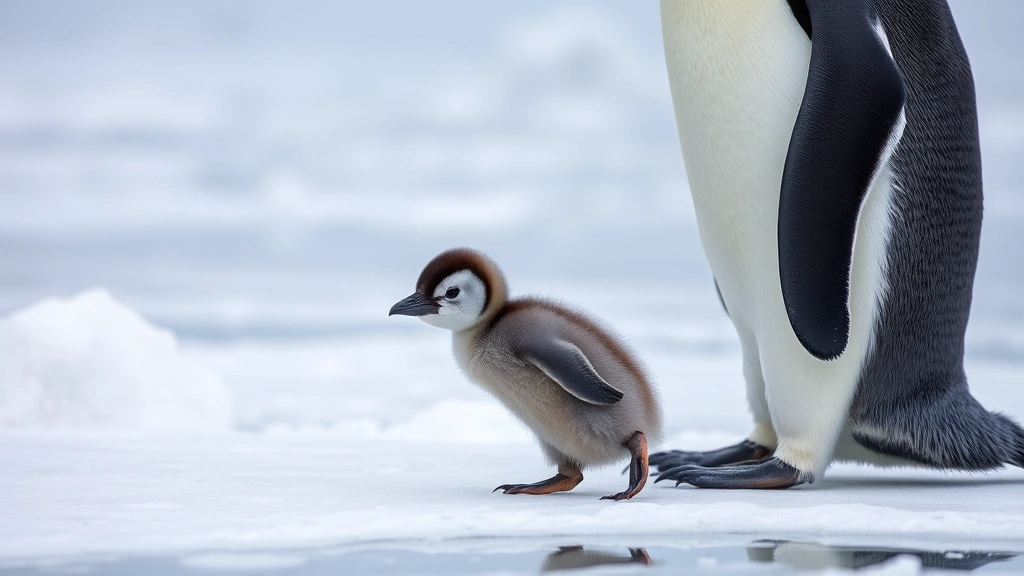
Early Chick Development: Newly hatched penguin chicks are covered in downy plumage—soft, fluffy feathers that provide insulation but aren’t waterproof. This is why chicks must remain on land initially. Parents take turns brooding the chick, keeping it warm while the other parent ventures out to hunt. The brooding period typically lasts 4-6 weeks, depending on the species.
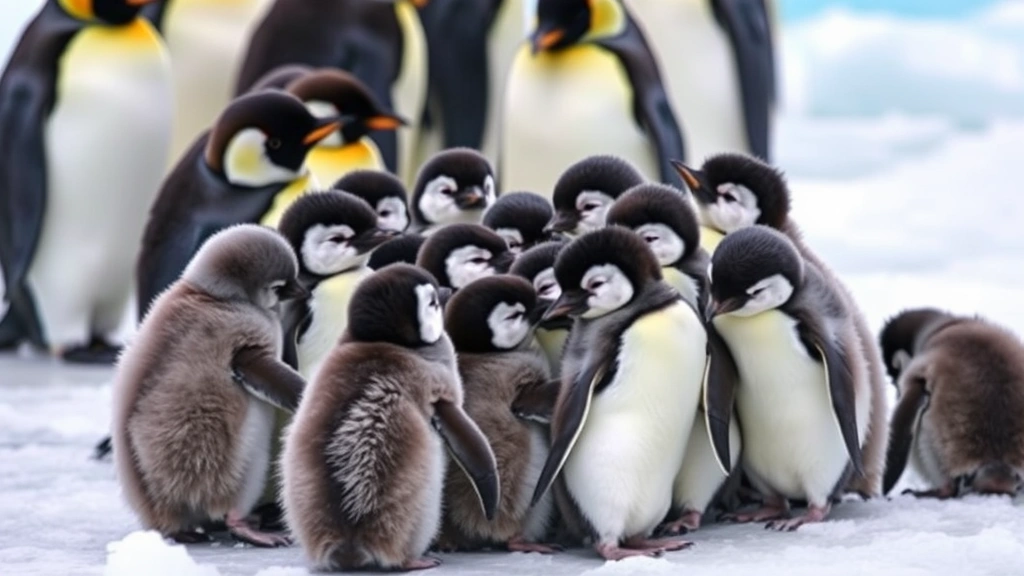
The Crèche Stage: As chicks grow stronger and more independent, they join groups called crèches (pronounced “kresh”). These are essentially penguin daycare centers where multiple chicks huddle together for warmth and protection while parents are away hunting. This social structure teaches young penguins crucial social skills and cooperation—lessons not unlike what human children learn in group settings.
Fledging and Independence: By 8-16 weeks of age (varying by species), penguin chicks develop their adult plumage and are ready to enter the water. This transition is significant; the chick’s waterproof feathers replace its downy coat, and instinct kicks in to guide their first swimming attempts. While some species continue receiving parental support for a brief period after fledging, most chicks become essentially independent once they enter the ocean.
Different Penguin Species and Their Chicks
While all penguin chicks share the common name, the experience of being a penguin chick varies dramatically depending on which species you’re discussing. Let’s explore some of the most notable variations:
Emperor Penguin Chicks: The most famous penguin chicks, Emperor chicks face the harshest conditions on Earth. Born during Antarctic winter, they must survive temperatures plummeting to -40°C (-40°F) and winds exceeding 150 km/h (93 mph). These chicks are remarkably large at birth and grow rapidly on a diet of regurgitated fish and squid. The Emperor penguin’s breeding cycle is so demanding that parents often fast for four months or longer. This extreme parental sacrifice offers a humbling perspective on commitment to one’s offspring.
Adelie and Chinstrap Chicks: These Antarctic species have slightly easier conditions than Emperors, though still harsh by most standards. Their chicks fledge during the Antarctic summer, giving them access to abundant food and warmer temperatures. The breeding season is more compressed, typically lasting 4-5 months total.
Gentoo Penguin Chicks: Similar to Adelies and Chinstraps, Gentoo chicks benefit from relatively abundant food sources during the breeding season. They’re known for being particularly vocal chicks, communicating frequently with parents and siblings.
Temperate and Sub-Antarctic Species: Penguins like the African penguin, Magellanic penguin, and Little penguin have chicks that experience milder climates. These chicks typically have longer fledging periods—sometimes 3-4 months—but benefit from more accessible food sources and moderate temperatures. Some species, like the Little penguin, even remain year-round residents of their breeding areas, creating more stable conditions for chick development.
Just as human children thrive differently depending on their environment, penguin chicks’ experiences are profoundly shaped by their species’ geographic location and breeding season timing.
Penguin Parenting: A Study in Dedication
If there’s one thing penguin parents teach us, it’s the meaning of commitment. The parallels between penguin and human parenting are striking, even across the vast biological differences.
The Dual Responsibility: Penguin parents operate on a shift system. While one parent broods or guards the chick, the other ventures into the ocean—sometimes traveling 50+ kilometers—to hunt for food. This requires extraordinary coordination and trust. Parent penguins must time their hunting trips carefully; returning too soon wastes the opportunity to gather sufficient food, but staying away too long risks leaving the chick vulnerable or hungry.
Fasting and Sacrifice: During the brooding period, the fasting parent—particularly in Emperor penguins—may go without food for weeks. This isn’t laziness or poor planning; it’s an evolutionary adaptation that ensures constant chick protection. The brooding parent’s body temperature remains elevated to keep the chick warm, burning calories rapidly while consuming nothing. This sacrifice mirrors the sleepless nights human parents endure, the meals skipped to prioritize children’s needs, and the physical exhaustion that comes with round-the-clock caregiving.
Recognition and Bonding: Penguin chicks and parents develop strong vocal recognition. Each chick has a unique call, and parents can identify their offspring among thousands of other chicks in a crèche. This acoustic bonding ensures that when a parent returns from hunting, it finds its own chick rather than randomly feeding any nearby chick. This specificity of attachment demonstrates the depth of penguin family bonds.
Teaching and Mentoring: As chicks grow, parents begin teaching them crucial survival skills. They demonstrate diving techniques, show chicks where to find food, and gradually encourage independence. This mentoring relationship—where experienced adults guide younger generations toward self-sufficiency—transcends species boundaries and speaks to fundamental parenting principles.
Learning about baby squirrel or other animal parenting styles can provide perspective, but penguin parents’ dedication stands as a remarkable testament to nature’s design for nurturing the next generation.
Adorable Facts About Penguin Chicks
Beyond the biological and behavioral aspects, penguin chicks possess qualities that genuinely capture hearts and imaginations. Here are some delightful facts that showcase why these creatures are so endearing:
- Fluffy and Awkward: Penguin chicks are covered in soft, downy feathers that make them appear impossibly round and cuddly. This fluffiness isn’t just for show—it provides essential insulation. However, this plumage makes them terrible swimmers initially, which is why they must remain on land until developing adult feathers. The contrast between their adorable appearance and their ungainly movements on ice is utterly charming.
- Vocal Communicators: Penguin chicks are surprisingly vocal. They chirp, squeak, and call constantly, communicating with parents, siblings, and crèche mates. This constant chatter helps researchers and wildlife enthusiasts track chick development and social interactions. If you’ve ever listened to a penguin colony, the noise is both chaotic and endearing—reminiscent of a human nursery at feeding time.
- Rapid Growth: Depending on species, penguin chicks can double or triple their weight within weeks. Emperor penguin chicks, for instance, can reach 15 kilograms (33 pounds) before fledging, making them nearly as large as their parents. This rapid growth requires enormous food intake and demonstrates the commitment parents make to nourishing their offspring.
- Social Learners: Penguin chicks are highly social. In crèches, they learn from one another, play together, and develop social hierarchies. This peer interaction is crucial for developing social skills and confidence. When you consider that human children similarly thrive in group settings and learn from peers, the parallel becomes evident.
- Curious and Playful: Young penguin chicks display genuine curiosity about their environment. They explore rocks, investigate other chicks, and seem to engage in what can only be described as play. This playfulness isn’t frivolous; it helps chicks develop coordination, test their physical abilities, and understand their environment—essential preparation for adult life.
- Temperature Regulation: Penguin chicks are born with limited ability to regulate body temperature, relying entirely on parental brooding. Over weeks, they develop this capacity independently. This gradual transition from complete dependence to self-sufficiency mirrors human child development, where infants gradually develop autonomic functions.
- Unique Plumage Patterns: While all penguin chicks wear downy gray or brown plumage, once they develop adult feathers, many species display distinctive markings. These patterns are individually variable, meaning each chick develops its own unique appearance—much like human fingerprints.
If you’re interested in documenting your own children’s development milestones, consider creating a baby book that captures their growth journey, much like nature documents penguin chick development.
For those interested in creative expressions of baby appreciation, exploring baby drawing techniques can be a delightful way to capture the essence of these creatures. Additionally, baby shower decorations often feature penguin themes, reflecting how beloved these creatures are in popular culture.
Frequently Asked Questions
How long does it take for a penguin chick to become independent?
The timeline varies by species. Emperor penguin chicks typically fledge around 5-6 months old, while smaller species like Little penguins may fledge within 8-10 weeks. Most penguin chicks are essentially independent once they enter the water and develop their adult plumage, though some species maintain minimal parental contact for brief periods post-fledging. According to Audubon Society resources on penguin biology, independence timing correlates directly with environmental conditions and food availability.
What do penguin chicks eat?
Penguin chicks are fed regurgitated fish and squid by their parents. The specific diet depends on species and geographic location. Antarctic penguins primarily consume Antarctic silverfish and krill, while temperate species may eat different fish varieties. Chicks cannot hunt for themselves initially; they’re entirely dependent on parental provisioning until they develop hunting skills post-fledging. The World Wildlife Fund provides detailed information on penguin nutrition across different species.
Do penguin parents stay with their chicks year-round?
No. Penguin parents are highly seasonal breeders. After chicks fledge and enter the ocean, parents cease providing care. The family unit dissolves, and parents focus on their own survival and feeding. Parent and offspring may never interact again after fledging. This contrasts sharply with some mammalian species and certainly with human families, where relationships often extend throughout life. Each breeding season, adult penguins return to their nesting sites, but they don’t reunite with previous offspring.
How many chicks do penguin parents typically raise?
Most penguin species lay one to three eggs, and typically two chicks fledge successfully. However, mortality rates during the chick stage can be significant, particularly in harsh environments. Emperor penguins usually lay only one egg and raise one chick. Environmental conditions, food availability, and predation all influence how many chicks survive to fledging. In difficult years, parents may successfully raise only one chick or potentially none.
Are penguin chicks born with any survival instincts?
Penguin chicks are born with certain innate behaviors—they know to seek warmth, respond to parental calls, and eventually demonstrate swimming instincts. However, much of their survival knowledge must be learned through parental teaching and peer observation. The balance between instinct and learning in penguin chicks is fascinating; they’re not entirely helpless but aren’t fully autonomous either. Nature journal publications on avian development provide extensive research on these innate versus learned behaviors.
What threats do penguin chicks face?
Penguin chicks face numerous threats including predation (particularly from skuas and leopard seals), starvation if parents struggle to find food, disease, and increasingly, climate change affecting ice conditions and food availability. In extreme weather events, entire cohorts of chicks can perish. Human activities like overfishing, pollution, and habitat disruption also impact chick survival rates. According to IUCN Red List assessments, several penguin species face declining populations partly due to chick mortality factors.
How do penguin chicks learn to swim?
Swimming instincts emerge naturally as chicks develop adult plumage. Parents don’t formally teach chicks to swim in the way human parents might; rather, chicks’ bodies and brains are programmed for aquatic life. When adult feathers develop, chicks become naturally buoyant and waterproof. Instinct drives them toward water, and their first swimming attempts, while clumsy, quickly improve. Peer observation also plays a role—chicks watch older or more advanced chicks and learn through imitation.