
Is Baby Crawling Late? Pediatricians Explain What Parents Need to Know
Watching your baby reach developmental milestones is one of parenting’s greatest joys—and sources of anxiety. When your little one isn’t crawling by the time you expect, it’s natural to worry. But here’s what pediatricians want you to know: crawling timelines vary widely, and “late” crawling rarely signals a problem. In this comprehensive guide, we’ll explore what’s normal, when to seek professional guidance, and how to support your baby’s unique developmental journey.
Every baby develops at their own pace. Some babies crawl at five months, while others skip crawling entirely and move straight to walking. This article breaks down the science behind infant motor development, explains what pediatricians actually look for during checkups, and provides practical strategies to encourage movement without pressure or comparison.
Quick Navigation
- When Do Babies Typically Crawl?
- Normal Variations in Crawling Development
- Red Flags Pediatricians Actually Monitor
- How to Support Your Baby’s Movement
- Babies Who Skip Crawling Entirely
- When to Contact Your Pediatrician
- Frequently Asked Questions
When Do Babies Typically Crawl?
According to the American Academy of Pediatrics (AAP), most babies begin crawling between 6 and 10 months of age. However, this window is broader than many parents realize. The AAP emphasizes that the range extends to 12 months and beyond without concern, provided other developmental markers are progressing normally.
Before actual crawling, babies progress through important preparatory stages. Around 4-5 months, babies typically roll over and begin pushing with their arms. By 5-6 months, many babies sit with support. Around 6-8 months, babies start rocking back and forth on their hands and knees—a crucial precursor to crawling. Some babies master this “rocking” phase for weeks before moving forward.
The actual onset of crawling depends on several factors: muscle strength, coordination, confidence, and personality. Some babies are cautious observers who watch the world before engaging physically. Others are fearless explorers who dive into movement immediately. Neither approach indicates future development.
Key developmental sequence:
- 4-5 months: Rolling, pushing with arms
- 5-6 months: Sitting with minimal support
- 6-8 months: Rocking on hands and knees
- 6-10 months: Crawling (typically)
- 8-12 months: Cruising along furniture
- 12-15 months: Independent walking
It’s important to remember these are averages, not strict deadlines. Babies born prematurely should be assessed using their corrected age (age since expected due date) until approximately 2-3 years old, which significantly impacts crawling timelines.
Parent Tip: Track your baby’s developmental progress using milestone checklists from your pediatrician, but avoid comparing with other babies. Every child’s timeline is individual and valid.
Normal Variations in Crawling Development
Pediatricians recognize numerous normal crawling variations. Not all babies crawl the same way, and these differences don’t predict future abilities.
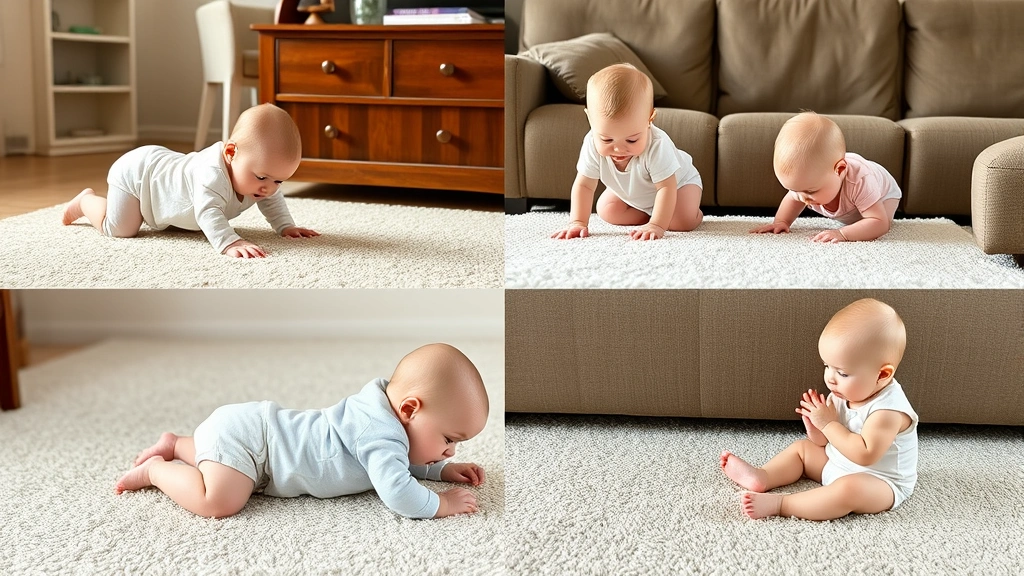
Different crawling styles include:
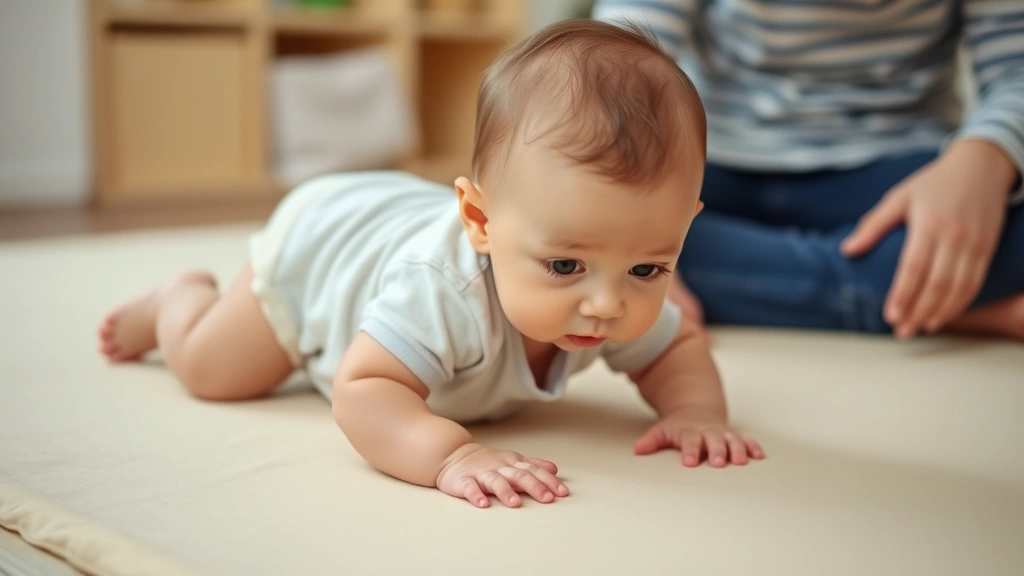
- Belly crawl: Babies scoot on their stomachs, using arms to pull themselves forward. This is completely normal and often the first crawling style.
- Commando crawl: Similar to belly crawling but with more arm and leg coordination. Very effective and common.
- Hands-and-knees crawl: The classic crawling position that many parents envision.
- Crab crawl: Babies move backward or sideways on hands and feet. Unusual but developmentally normal.
- Bottom scooting: Babies use their hands to propel themselves while sitting. Some babies primarily scoot this way before walking.
Research shows that crawling style has no correlation with intelligence, athleticism, or future development. A baby who belly-crawls at 8 months will develop typically if they continue progressing through other milestones.
Temperament significantly influences crawling timing. Cautious babies may take longer to attempt crawling, preferring to observe and practice balance through cruising. Bold babies might skip intermediate stages entirely. Neither approach indicates developmental concerns when other skills are developing appropriately.
Environmental factors also matter. Babies with limited floor time, those spending extended periods in carriers or swings, or babies with restricted play spaces may crawl later. This reflects opportunity, not ability. Once given space and encouragement, these babies typically catch up quickly.
Red Flags Pediatricians Actually Monitor
While late crawling alone rarely indicates problems, pediatricians watch for patterns of delayed development across multiple areas. Understanding what actually concerns medical professionals can ease unnecessary worry.
Actual developmental red flags include:
- No rolling by 6 months: Rolling is typically the first major motor skill. Absence by 6 months warrants evaluation.
- Significant asymmetry: Using one side of the body predominantly while the other remains relatively inactive can indicate neurological concerns.
- No purposeful reaching by 5-6 months: Babies should reach for objects and bring hands to mouth.
- Inability to sit independently by 9 months: Sitting is fundamental to crawling development.
- No weight-bearing on legs by 9-10 months: Babies should support weight on legs when held upright.
- Extreme muscle tone abnormalities: Either very floppy or very stiff muscles warrant investigation.
- Lack of interest in exploring environment: Babies should show curiosity about their surroundings.
- Regression in skills: Losing previously mastered abilities is concerning and requires immediate evaluation.
Importantly, late crawling as an isolated finding—with normal strength, symmetrical movement, appropriate sitting balance, and interest in exploration—is typically not a red flag. Your pediatrician evaluates the whole picture, not individual milestones.
During well-child visits, pediatricians assess muscle tone, strength, symmetry, reflexes, and overall development. They ask about your observations at home. They watch how your baby moves and interacts. This comprehensive evaluation is far more informative than reaching any single milestone on schedule.
How to Support Your Baby’s Movement
If you want to encourage crawling without pressure, focus on creating an environment that supports natural development. Safe play spaces and appropriate positioning matter tremendously.
Evidence-based strategies to support crawling development:
- Maximize floor time: Babies need daily opportunities to move freely on safe, clean floors. Aim for at least 1-2 hours of supervised floor play daily. This is non-negotiable for motor development.
- Reduce container time: While bouncy seats, swings, and carriers serve purposes, limit time in these devices. Babies learn to move by moving, not by being contained.
- Practice tummy time: Even babies who dislike tummy time benefit from short, frequent sessions. Start with 1-2 minutes several times daily and gradually increase. Tummy time builds the neck, shoulder, and core strength necessary for crawling.
- Use mirrors: Babies love looking at themselves. Place a safe, baby-friendly mirror at floor level to encourage neck strengthening and engagement.
- Position toys strategically: Place interesting toys just out of reach to motivate movement. As your baby progresses, gradually increase distance.
- Get on the floor: Model movement yourself. Babies learn by observing and imitating. Show enthusiasm for movement and exploration.
- Support without pushing: Help your baby into hands-and-knees position if they’re interested, but don’t force it. Some babies naturally find this position; others skip it entirely.
- Offer varied surfaces: Grass, carpet, tile, and blankets provide different sensory feedback and challenges that support motor development.
- Practice sitting: Support your baby in sitting positions to build core strength and balance. This foundation supports crawling.
Importantly, avoid baby walkers. Research consistently shows that walkers don’t accelerate crawling development and may actually delay it by limiting natural movement patterns. The AAP recommends against baby walkers for both developmental and safety reasons.
Babies Who Skip Crawling Entirely
Here’s something that surprises many parents: some babies never crawl, and this is completely normal. Research suggests that 10-15% of typically developing babies skip crawling altogether, moving directly from sitting to cruising to walking.
Babies who skip crawling often use alternative movement strategies. Some scoot on their bottoms. Others cruise along furniture earlier than typical crawlers. Some simply practice standing and balancing before walking independently. All of these pathways are developmentally normal.
Skipping crawling doesn’t predict future motor abilities. Studies following children who never crawled show no differences in walking age, athletic ability, or coordination compared to babies who crawled. The key is that babies are moving and exploring, regardless of the specific method.
What matters for development is:
- Adequate floor time and freedom to move
- Varied movement experiences (rolling, sitting, standing, balancing)
- Progression through major milestones (even if sequence varies)
- Symmetrical strength and coordination
- Interest in exploration and independence
If your baby is moving in some way—whether crawling, scooting, or cruising—and progressing through other developmental milestones, there’s no need for concern about crawling specifically.
When to Contact Your Pediatrician
Rather than focusing on crawling age alone, contact your pediatrician if you notice patterns suggesting broader developmental concerns.
Reasons to schedule an evaluation:
- Your baby isn’t rolling or showing any purposeful movement by 6 months
- Your baby can’t sit with minimal support by 8 months
- Your baby shows significant muscle tone abnormalities (very floppy or very stiff)
- Your baby shows asymmetrical movement (one side much stronger than the other)
- Your baby has lost previously mastered skills
- Your baby shows no interest in exploring or moving toward toys
- Your baby isn’t bearing weight on legs by 10 months
- You notice your baby isn’t progressing in any major developmental areas
- Your instincts tell you something seems different (trust your gut)
Early intervention services are available free or low-cost in most areas for children under 3 showing developmental delays. If your pediatrician has concerns, they can provide a referral. Early intervention isn’t diagnosis; it’s support. Many babies receive a few months of physical therapy that helps them progress beautifully.
Remember that your pediatrician has reviewed thousands of babies. They can distinguish between normal variation and actual concerns. If they say your baby is fine, trust that assessment. If they recommend evaluation, pursue it confidently—early support is incredibly beneficial when needed.
For new parents feeling anxious, documenting your baby’s skills can help during conversations with your pediatrician. Note when your baby started rolling, sitting, reaching, and any movement patterns you observe. This information helps professionals assess development accurately.
Frequently Asked Questions
My baby is 9 months old and not crawling yet. Should I be worried?
Not necessarily. Crawling typically begins between 6-10 months, but the range extends to 12 months without concern. If your baby is rolling, sitting independently or with minimal support, showing interest in reaching and exploring, and developing symmetrically, late crawling alone isn’t worrisome. However, if your baby shows no movement progression or other developmental delays, contact your pediatrician for evaluation.
Does crawling affect intelligence or learning ability?
No. Research consistently shows no correlation between crawling age or style and intelligence, academic performance, or learning ability. Many brilliant children crawled late or skipped crawling entirely. Motor development and cognitive development are separate domains.
Can I make my baby crawl faster?
You can provide an environment that supports natural crawling development through floor time, tummy time, and appropriate positioning. However, you cannot force faster crawling than your baby’s developmental readiness allows. Pushing too hard may create anxiety around movement. Focus on creating opportunities rather than achieving specific timelines.
My baby is 12 months old and still not crawling. When should I seek help?
By 12 months, if your baby shows no forward movement (crawling, scooting, or cruising) and isn’t bearing weight on legs, evaluation is appropriate. However, also consider whether your baby is progressing in other areas. Some babies who don’t crawl by 12 months may walk independently shortly after. If your baby is also delayed in other developmental areas, definitely contact your pediatrician.
Is bottom scooting normal?
Yes. Bottom scooting is a completely normal alternative to crawling. Babies who scoot typically walk at similar ages to crawlers. As long as your baby is moving forward and progressing in other milestones, scooting is developmentally appropriate.
Should I use a baby walker to help my baby crawl?
No. The American Academy of Pediatrics recommends against baby walkers. Research shows they don’t accelerate crawling development and may actually delay it. Additionally, walkers pose safety risks, including falls down stairs. Focus on floor time and natural movement instead.
My baby was born prematurely. When should I expect crawling?
Use your baby’s corrected age (age since expected due date) until approximately 2-3 years old. A baby born 2 months early would be expected to crawl around 8-12 months old (corrected age), even if their chronological age is 10-14 months. Always discuss corrected age with your pediatrician.
Is it bad if my baby skips crawling and goes straight to walking?
No. Approximately 10-15% of typically developing babies skip crawling and move directly to walking or cruising. This is normal and doesn’t indicate any problems. What matters is that your baby is moving and progressing through developmental milestones, not the specific pathway they take.
When should I babyproof for a crawling baby?
Begin babyproofing around 5-6 months, even if your baby isn’t crawling yet. Babies may begin moving unexpectedly, and preparation prevents accidents. Focus on removing hazards, securing furniture, covering outlets, and creating safe play spaces before movement accelerates.
Does tummy time really matter if my baby hates it?
Tummy time is beneficial for building strength and development, but it doesn’t have to mean long stretches of crying. Start with short 1-2 minute sessions several times daily. Do tummy time when your baby is happy and alert. Gradually increase duration. Even brief sessions accumulate and provide developmental benefits without creating negative associations with floor time.
Visit the Parent Path Daily Blog for more information on supporting your baby’s development, or explore our guide on practical baby items that support safe exploration.
Final Thoughts: Trust Your Baby’s Timeline
Late crawling, when occurring as an isolated finding with normal development in other areas, is rarely a cause for concern. Babies develop at wonderfully different paces, and these variations are normal, not problematic. Your role is to provide a safe, supportive environment for movement, watch for patterns of concerning delays across multiple areas, and trust your pediatrician’s expertise.
Focus less on when your baby crawls and more on whether they’re progressing, exploring, growing stronger, and developing confidence. These indicators matter far more than achieving any specific milestone on schedule. Every baby’s journey is unique, and that’s exactly how it should be.