Baby’s Breath Flowers: Safe for Kids? Expert View
As a parent, you want to create a beautiful, safe home environment for your children. Decorative flowers add charm and natural beauty to any space, but when you have young kids, safety becomes the top priority. Baby’s breath flowers are popular choices for bouquets, floral arrangements, and decorations, but many parents wonder whether these delicate blooms pose any risks to their children. Understanding the facts about baby’s breath flowers can help you make informed decisions about what you bring into your home.
Baby’s breath, scientifically known as Gypsophila, features tiny white or pink flowers on thin, wispy stems. These flowers are commonly used as filler in floral arrangements and bridal bouquets. While they appear innocent and delicate, it’s crucial to know whether they’re truly safe for children who might touch, mouth, or accidentally ingest them. This comprehensive guide explores the safety concerns, expert recommendations, and practical strategies for keeping your family safe around these popular flowers.
Table of Contents
[IMAGE_1]
Understanding Baby’s Breath Toxicity
Baby’s breath flowers contain saponins, which are naturally occurring compounds found in many plants. Saponins are glycosides that can cause gastrointestinal irritation when ingested. The American Society for the Prevention of Cruelty to Animals (ASPCA) classifies baby’s breath as toxic to both cats and dogs, and the same compounds that affect pets can also affect young children. However, the level of toxicity depends on several factors, including the amount consumed and the individual child’s sensitivity.
The toxicity of baby’s breath is generally considered mild to moderate rather than severe. This means that accidental contact or small ingestions are unlikely to cause serious harm, but larger quantities or repeated exposure could lead to more significant symptoms. Parents should understand that toxicity doesn’t automatically mean a plant is extremely dangerous—it means the plant contains compounds that can cause adverse effects if consumed in sufficient quantities.
Research from the National Poison Control Center indicates that most plant-related poisoning cases in children involve accidental ingestion of small amounts, which typically result in mild symptoms. Baby’s breath falls into this category of plants that warrant caution but shouldn’t cause panic if your child has minor contact with the flowers.
Potential Health Risks for Children
When considering whether baby’s breath flowers are safe for kids, understanding the specific health risks helps you assess whether these flowers belong in your home. The primary concern involves gastrointestinal irritation, which occurs when the saponins in baby’s breath contact the digestive system.
Gastrointestinal Symptoms: If a child ingests baby’s breath, the most likely outcome is mild to moderate stomach upset. This may include nausea, vomiting, abdominal pain, and diarrhea. These symptoms typically appear within a few hours of ingestion and usually resolve within 24 hours without medical intervention.
Dermal Contact: Direct contact with baby’s breath flowers on skin is generally safe. The saponins don’t penetrate intact skin, so simply touching the flowers shouldn’t cause problems. However, if a child has cuts or open wounds on their hands, it’s best to avoid contact to prevent any potential irritation.
Respiratory Irritation: Some people experience mild respiratory irritation from handling baby’s breath, particularly if they have sensitive airways or asthma. This is relatively uncommon in children but worth noting if your child has respiratory sensitivities.
Allergic Reactions: While rare, some individuals may have allergic reactions to baby’s breath. Symptoms could include itching, swelling of the lips or mouth, or in severe cases, difficulty breathing. If your child has known plant allergies, exercise extra caution.
The risk increases significantly if a child consumes a large quantity of baby’s breath flowers. Small tastes or accidental mouthing of a single flower are unlikely to cause serious problems, but a handful of flowers could trigger more noticeable symptoms.
What Happens If a Child Ingests Baby’s Breath
Understanding the timeline and symptoms of baby’s breath ingestion helps you respond appropriately if your child consumes these flowers. Knowledge about what to expect can reduce panic and help you determine whether medical attention is necessary.
Immediate Effects (0-2 hours): After ingestion, your child may not show symptoms immediately. Some children experience mild nausea or stomach discomfort within the first two hours, while others may show no signs at all, depending on the amount consumed.
Primary Symptoms (2-6 hours): If symptoms develop, they typically appear within two to six hours of ingestion. Common symptoms include mild vomiting, diarrhea, abdominal cramping, and loss of appetite. Most children experience only one or two of these symptoms rather than all of them.
Resolution Timeline: In the vast majority of cases, symptoms resolve naturally within 12 to 24 hours without requiring medical treatment. Your child’s digestive system processes the plant material, and normal function returns. Providing plenty of fluids and age-appropriate bland foods can help support recovery.
When to Seek Medical Attention: Contact your pediatrician or Poison Control (1-800-222-1222) if your child ingests a large quantity of baby’s breath, shows severe symptoms, or has symptoms lasting longer than 24 hours. Also seek help if your child is very young (under 2 years old) or has underlying health conditions.
It’s important to note that most pediatricians and poison control specialists don’t consider baby’s breath ingestion a medical emergency in typical scenarios. However, professional guidance is always valuable when you’re uncertain.

Safety Measures and Prevention Strategies
Creating a safe environment for your children doesn’t mean eliminating all flowers from your home—it means being intentional about placement and supervision. Here are practical strategies for keeping baby’s breath flowers safe around kids:
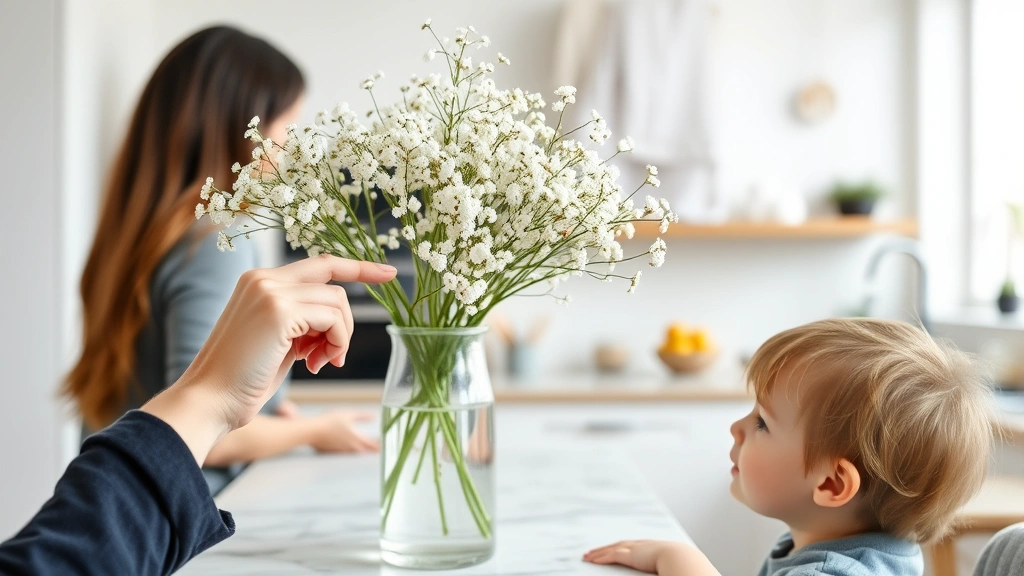
- High Placement: Keep floral arrangements on high shelves, windowsills, or tables that are out of your child’s reach. This prevents curious toddlers from accessing the flowers while they explore their environment.
- Secure Containers: Use heavy, stable vases or containers that won’t tip easily if a child pulls on the flowers. Avoid decorative but unstable vessels that could spill water or fall.
- Remove Loose Petals: Regularly check arrangements and remove fallen petals or flowers from floors and surfaces where children play. Loose flowers are more tempting for toddlers to pick up and mouth.
- Supervision: When children are in the same room as baby’s breath arrangements, maintain appropriate supervision. This is especially important for toddlers and young children who explore the world by touching and tasting.
- Teaching Moments: As your child grows, use flowers as teaching opportunities. Explain that some plants aren’t for eating and that beautiful flowers should be admired but not touched without permission.
- Hand Washing: Encourage children to wash their hands after handling flowers or playing near floral arrangements. This simple habit reduces any potential risk from accidental hand-to-mouth contact.
- Pet Considerations: Remember that baby’s breath is toxic to cats and dogs. Keep arrangements away from pets as well as children, and dispose of fallen flowers promptly.
These preventive measures align with general parenting advice for creating safe home environments. The key is finding balance between creating a beautiful home and maintaining safety for your family.
Safer Flower Alternatives for Families
If you’re concerned about baby’s breath flowers, numerous beautiful alternatives are completely safe for children. These options let you enjoy fresh flowers without worry:
- Sunflowers: Large, cheerful, and completely non-toxic, sunflowers are excellent choices for families with young children. Their size makes them less tempting for toddlers to mouth.
- Roses: While the thorns require careful handling, rose petals are non-toxic. Simply remove thorns before displaying roses in homes with curious children.
- Tulips: These colorful flowers are safe for children and add beautiful variety to arrangements. They’re widely available and come in numerous colors.
- Zinnias: Bright and cheerful, zinnias are completely safe for families and attract butterflies if displayed near windows.
- Marigolds: These vibrant flowers are non-toxic and often used in children’s gardens. They’re hardy and long-lasting in arrangements.
- Orchids: Elegant and safe, orchids make excellent decorative choices for family homes and can last for weeks in proper conditions.
- Gerbera Daisies: Large, colorful, and non-toxic, gerbera daisies are perfect for families and come in numerous bright shades.
When selecting flowers for your home, consult resources like the ASPCA’s Animal Poison Control Center or ask your florist about toxicity. Most florists are happy to recommend child-safe options and can create beautiful arrangements using non-toxic flowers.
Expert Recommendations and Guidelines
Leading pediatric and toxicology experts provide clear guidance on managing plants in homes with children. According to the American Association of Poison Control Centers, the approach to baby’s breath and similar mildly toxic plants should be cautious but not alarmist.
Dr. recommendations from poison control specialists emphasize that accidental exposure to baby’s breath flowers is unlikely to cause serious harm in most cases. However, parents should implement reasonable safety precautions and know how to respond if ingestion occurs. This balanced approach allows families to enjoy flowers while maintaining appropriate safety measures.
The American Academy of Pediatrics (AAP) suggests that parents should be aware of toxic plants in their homes and take preventive measures, but shouldn’t live in fear of minor accidental exposures. This perspective helps parents maintain perspective about plant toxicity while still prioritizing child safety.
Pediatric toxicologists note that the dose makes the poison—a concept fundamental to toxicology. A child tasting a single baby’s breath flower is in a completely different risk category than a child consuming several handfuls. Understanding this principle helps parents respond appropriately to different scenarios.
For families considering baby shower gift ideas or home decorations, experts recommend choosing non-toxic flowers when possible, especially for homes with very young children. However, they also acknowledge that baby’s breath is such a common decorative element that many families have these flowers in their homes without incident.
Frequently Asked Questions
Is baby’s breath toxic to children?
Baby’s breath contains saponins that can cause mild to moderate gastrointestinal upset if ingested in significant quantities. However, small accidental exposures or single flower ingestion typically cause no serious harm. The toxicity is generally considered mild rather than severe.
What should I do if my child eats baby’s breath?
If your child ingests a small amount of baby’s breath, monitor them for symptoms like nausea, vomiting, or diarrhea. Provide plenty of fluids and bland foods. Contact Poison Control (1-800-222-1222) or your pediatrician if your child consumed a large quantity, shows severe symptoms, or if symptoms persist beyond 24 hours.
Can baby’s breath cause allergic reactions in children?
While rare, some children may have allergic reactions to baby’s breath. If your child has known plant allergies or shows signs of an allergic reaction (itching, swelling, difficulty breathing), seek medical attention immediately.
How can I keep baby’s breath flowers safe around my toddler?
Place arrangements on high shelves out of reach, use stable containers, remove fallen petals promptly, maintain supervision, and teach your child not to touch flowers without permission. These preventive measures significantly reduce any potential risk.
Are there completely safe flower alternatives?
Yes, many flowers are completely non-toxic for children, including sunflowers, roses, tulips, zinnias, marigolds, orchids, and gerbera daisies. Ask your florist to recommend child-safe options when ordering arrangements.
Should I remove baby’s breath from my home if I have young children?
Not necessarily. With proper placement and supervision, baby’s breath can safely coexist in homes with children. However, if you prefer to eliminate any potential risk, safer alternatives are readily available.
What’s the difference between baby’s breath toxicity in pets and children?
The same saponins affect both pets and children, but children’s larger body size and different eating habits create different risk profiles. Pets are more likely to consume larger quantities of flowers, increasing their risk. Children who taste a flower and find it unpleasant are unlikely to eat more.