
Is Co-Sleeping Safe? Pediatricians Weigh In
Co-sleeping—the practice of sharing a bed with your infant or young child—remains one of the most debated topics in modern parenting. While some families embrace it as a natural way to bond and facilitate nighttime feeding, others worry about safety risks. The truth is nuanced, and understanding what pediatricians and sleep experts actually recommend can help you make the best decision for your family.
This comprehensive guide explores the current research on co-sleeping safety, examines what major health organizations say, and provides practical guidance for families considering this sleep arrangement. Whether you’re a new parent navigating these decisions or seeking to understand different approaches to infant sleep, we’ll help you separate fact from fear.
What Is Co-Sleeping?
Co-sleeping refers to parents and children sharing the same sleeping surface—typically a bed. This differs from room-sharing, where a child sleeps in their own crib, bassinet, or bed in the parents’ room. The terms are often confused, but this distinction is crucial when discussing safety recommendations.
Co-sleeping has been practiced across cultures for centuries and remains common in many parts of the world. In Western contexts, it gained renewed attention in the 1990s through attachment parenting advocates who emphasized the bonding benefits. However, as sudden infant death syndrome (SIDS) research evolved, medical organizations began issuing specific guidance about this practice.
It’s important to understand that co-sleeping encompasses different arrangements. Some families practice occasional co-sleeping during nighttime feedings, while others make it a permanent arrangement. The age of the child, the size of the bed, and other environmental factors all influence safety considerations.
What Does the Research Say?
The research on co-sleeping safety is complex and sometimes contradictory, which contributes to confusion among parents. Multiple studies have examined the relationship between bed-sharing and SIDS, with varying conclusions depending on methodology and population studied.
SIDS and Co-Sleeping Connection
The American Academy of Pediatrics has identified bed-sharing as a risk factor for SIDS, particularly when it involves infants under 4 months of age. However, research also shows that SIDS risk increases dramatically when co-sleeping occurs alongside other risk factors such as parental smoking, alcohol use, or drug use. A landmark 2016 study in Pediatrics found that the increased SIDS risk from bed-sharing was primarily associated with these additional hazards rather than bed-sharing alone in low-risk families.
Cultural Context and Risk Assessment
Important research from the National Institutes of Health suggests that SIDS rates vary significantly by culture and geography, independent of co-sleeping prevalence. This indicates that other factors—including prenatal care quality, breastfeeding rates, and socioeconomic conditions—play substantial roles in SIDS risk.
Studies from populations where co-sleeping is normative show that when practiced safely, the risks may be considerably lower than Western medical organizations initially suggested. This doesn’t mean co-sleeping is universally safe, but rather that safety depends heavily on how it’s practiced.

” alt=”Pediatrician discussing sleep safety with attentive parents in clinical office setting with reassuring expressions”>
Pediatrician Recommendations
Major health organizations have specific positions on co-sleeping that reflect current evidence. Understanding these recommendations helps parents make informed decisions aligned with medical guidance.
American Academy of Pediatrics Position
The AAP recommends room-sharing without bed-sharing for at least the first six months, and ideally the first year. They acknowledge that room-sharing reduces SIDS risk by approximately 50%. However, the AAP also recognizes that many families practice co-sleeping and emphasizes that if parents choose to bed-share, specific safety measures become essential.
This nuanced stance represents an evolution in thinking. Rather than an absolute prohibition, the AAP provides a harm-reduction framework: if you’re going to co-sleep, here’s how to do it more safely.
International Perspectives
Organizations like the World Health Organization recognize co-sleeping as a normal practice in many cultures and focus recommendations on safety optimization rather than elimination. This reflects the reality that in many parts of the world, co-sleeping is the norm and SIDS rates aren’t necessarily higher than in Western countries.
Your pediatrician’s individual perspective matters tremendously. Many pediatricians take a collaborative approach, working with families to understand their preferences and then providing specific safety guidance tailored to that family’s situation. Choosing a pediatrician who respects your parenting philosophy while prioritizing safety is valuable.
Safe Co-Sleeping Practices
If your family decides to co-sleep, implementing specific safety measures significantly reduces risks. These evidence-based practices should be non-negotiable.
Essential Safety Guidelines
- Age Consideration: Co-sleeping is safest for infants over 4 months old, though risk reduction measures are important at all ages if you choose this arrangement
- Firm Sleep Surface: Use a firm mattress, not a waterbed, pillow-top bed, or soft surface. The mattress should fit snugly in the bed frame with no gaps
- Remove Hazards: Keep pillows, blankets, bumpers, and stuffed animals away from your infant. Use a sleep sack or wearable blanket instead of loose bedding
- Proper Positioning: Place your baby on their back for sleep, not the side or stomach
- Avoid Entrapment: Ensure no gaps exist between the mattress and headboard, footboard, or walls where an infant could become wedged
- Parental Health: Co-sleeping is unsafe if parents have consumed alcohol, used drugs, or take medications that impair consciousness. Obesity and extreme fatigue also increase risks
- Avoid Overheating: Keep the room at a comfortable temperature and avoid excessive bedding or clothing that could cause overheating
- Breastfeeding Position: If nursing while bed-sharing, use safe positioning with your arm supporting your baby and your baby’s face clear of pillows
Creating a Safe Sleep Environment
The physical setup of your bedroom matters significantly. A dedicated co-sleeping space using a bed rail or side-car bassinet—a small bed that attaches to the adult bed—offers a middle ground. This arrangement allows close proximity for nighttime feeding while providing your baby with their own defined sleep surface.
Some families use the “arms reach” concept, where the baby sleeps in a bassinet or small bed immediately adjacent to the parental bed, allowing easy access without actual bed-sharing. This approach addresses many safety concerns while maintaining the convenience and bonding benefits parents seek.
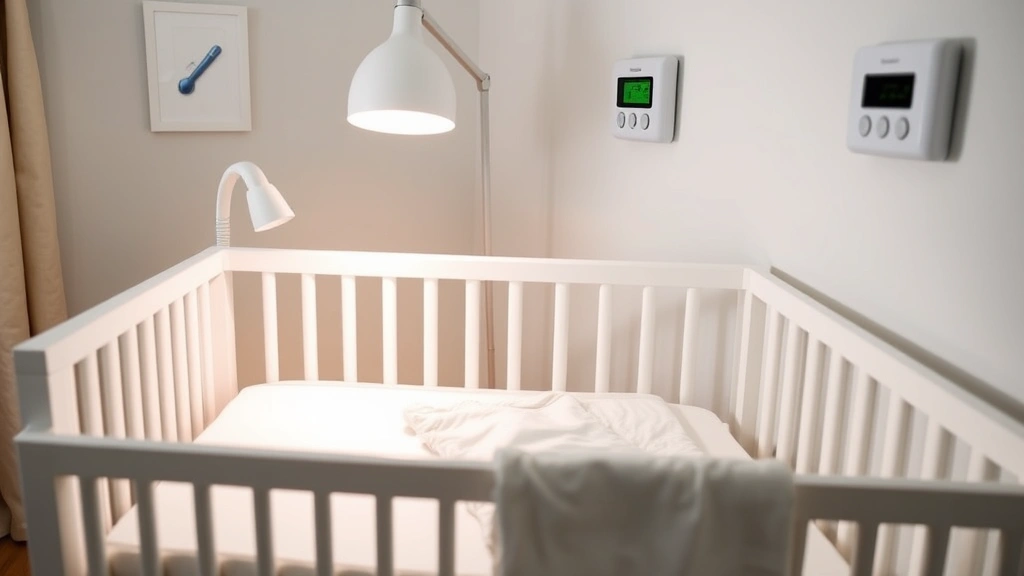
” alt=”Safe nursery setup showing crib with fitted sheet and sleep sack in dimly lit room with temperature monitor”>
Room-Sharing Alternatives
If you’re drawn to co-sleeping for its convenience and bonding benefits but concerned about safety, several alternatives provide similar advantages with reduced risks.
Room-Sharing Without Bed-Sharing
The comprehensive parenting advice from pediatricians increasingly emphasizes room-sharing as the optimal compromise. Your baby sleeps in their own crib, bassinet, or play yard in your bedroom. This arrangement:
- Reduces SIDS risk by approximately 50%
- Facilitates nighttime feeding without the hazards of bed-sharing
- Allows parents to monitor their baby’s breathing and movements
- Provides the comfort of proximity without the risks of shared sleep surfaces
- Makes the eventual transition to independent sleeping easier
Bedside Sleepers and Co-Sleepers
Products designed specifically for safe co-sleeping have evolved significantly. Bedside sleepers attach securely to adult beds, creating a separate sleep space for your baby while keeping them within arm’s reach. These solutions maintain the convenience factor while addressing safety concerns about shared sleep surfaces.
When selecting any sleep product, verify it meets current safety standards and has no recalls. Check the Consumer Product Safety Commission website for information on any product you’re considering.
Practical Considerations for New Parents
If you’re preparing for a new baby, choosing appropriate baby items includes thoughtful sleep solutions. Quality bassinets and pack-and-plays designed for bedroom use offer flexibility as your family’s needs evolve. Many parents find that having multiple sleep options—a bassinet for early months and a crib for later—provides flexibility as they discover what works best for their family.
Frequently Asked Questions
Is co-sleeping safe for newborns?
Co-sleeping with newborns carries higher risks, particularly in the first four months when SIDS risk peaks. If you choose to co-sleep with a newborn, implementing every safety measure mentioned above becomes critical. Many pediatricians recommend waiting until at least 4 months and preferably considering room-sharing alternatives during this high-risk period.
What about breastfeeding and co-sleeping?
Breastfeeding and co-sleeping have a complex relationship. While breastfeeding itself reduces SIDS risk, combining it with bed-sharing requires particular attention to safe positioning. Many lactation consultants recommend learning safe co-sleeping positions if you plan to nurse while bed-sharing. However, room-sharing without bed-sharing still provides the convenience of nighttime feeding with reduced risks.
When should we transition from co-sleeping?
There’s no universal age for this transition. Some families transition around 6 months, others around age 2-3, and some continue longer. The transition is often easier when done gradually, moving from bed-sharing to room-sharing to independent sleeping. Consulting your pediatrician about your specific situation helps identify the best timing for your family.
Can co-sleeping create dependency issues?
Research doesn’t support the idea that co-sleeping creates problematic dependency. Children who co-sleep don’t inherently have more sleep problems than those who don’t. However, the transition to independent sleeping may take longer if co-sleeping has been the norm. Essential parenting advice emphasizes that there’s no single “right” approach—different families have different needs and values.
What if my partner and I disagree about co-sleeping?
This is a common concern. The best approach involves honest conversation about both partners’ comfort levels, values, and concerns. Consider consulting your pediatrician together to discuss the evidence and options. Room-sharing without bed-sharing often serves as a compromise that addresses safety concerns while maintaining close contact.
Is co-sleeping safe if I’m overweight or take medications?
Certain parental factors increase co-sleeping risks. If you take sedating medications, have sleep apnea, are significantly obese, or struggle with fatigue, bed-sharing poses higher risks. Discuss your specific situation with your healthcare provider. Room-sharing alternatives may be safer choices for your family.
The Bottom Line
Co-sleeping safety isn’t a simple yes-or-no question. Current research indicates that while bed-sharing carries increased risks compared to room-sharing, these risks are substantially modified by how co-sleeping is practiced and which additional risk factors are present. The safest sleep arrangement is one that allows your baby to sleep on their back on a firm surface in a smoke-free, alcohol-free, drug-free environment.
For many families, room-sharing without bed-sharing offers the best balance of safety, convenience, and bonding. For others, co-sleeping with careful attention to safety measures works well. The key is making an informed decision aligned with your family’s values and your pediatrician’s guidance. Whatever you choose, prioritizing a safe sleep environment—firm surface, back sleeping position, appropriate room temperature, and absence of hazards—matters most.