When Do Babies Walk? A Comprehensive Milestone Guide for Parents
Watching your baby take their first steps is one of the most magical moments in parenting. That wobbling, uncertain journey from crawling to walking represents a major developmental milestone that every parent eagerly anticipates. But when exactly do babies typically start walking, and what signs should you watch for? Understanding this developmental stage helps you support your little one’s growth while knowing what’s developmentally normal.
The walking milestone is highly individual, and babies develop at their own pace. While some children cruise confidently by nine months, others don’t take independent steps until well into their second year. Rather than comparing your baby to others, focus on the developmental progression and celebrate each small achievement. This guide explores everything you need to know about baby walking, from the earliest signs of readiness to troubleshooting common concerns.
As you navigate this exciting phase, remember that comprehensive parenting advice can help you feel more confident in supporting your baby’s development. You might also want to explore our selection of baby boy clothes and baby girl clothes designed for active toddlers just beginning their walking journey.
Table of Contents
- Typical Age Range for Walking
- Developmental Stages Before Walking
- Signs Your Baby Is Ready to Walk
- How to Support Your Baby’s Walking Development
- Safety Considerations for New Walkers
- When to Consult Your Pediatrician
- Frequently Asked Questions
Typical Age Range for Walking
Most babies take their first independent steps between 12 and 15 months of age, though the normal range extends from 8 to 18 months. Some children are natural early walkers, achieving this milestone as young as 8 or 9 months, while others prefer to perfect their crawling skills first and don’t walk until 16-18 months. Both scenarios fall within the range of typical development.
The variation in walking age doesn’t necessarily indicate anything about your child’s intelligence or future athletic ability. Factors like temperament, muscle development, birth weight, and even gender can influence timing. Generally, children who were born prematurely should have their walking age adjusted based on their corrected age (age from their due date) until around age 2 or 3.
It’s worth noting that developmental screening from the American Academy of Pediatrics emphasizes that wide variation in walking age is completely normal. What matters most is that your baby is progressing through the developmental stages that lead to walking, even if the timeline differs from other children.
Developmental Stages Before Walking
Walking doesn’t happen overnight—it’s the culmination of months of progressive development. Understanding these stages helps you recognize your baby’s progress and know what to expect next.
Neck and Head Control (2-4 months)
The first step toward walking is actually in the neck and head. By 2-3 months, babies develop the ability to hold their head steady. This seemingly simple achievement represents significant neural development and muscle strengthening that will eventually support upright movement.
Rolling and Sitting (4-6 months)
Around 4-6 months, babies begin rolling from back to front and front to back. By 6 months, most babies can sit with support, and many can sit independently by 7-8 months. These skills develop core strength essential for standing and walking.
Scooting and Crawling (6-10 months)
Between 6 and 10 months, babies typically begin moving independently. Some scoot backward, others crawl forward, and some skip crawling entirely. All of these movement patterns are normal. Crawling strengthens the arms, shoulders, and legs needed for walking, though research shows that babies who don’t crawl can still walk normally.
Pulling to Stand (8-12 months)
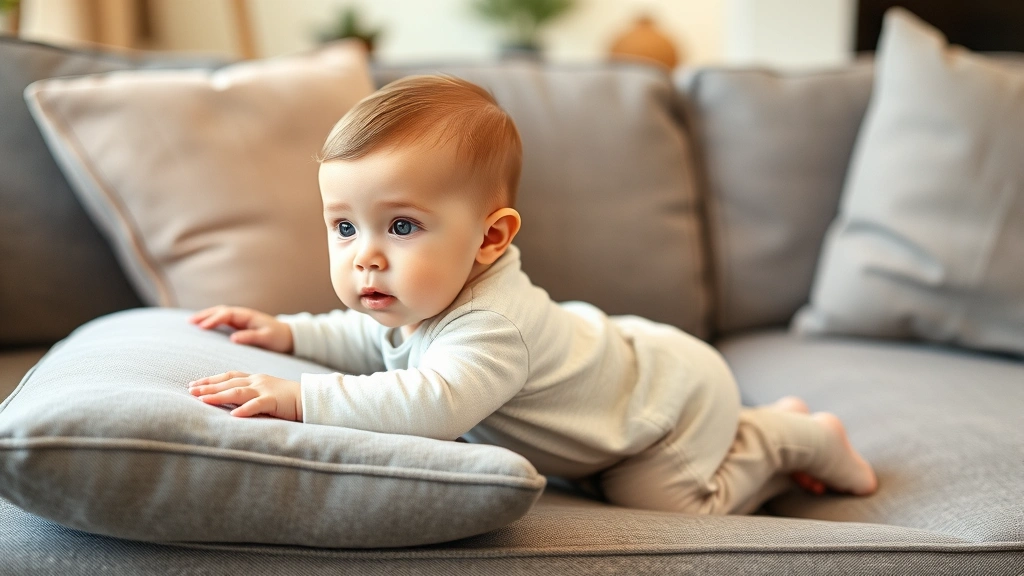
This is a crucial milestone. Babies begin pulling themselves up on furniture, starting with hands and knees, then progressing to standing with support. Initially, they may need help getting down and might cry in frustration when stuck. This stage typically occurs between 8 and 12 months.
Cruising (9-14 months)
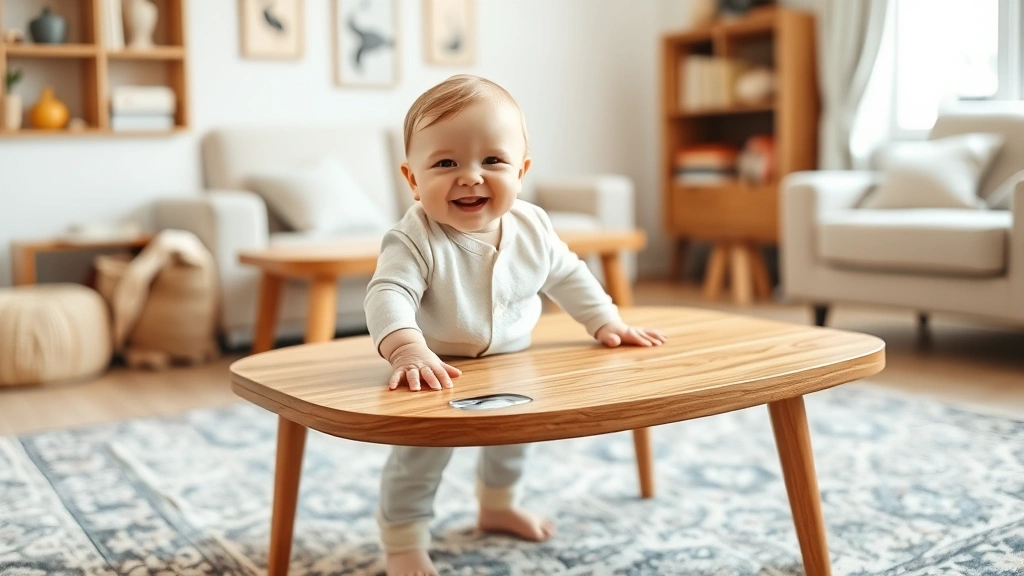
Once babies can pull to stand, they often begin cruising—walking sideways while holding onto furniture for support. This stage develops balance, coordination, and confidence. Babies may cruise along the couch, coffee table, or other sturdy furniture before attempting independent steps.
Standing Independently (10-15 months)
Before taking independent steps, babies learn to stand without support for brief moments. You might notice your baby letting go of furniture for a few seconds, then dropping back down. This growing confidence and balance development signals that independent walking is approaching.
Signs Your Baby Is Ready to Walk
Every baby shows readiness differently, but certain signs consistently indicate that walking may be approaching. Watch for these developmental cues:
- Pulls to stand confidently: Your baby can pull themselves up on furniture and stands with minimal support
- Cruises steadily: Movement along furniture is smooth and purposeful rather than shaky
- Stands alone momentarily: Your baby releases furniture and balances independently for several seconds
- Shifts weight between feet: You notice bouncing or weight-shifting while standing with support
- Reaches for objects while standing: Your baby attempts to grab toys without immediately sitting down
- Shows curiosity about movement: Your baby watches other children walking with interest
- Has strong leg muscles: Legs feel sturdy and can support body weight effectively
- Demonstrates determination: Your baby persists in attempts to move independently despite frequent falls
Remember that babies don’t need to demonstrate all these signs simultaneously. The progression is gradual, and each baby’s path is unique. Some babies who are cautious might practice standing for weeks before taking a single step, while bold babies might suddenly take several steps with minimal warning.
How to Support Your Baby’s Walking Development
While you can’t force your baby to walk before they’re developmentally ready, you can create an environment that encourages and supports this milestone.
Provide Safe Spaces to Practice
Create areas where your baby can practice pulling to stand and cruising safely. Low furniture, sturdy ottomans, and coffee tables with rounded edges provide excellent practice opportunities. Ensure all furniture is stable and won’t tip if your baby pulls or leans on it. Remove sharp corners and secure any unstable pieces.
Minimize Restrictive Devices
Walkers and jumpers can actually delay walking development. These devices prevent babies from learning proper balance and weight distribution. Instead, allow your baby to move freely on the floor, which builds the strength and coordination needed for independent walking. When you need to keep your baby contained, use a playpen or baby gate rather than walkers.
Offer Encouragement Without Pressure
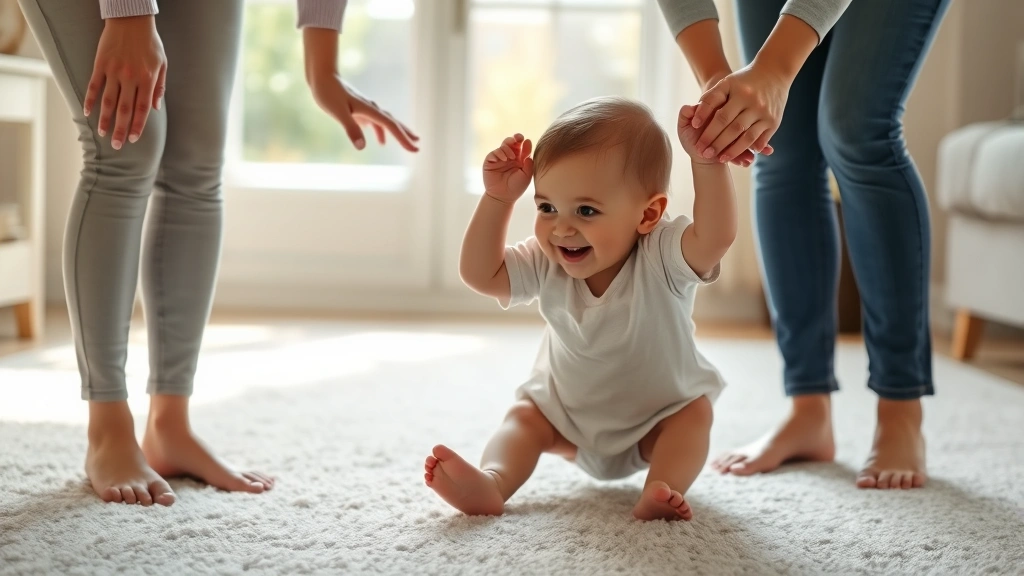
Celebrate your baby’s efforts enthusiastically, but don’t pressure them to walk before they’re ready. Offer your hands for practice walking, but let your baby set the pace. Some babies love being held while “walking,” while others prefer independent exploration. Follow your baby’s lead and comfort level.
Choose Appropriate Footwear
Soft-soled shoes or going barefoot is best for developing walkers. Bare feet provide better sensory feedback and balance development than hard-soled shoes. If you choose shoes, ensure they’re flexible and allow natural foot movement. Save fancy shoes for special occasions.
Encourage Stair Climbing
Once your baby is walking, supervised stair practice builds confidence and strength. Start with one or two steps, and always supervise closely. Climbing stairs actually helps develop the muscle patterns needed for more advanced walking skills.
Practice on Various Surfaces
Exposure to different textures—grass, carpet, tile, wood—helps babies develop balance and adapt their walking technique. Different surfaces require subtle adjustments that strengthen motor skills and coordination.
Safety Considerations for New Walkers
As your baby becomes mobile, safety becomes increasingly important. New walkers are accident-prone as they develop coordination and judgment.
Fall Prevention: Babies learning to walk fall frequently—this is normal and necessary for learning. However, you can reduce injury severity. Install safety gates at the top and bottom of stairs, secure loose rugs, pad sharp furniture corners, and keep the walking area clear of obstacles. Expect bumps and bruises; they’re part of the learning process.
Supervision: Never leave a new walker unattended, even briefly. Babies move quickly and unpredictably, and accidents can happen in seconds. Use baby gates, playpens, and constant visual supervision to keep your baby safe.
Appropriate Clothing: Ensure your baby wears clothing that doesn’t restrict movement. Long pants can be tripping hazards, so consider shorter options or well-fitted clothing. Avoid overly bulky outfits that impede movement. Check our baby boy clothes and baby girl clothes collections for appropriately fitted options designed for active toddlers.
Footwear Safety: If using shoes, ensure they fit properly and don’t cause tripping. Many experts recommend going barefoot indoors whenever possible for better balance development.
When to Consult Your Pediatrician
While variation in walking age is normal, certain signs warrant discussion with your pediatrician. Contact your doctor if:
- Your baby hasn’t pulled to stand by 12 months
- Your baby shows significant asymmetry in movement (favoring one side noticeably)
- Your baby is 18 months old and not walking independently
- Your baby walked previously but has regressed or stopped walking
- You notice your baby’s legs seem unusually stiff or floppy
- Your baby seems to be in pain when moving or bearing weight
- Your baby has difficulty coordinating movements or frequently falls
- You have concerns about your baby’s overall development
Early intervention services are available in most areas and can provide evaluation if you’re concerned. These services are typically free or low-cost and can be incredibly helpful in identifying any developmental delays early. The CDC provides milestone information and guidance on developmental concerns.
Remember that corrected age matters for babies born prematurely. If your baby was born more than two weeks early, adjust their age for developmental milestones until around age 2 or 3. Discuss the appropriate corrected age to use with your pediatrician.
Frequently Asked Questions
Is it normal if my baby walks at 9 months?
Yes, early walking is completely normal. Approximately 5% of babies walk by 9 months. Early walkers tend to be children with naturally strong leg muscles, bold temperaments, or genetic predisposition to early mobility. Early walking doesn’t indicate exceptional intelligence or athletic ability—it’s simply one variation of normal development.
Should I be concerned if my baby isn’t walking at 15 months?
Not necessarily. The normal range extends to 18 months, and many perfectly healthy babies aren’t walking independently until 16-18 months. However, if your baby isn’t pulling to stand or cruising by 15 months, mention this to your pediatrician. They can assess whether evaluation is needed or if your baby is simply following a slower developmental timeline.
Do babies who don’t crawl walk later?
No. Research shows that babies who skip crawling and move directly to walking develop normal walking skills without delay. The crawling stage, while common, isn’t necessary for walking development. Babies use various movement patterns to build strength, and all these patterns can lead to normal walking.
What’s the best way to help my baby practice walking?
The best practice is free play in a safe environment. Allow your baby to move at their own pace without artificial devices. Offer your hands for support if your baby wants it, but let them lead. Encourage cruising along furniture and standing practice, but don’t pressure independent steps. Babies learn walking through natural play and exploration.
Should my baby wear shoes while learning to walk?
Barefoot is ideal for developing walkers because it provides better sensory feedback and balance development. If you must use shoes, choose soft-soled, flexible options that allow natural foot movement. Save structured, rigid shoes for when your baby is walking confidently and spending time outdoors.
Is it okay to use a baby walker?
The American Academy of Pediatrics discourages traditional baby walkers because they don’t help walking development and may actually delay it. Walkers prevent babies from experiencing the weight shifts and balance challenges necessary for learning to walk. They also pose safety risks, including falls down stairs. If you want to contain your baby safely, use a stationary play center or playpen instead.
How many times per day should my baby practice walking?
Babies naturally practice walking throughout the day during play. Structured practice sessions aren’t necessary—just allow your baby free play time in a safe space. Most babies will practice walking as much as they want during normal daily activities and play.
What should I do if my baby is afraid to let go of furniture?
This is completely normal and shows appropriate caution. Never force your baby to release furniture or stand independently before they’re ready. Some babies need more practice and confidence-building before attempting independent steps. Continue offering support and encouragement, and your baby will progress at their own pace. Pushing too hard can create anxiety around walking.
For more parenting guidance, visit the Parent Path Daily Blog, explore our baby registry checklist for essential items, or check out our best baby shower gifts guide for celebrating this exciting milestone with loved ones.