What Do Baby Birds Eat? A Vet Explains
Finding a baby bird in your yard can spark curiosity and concern in equal measure. Whether you’re a wildlife enthusiast, a parent helping your child understand nature, or someone who’s discovered a nestling on your property, understanding what baby birds eat is essential for their survival and development. Baby birds have remarkably specific dietary needs that vary dramatically depending on their species, age, and developmental stage. From the moment they hatch until they fledge, these tiny creatures require precise nutrition to grow strong wings, develop their feathers, and eventually take flight.
As a veterinarian with over fifteen years of experience in avian care and wildlife rehabilitation, I’ve worked with hundreds of baby birds and their concerned caretakers. The question “what do baby birds eat?” doesn’t have a one-size-fits-all answer, but understanding the fundamentals will help you appreciate these remarkable creatures and know how to help if you encounter one in need. This comprehensive guide explores the fascinating world of baby bird nutrition, covering everything from natural feeding behaviors to emergency care situations.
Natural Diet of Baby Birds: What Mother Birds Provide
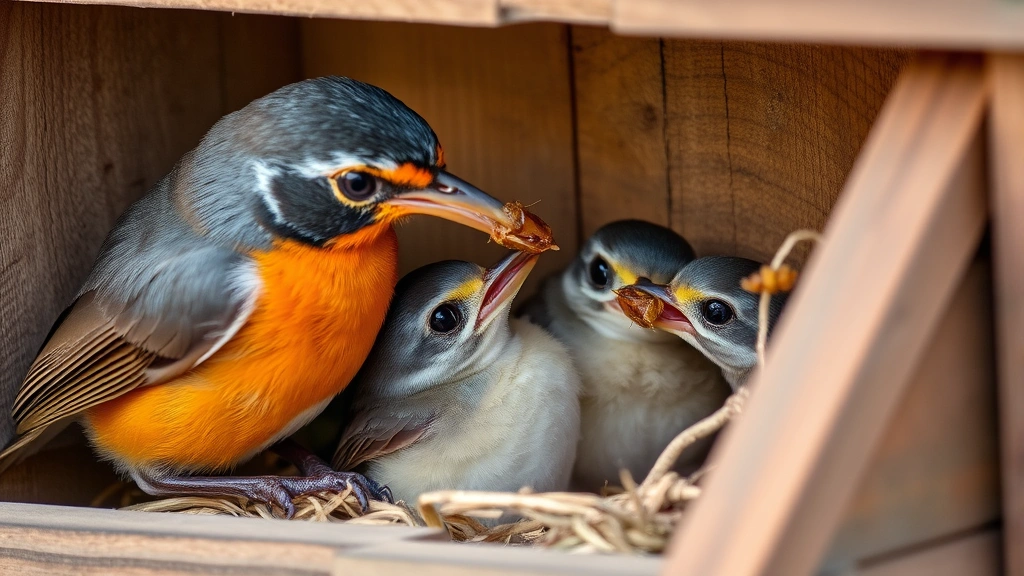
In nature, baby birds rely entirely on their parents for nutrition. The diet their parents provide depends on what species they are and what food sources are available in their environment. Most baby birds are altricial, meaning they’re born relatively helpless and depend on parental feeding for survival. The parent birds work tirelessly, making dozens of feeding trips each day to keep their growing chicks nourished.
The primary diet for most baby birds consists of insects and invertebrates. Worms, caterpillars, beetles, grasshoppers, and spiders provide the essential proteins and nutrients these developing birds need. Parent birds often spend hours searching for these protein-rich foods, crushing them in their beaks before regurgitating them into their chicks’ mouths. Some species also feed their young partially digested food mixed with saliva, which aids digestion and nutrient absorption.
Certain species supplement this diet with seeds, berries, and plant matter as their chicks mature. Fruit-eating birds like thrushes and waxwings introduce soft fruits to their young birds, while seed-eating species gradually transition their chicks to harder seeds as their beaks and digestive systems develop. The Cornell Lab of Ornithology provides excellent resources about species-specific feeding behaviors that can help you identify what a particular baby bird needs.
Understanding parenting advice and natural behaviors in the animal kingdom can deepen our appreciation for how parent birds instinctively know what their chicks need. This same dedication to meeting developmental needs is something human parents can relate to and learn from.

Feeding Stages and Developmental Milestones
Baby birds progress through distinct feeding stages as they develop, each requiring different food consistency and nutritional composition. Understanding these stages is crucial if you ever need to care for a baby bird temporarily.
Nestling Stage (0-10 Days)
Newly hatched chicks are incredibly vulnerable and completely dependent on their parents. During this period, their eyes are often closed, and they can barely hold up their heads. Parent birds feed them extremely soft, easily digestible food—often regurgitated insects that have been partially broken down in the parent’s crop (a specialized food storage pouch). At this stage, chicks need feeding every 15-30 minutes during daylight hours.
Early Nestling Stage (10-14 Days)
As chicks grow, their eyes open and they become more active. They begin recognizing their parents and responding to feeding cues. Parents gradually introduce slightly larger food pieces, though everything remains soft and easily manageable. Feeding frequency typically decreases to every 20-40 minutes, though parent birds may make 100+ feeding trips daily in total.
Late Nestling Stage (14-18 Days)
Chicks now have most of their feathers and are considerably stronger. Parents introduce larger insects and less-processed food items. Some species begin offering whole insects or seeds during this stage. This is when you might observe a baby bird hopping around near its nest—it’s likely a fledgling in this critical developmental phase.
Fledgling Stage (18+ Days)
Once chicks leave the nest, they become fledglings. Parents continue feeding them for several days or even weeks, depending on the species, while teaching them to forage independently. During this period, young birds learn which foods are safe and how to find them. The American Academy of Pediatrics emphasizes that learning through observation is crucial in young development—a principle that applies to baby birds as well.
Species-Specific Diets: Variations Across Bird Types
Different bird species have evolved to eat different foods, and these dietary preferences begin from the moment chicks hatch. Understanding species-specific needs is essential for proper care.
Songbirds and Passerines
Most common backyard songbirds—including robins, sparrows, wrens, and finches—feed their young primarily insects and invertebrates. Even seed-eating adult finches switch to feeding insects to their chicks during breeding season because insects provide superior protein content. Baby songbirds consume hundreds of insects during their development, making them valuable for pest control.
Raptors (Hawks, Falcons, and Owls)
Baby raptors require whole prey items, starting with very small animals like insects and moving to small rodents, birds, and other prey as they grow. Parent raptors tear food into manageable pieces for young chicks, but older nestlings can consume whole prey. This diet provides the nutrients necessary for developing strong talons and keen eyesight.
Waterfowl (Ducks, Geese, and Swans)
Ducklings and goslings are precocial, meaning they’re relatively independent from hatching. They feed themselves on aquatic plants, insects, small fish, and crustaceans. Parent birds show them where to find food but don’t regurgitate it for them. These chicks can forage within hours of hatching.
Hummingbirds
Baby hummingbirds require a specialized diet of tiny insects and spiders mixed with nectar. Parent hummingbirds feed their chicks by inserting their long beaks deep into the chick’s mouth and regurgitating this protein-rich mixture. Hummingbird chicks need feeding every 10-15 minutes and consume food equal to about half their body weight daily.
Parrots and Macaws
Young parrots eat seeds, nuts, fruits, and vegetation provided by their parents. These birds have powerful beaks and digestive systems designed for processing hard seeds and nuts. Parent parrots may feed chicks for extended periods—sometimes several months—even after they can eat independently.
What to Do If You Find a Baby Bird: A Practical Guide
Discovering a baby bird raises important questions about whether intervention is necessary. The first step is determining whether you’ve found a nestling or a fledgling.
Nestlings vs. Fledglings
Nestlings are mostly featherless or covered in fluffy down, eyes often closed, and completely helpless. If you find a nestling on the ground, look for a nest nearby. You can safely place it back in the nest—contrary to popular myth, parent birds won’t reject chicks touched by humans. If the nest is destroyed, create a makeshift nest from a small container with drainage holes, secure it as close to the original location as possible, and monitor from a distance.
Fledglings are mostly feathered, can hop around, and may appear grounded or injured but are usually fine. Parent birds continue feeding fledglings on the ground for days or weeks. The best action is to leave them alone unless they’re in immediate danger from pets or traffic. Moving a healthy fledgling away from its parents is actually harmful.
When to Contact Wildlife Rehabilitation
Contact a licensed wildlife rehabilitator if you find:
- A nestling with visible injuries or bleeding
- A baby bird that’s cold, wet, or attacked by a cat
- A fledgling that’s been attacked and injured
- A chick with maggots or parasites visible
- An orphaned chick with no parents returning after several hours of observation
The National Wildlife Rehabilitators Association provides directories of licensed rehabilitators in your area.
Hand-Rearing Baby Birds: When and How
Hand-rearing baby birds should only be done when parental care is impossible and by trained individuals or under professional guidance. If you must temporarily care for a baby bird, proper nutrition is absolutely critical.
Appropriate Feeding Formulas
Commercial hand-rearing formulas specifically designed for baby birds are available from veterinary suppliers and specialty pet stores. These formulas are nutritionally balanced to meet the needs of various bird species. Never use dog or cat food, bread, or general animal formulas—these can cause serious nutritional deficiencies and digestive problems.
Popular commercial formulas include Kaytee Exact, Harrison’s Adult Lifetime, and species-specific formulas for specialized birds. Always follow preparation instructions carefully, as formula concentration directly affects the chick’s health. The American Veterinary Medical Association recommends consulting with an avian veterinarian before hand-rearing any wild bird.
Feeding Techniques and Frequency
Hand-feeding requires specialized feeding syringes or tubes and considerable skill to avoid aspiration (food entering the lungs). Chicks must be fed at appropriate temperatures—formula should be warm but not hot. Feeding frequency depends on age: very young chicks need feeding every 2-3 hours from dawn until dusk, while older chicks may need feeding every 3-4 hours.
Proper sanitation is essential, as baby birds are susceptible to bacterial infections. All feeding equipment must be sterilized between feedings, and hands must be thoroughly washed.
Supplemental Foods for Growing Chicks
As hand-reared chicks grow, gradually introduce appropriate whole foods. Insects like crickets, mealworms, and dubia roaches (for appropriate species) provide essential nutrition and help develop natural foraging behaviors. Soft fruits, seeds, and vegetation can be introduced based on species-specific requirements.
Learning about preparing for baby arrivals involves careful planning and research—the same principle applies to caring for baby birds. Just as parents prepare nurseries and learn about nutrition for human infants, bird caretakers must thoroughly prepare before taking on this responsibility.
Weaning and Independence
Successfully transitioning hand-reared chicks to independent feeding is crucial for their survival. This process should happen gradually, with chicks learning to self-feed while still receiving supplemental hand-feeding. By the time chicks are fully fledged, they should be eating independently, though they may still solicit food from caretakers for a period.
Frequently Asked Questions About Baby Bird Nutrition
Can I feed a baby bird bread or crackers?
No. Bread and crackers lack essential nutrients and can cause serious malnutrition. They also expand in the stomach and can cause impaction. Only appropriate formulas, insects, and species-specific foods should be offered to baby birds.
What should I do if I find a baby bird with its mouth open?
An open mouth is a feeding response, indicating the chick is hungry. If parents are nearby, leave the area so they can feed it. If you’re certain the chick is orphaned after several hours of observation, contact a wildlife rehabilitator.
How often do baby birds need to eat?
Feeding frequency depends on age and species. Newly hatched chicks may need feeding every 15-30 minutes during daylight hours, while older nestlings and fledglings may go 2-4 hours between feedings. Parent birds instinctively know when their chicks are hungry based on behavioral cues.
Can I give a baby bird water?
Baby birds obtain most of their water from food. Never force water into a chick’s mouth, as aspiration is a serious risk. If hand-rearing, use formulas at appropriate consistency—they contain necessary hydration.
What’s the difference between feeding a wild baby bird and a pet baby bird?
Wild baby birds are best left with their parents. Pet baby birds (like hand-raised parrots or canaries) may be intentionally hand-reared from hatching by breeders using appropriate formulas and techniques. Never attempt to hand-rear a wild bird without professional guidance.
How long do parent birds feed their young?
Duration varies by species. Some birds stop feeding fledglings after 1-2 weeks, while others (particularly raptors and parrots) may feed juveniles for several months. This extended feeding period teaches young birds essential survival skills.
Are there signs that a baby bird is getting proper nutrition?
Healthy baby birds show steady growth, developing feathers appropriately for their age, clear and bright eyes, and active, alert behavior. Poor nutrition results in stunted growth, weak feathers, lethargy, and vulnerability to infection.
What about baby birds found in urban areas?
Urban baby birds have the same nutritional needs as rural birds, though parents may need to work harder to find appropriate insects among human-dominated landscapes. If you find an urban baby bird in distress, contact local wildlife rehabilitators who understand urban wildlife challenges.
Understanding what baby birds eat connects us to the natural world and helps us appreciate the incredible work parent birds do daily. Whether you’re observing birds in your yard, educating your children about wildlife, or assisting an injured chick, knowledge about proper nutrition is essential. The National Audubon Society offers excellent resources for bird enthusiasts of all ages. Remember that in most cases, the best help you can provide is simply leaving healthy baby birds alone to be raised by their dedicated parents. For more information about supporting young creatures and development, explore our Parent Path Daily Blog and discover practical parenting insights that apply across many areas of life.