When Do Babies Say “Mama”? Pediatricians Explain
One of the most magical moments in parenthood is hearing your baby say their first word. For many families, that word is “mama”—a sound that fills hearts with joy and marks a significant developmental milestone. But when exactly do babies typically start saying “mama,” and what does it mean when they do? Understanding the timeline and developmental stages behind this precious milestone can help parents recognize their baby’s progress and know when to celebrate these early communication attempts.
The journey toward first words is gradual and filled with fascinating developmental steps. Babies don’t simply wake up one day and declare “mama” with full understanding. Instead, they progress through predictable stages of vocal development, from cooing and babbling to intentional speech. Pediatricians and child development experts have identified consistent patterns in how and when babies typically produce their first recognizable words, and “mama” often takes center stage in this exciting process.
Whether your baby is already experimenting with sounds or you’re eagerly anticipating those first words, this guide will help you understand what pediatricians say about when babies say “mama” and how you can support your child’s language development along the way.
Table of Contents
- Timeline: When Babies Typically Say Mama
- Developmental Stages Before First Words
- Why Is “Mama” Often the First Word?
- Supporting Your Baby’s Speech Development
- When to Talk to Your Pediatrician
- Frequently Asked Questions
Timeline: When Babies Typically Say Mama
According to the American Academy of Pediatrics (AAP), most babies say their first recognizable words between 12 and 18 months of age. However, the journey toward “mama” actually begins much earlier, with important precursors starting in the first few months of life.
Around 6 to 9 months, babies begin to babble with repetitive consonant-vowel combinations. This is when you might hear “ba-ba-ba,” “da-da-da,” or “ma-ma-ma”—though at this stage, babies are experimenting with sounds rather than intentionally communicating meaning. These vocalizations are crucial developmental milestones that indicate your baby’s vocal cords and language centers in the brain are developing normally.
Between 9 and 12 months, babies’ babbling becomes more sophisticated. They start to use different sounds in combination and may begin to understand that their vocalizations have meaning. This is when “mama” might appear, but it’s often still without intentional reference to you specifically. Your baby is practicing the sound, not necessarily calling for mom.
From 12 to 18 months, babies typically produce their first true words—words that they use intentionally to refer to specific people, objects, or actions. This is when “mama” becomes meaningful communication rather than simple sound play. At this stage, your baby understands that the word “mama” refers to you and uses it purposefully to get your attention or express a need.
It’s important to remember that this timeline represents typical development, but there is significant variation among healthy babies. Some babies may say “mama” as early as 8 or 9 months with intentional meaning, while others might not produce clear words until 18 months or slightly later. The CDC provides developmental milestone guidelines that can help you track your baby’s progress.
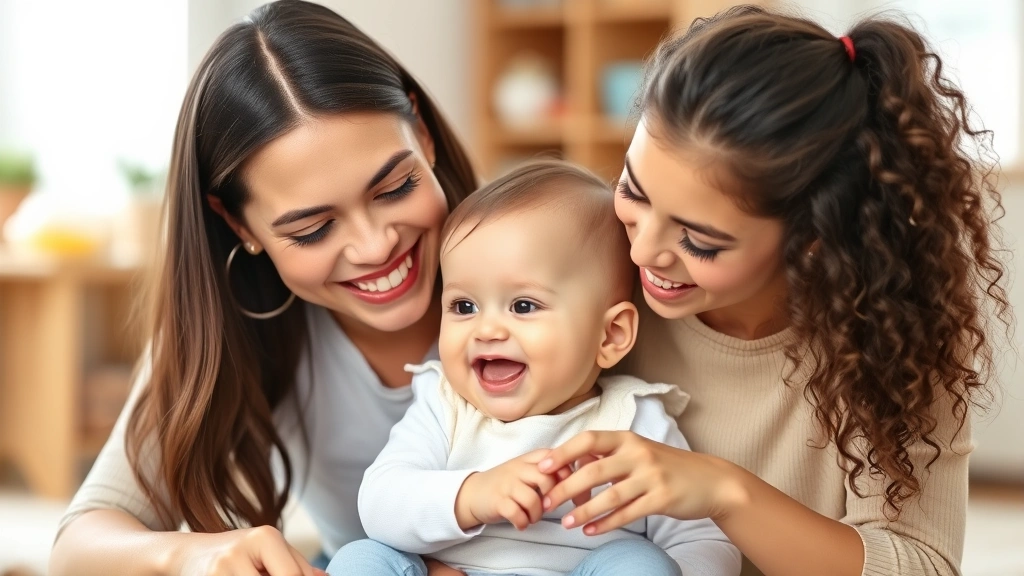
” alt=”Happy mother and baby smiling together during playtime, mother encouraging toddler’s speech development through interaction and engagement”/>
Developmental Stages Before First Words
Understanding the progression toward first words helps parents appreciate the incredible cognitive and physical development happening behind the scenes. Each stage builds upon the previous one, creating a foundation for meaningful communication.
Birth to 2 months: Crying and Cooing
Your newborn communicates primarily through crying, which is their way of expressing hunger, discomfort, or tiredness. Around 6 to 8 weeks, babies begin “cooing”—producing soft, vowel-like sounds such as “ooh” and “aah.” These sounds indicate that your baby’s vocal cords are functioning and they’re experimenting with sound production.
2 to 4 months: Increased Vocalization
During this period, babies become more vocal and begin to vary their sounds. They may laugh, squeal, and make more complex vocalizations. Your baby is learning to control their vocal apparatus and discovering the relationship between breath control and sound production. Respond enthusiastically to your baby’s vocalizations—this back-and-forth interaction supports language development.
4 to 6 months: Consonant Sounds Emerge
Babies begin to produce consonant sounds, particularly those made with their lips like “p,” “b,” and “m.” You might hear sounds like “pa,” “ba,” or “ma” emerging during this stage. These are still reflexive sounds rather than intentional communication, but they’re important precursors to meaningful speech.
6 to 9 months: Canonical Babbling
This stage introduces “canonical babbling”—repetitive strings of consonant-vowel syllables like “ba-ba-ba,” “da-da-da,” and “ma-ma-ma.” Babies repeat these sounds because they find them satisfying and because they’re developing the motor control needed for speech. Interestingly, this babbling is similar across all languages and cultures, suggesting it’s a universal developmental stage.
9 to 12 months: Variegated Babbling and Gestures
Babies’ babbling becomes more varied, with different sounds and syllable combinations appearing in the same utterance. Additionally, babies begin to use gestures—pointing, waving, and reaching—to communicate. They start to understand that communication involves turn-taking and that their actions affect others. This is a critical period for comprehension, and babies often understand far more words than they can say.
12 to 18 months: First True Words
During this stage, babies produce their first intentional words. These words are often labels for people (“mama,” “dada”), objects (“ball,” “dog”), or actions (“up,” “more”). Babies now understand that words have consistent meanings and use them purposefully to communicate.
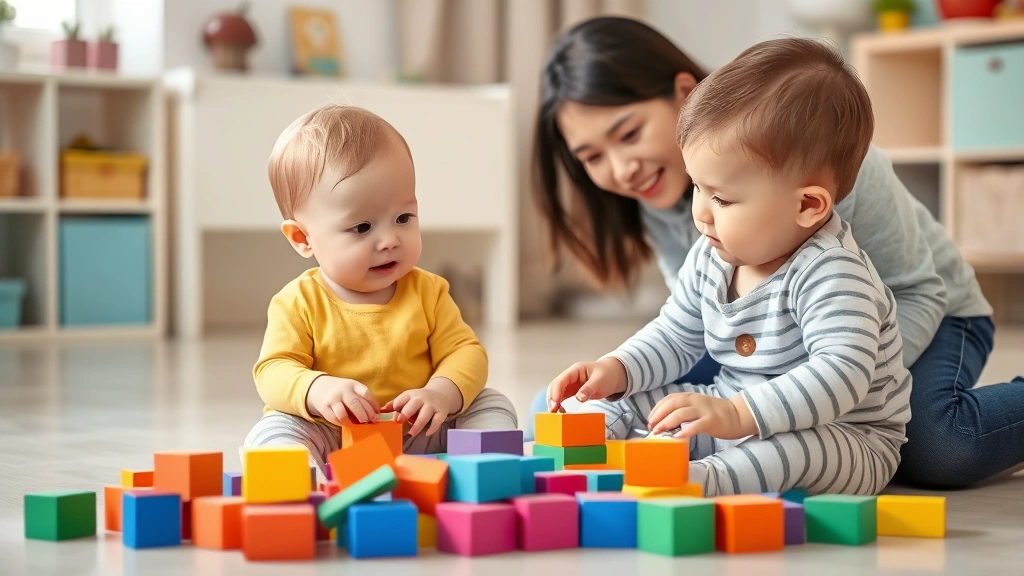
” alt=”Toddler sitting on floor playing with colorful blocks, parent watching and responding positively to encourage language learning through play”/>
Why Is “Mama” Often the First Word?
Many parents wonder why “mama” is such a common first word across cultures and languages. There are several interesting reasons rooted in both linguistics and child development.
Phonetic Simplicity
The “m” sound is one of the easiest consonants for babies to produce. It requires only lip closure and nasal airflow, making it physically easier than many other consonants. The “a” vowel is also one of the most open and easiest vowel sounds to articulate. The combination “ma-ma” requires minimal motor control compared to other words, making it a natural choice for early speech attempts.
Frequency and Repetition
The “ma-ma-ma” sound emerges naturally during the canonical babbling stage around 6 to 9 months. Because babies repeat this sound frequently during normal babbling, parents and caregivers reinforce it enthusiastically. This positive feedback encourages babies to continue producing the sound, and eventually, they associate it with their mother’s presence.
Emotional Significance
Mothers are typically the primary caregiver during a baby’s first year, creating a strong emotional bond. Babies are highly motivated to communicate with their most important attachment figures. When babies realize that saying “mama” brings their mother’s attention, they’re motivated to repeat it intentionally. This combination of physical ease and emotional motivation makes “mama” a perfect first word.
Cultural Factors
Interestingly, “mama” appears in many languages worldwide—Spanish “mamá,” French “maman,” German “Mama,” and countless others. This near-universal pattern suggests both the phonetic ease of the sound and the cultural significance of the mother-child relationship in human societies.
If your baby says “dada” first, don’t worry—this is equally common and doesn’t indicate any preference for their father. The order of first words varies among individual babies and depends on many factors including exposure, reinforcement, and individual developmental timing.
Supporting Your Baby’s Speech Development
While babies develop language naturally, there are many things parents can do to support and encourage healthy speech development. These strategies are backed by research in child development and recommended by speech-language pathologists.
Talk to Your Baby Frequently
Narrate your daily activities: “Mommy is changing your diaper now. You have a clean diaper on. It’s soft and dry!” This constant exposure to language, known as “parentese” or “baby talk,” helps babies learn vocabulary and understand how language works. Studies show that babies whose parents talk to them more have larger vocabularies and stronger language skills later in childhood.
Respond to Your Baby’s Vocalizations
When your baby coos, babbles, or attempts words, respond enthusiastically. Take turns “talking”—let your baby make a sound, then you respond, then your baby responds again. This turn-taking teaches babies about conversation and the back-and-forth nature of communication. It also reinforces that their vocalizations have meaning and effect.
Read Books Together
Reading to your baby from birth supports language development. Point to pictures, name objects, and use different voices for characters. Even though your baby doesn’t understand the words initially, they’re learning language patterns and building vocabulary. Board books with bright pictures and simple words are perfect for babies in the 6 to 18-month range.
Sing Songs and Nursery Rhymes
Songs and rhymes are wonderful for language development. They help babies learn rhythm and sound patterns, and repetition aids memory. Nursery rhymes with gestures, like “Pat-a-Cake,” combine language with physical movement, engaging multiple learning systems.
Limit Screen Time
The American Academy of Pediatrics recommends avoiding screen media for children under 18 months (except for video chatting). Research shows that babies learn language best from live interaction with people, not from screens. Interactive engagement with caregivers is far more effective for language development than passive video watching.
Create a Language-Rich Environment
Play music, have conversations around your baby, and include them in family activities. Babies learn language by immersion in a rich linguistic environment. The more words your baby hears from various speakers in different contexts, the more robust their language development becomes.
For additional comprehensive guidance on supporting your child’s development, explore our parenting advice guide, which covers many aspects of child development and parenting strategies.
When to Talk to Your Pediatrician
While there’s significant variation in the age at which babies say their first words, there are some signs that warrant discussion with your pediatrician. Early identification of speech or language delays can lead to early intervention, which is highly effective.
Speech Development Concerns
Consider contacting your pediatrician if your baby:
- Isn’t babbling by 9 months
- Isn’t using gestures (pointing, waving) by 12 months
- Isn’t saying any words by 18 months
- Loses language skills they previously had (regression)
- Isn’t responding to their name by 12 months
- Doesn’t follow simple one-step directions by 18 months
- Isn’t using gestures or sounds to communicate by 12 months
Hearing Concerns
Since hearing is fundamental to language development, it’s important to ensure your baby’s hearing is normal. All newborns should receive newborn hearing screening before leaving the hospital. If you have concerns about your baby’s hearing, discuss them with your pediatrician. Babies with hearing loss can still develop speech with early intervention and appropriate support.
Other Developmental Concerns
Speech delays sometimes occur alongside other developmental delays or conditions. Your pediatrician can assess your baby’s overall development and recommend further evaluation or specialist referral if needed. Early intervention services are available in most areas for babies and toddlers with developmental delays.
Remember that consulting your pediatrician doesn’t mean something is wrong—it’s a proactive step in ensuring your child gets any support they might benefit from. Many babies who are evaluated early and receive intervention catch up to their peers without any lasting effects.
Frequently Asked Questions
At what age do most babies say “mama” intentionally?
Most babies say “mama” with intentional meaning between 12 and 18 months. However, babies may produce the sound “mama” as early as 6 to 9 months during the babbling stage, though without understanding that it refers to their mother. The key distinction is intentional communication versus random sound play.
Is it normal if my baby says “dada” before “mama”?
Yes, absolutely. While “mama” is commonly cited as a first word, many babies say “dada” first, or even other words entirely. The order of first words varies widely among individual babies and doesn’t indicate preference for one parent over another. Both are normal variations in typical development.
What should I do if my baby says “mama” but doesn’t seem to understand it refers to me?
This is completely normal during the babbling stage. Your baby is practicing sounds, not yet associating them with meaning. Continue responding enthusiastically to their vocalizations. Over time, through repeated association between the sound “mama” and your presence, your baby will begin to understand that the word refers to you specifically.
How can I encourage my baby to say “mama”?
The best approach is to respond enthusiastically when your baby produces “ma” sounds during babbling. Label yourself consistently: “Yes! Mama is here.” Read books together, talk during daily activities, and engage in back-and-forth interactions. Avoid pressure or forced practice—babies learn language best through natural, joyful interaction. If you’re interested in more parenting strategies, check out our guide to raising happy and healthy children.
Should I be concerned if my 24-month-old isn’t saying “mama” yet?
If your 24-month-old isn’t saying any words, including “mama,” it’s worth discussing with your pediatrician. By 18 months, most children have at least a few words. However, late talkers can catch up without intervention, and some children naturally develop language more slowly. Your pediatrician can help determine whether your child would benefit from speech evaluation or early intervention services.
Can multilingual exposure delay my baby’s first words?
No. Research shows that babies raised in multilingual environments develop language normally. While they may have a smaller vocabulary in each individual language compared to monolingual peers, their total vocabulary (combining all languages) is typically similar. Bilingual babies may take slightly longer to produce their first words, but this is not a delay—it’s a normal variation in multilingual development.
What’s the difference between babbling and first words?
Babbling is the repetition of consonant-vowel sounds (like “ma-ma-ma”) without intentional meaning. First words are sounds or word-like utterances that babies use purposefully to refer to specific people, objects, or actions. When your baby says “mama” and looks at you or reaches for you, understanding that the word refers to you, that’s a true first word. When they’re just repeating “ma-ma-ma” while playing alone, that’s babbling.
How does understanding language development help me as a parent?
Understanding the stages of language development helps you recognize what’s normal and typical for your baby’s age. This knowledge reduces anxiety and helps you appreciate the incredible development happening. It also guides you toward supportive strategies that enhance your baby’s communication skills. Additionally, knowing when to seek professional input ensures early identification of any concerns. For more foundational parenting information, visit our Parent Path Daily Blog.