Best Baby Body Wash? Dermatologists Recommend These Top Picks
Choosing the right baby body wash is one of the most important decisions you’ll make as a parent. Your baby’s skin is delicate, sensitive, and developing rapidly during those crucial first years. Unlike adult skin, a newborn’s skin barrier is still maturing, making it more vulnerable to irritation, dryness, and harmful chemicals. The wrong product can lead to uncomfortable rashes, eczema flare-ups, and long-term skin sensitivity issues.
Dermatologists consistently emphasize that what you put on your baby’s skin matters tremendously. The products you choose now can set the foundation for healthy skin habits throughout childhood. We’ve consulted with leading pediatric dermatologists and reviewed extensive research to bring you the most reliable recommendations for gentle, effective baby body washes that parents trust.
Whether you’re preparing for a baby shower or already navigating the overwhelming world of baby products, this comprehensive guide will help you understand what to look for and which products dermatologists actually recommend for your little one.
Table of Contents
- Why Baby Skin Requires Special Care
- What Dermatologists Look For
- Top Dermatologist-Recommended Products
- Ingredients to Avoid
- Proper Baby Bathing Techniques
- Frequently Asked Questions
Why Baby Skin Requires Special Care
Your baby’s skin is fundamentally different from yours. At birth, a newborn’s skin barrier—the protective outer layer—is only about 20% as thick as an adult’s. This means moisture escapes more easily, and harmful substances penetrate more readily. Over the first year of life, this barrier gradually strengthens, but it remains sensitive well into toddlerhood.
According to research from the American Academy of Dermatology, babies have a higher skin pH than adults, making their skin more alkaline and less acidic. This affects the natural bacteria that live on the skin and can make babies more prone to infections and irritation. Additionally, babies have a larger surface area relative to body weight, meaning they absorb more of whatever you apply topically.
The sebaceous glands that produce natural oils are still developing in infants, which is why baby skin tends to be drier. Many parents notice their newborns experience peeling skin in the first few weeks—this is completely normal as the skin adjusts to life outside the womb. However, using the wrong products can exacerbate dryness and lead to conditions like cradle cap or infantile eczema.
Understanding these biological realities helps explain why dermatologists are so particular about product recommendations. When you’re shopping for baby body wash, you’re not just choosing a cleanser; you’re making a decision that affects your child’s comfort, health, and skin development.
What Dermatologists Look For
Pediatric dermatologists use specific criteria when evaluating baby body wash products. These standards go far beyond marketing claims and are based on clinical evidence and safety testing. Here’s what the experts prioritize:
- Hypoallergenic Formulation: The product should be tested to minimize allergic reactions and should avoid common irritants that trigger sensitivity in infants.
- Gentle Cleansing Agents: Rather than harsh surfactants, dermatologists recommend products with mild cleansers that don’t strip natural oils from delicate skin.
- pH Balance: The wash should be pH-balanced to match baby’s skin, typically between 5.5 and 7.0, to maintain the skin barrier.
- Fragrance-Free: Even “natural” fragrances can irritate sensitive infant skin. Dermatologists recommend unscented products or those with minimal fragrance from essential oils.
- Moisturizing Ingredients: Products should contain humectants like glycerin or ceramides to help retain moisture in developing skin.
- Third-Party Testing: Dermatologist-recommended products are typically tested by independent laboratories and carry certifications from pediatric organizations.
As noted in our comprehensive parenting advice guide, making informed choices about baby products is part of responsible parenting. The American Academy of Pediatrics emphasizes that prevention of skin issues through proper product selection is far easier than treating dermatitis after it develops.
Top Dermatologist-Recommended Baby Body Wash Products
Based on dermatological research and clinical recommendations, these products consistently receive praise from skin care specialists:
Cetaphil Baby Wash & Shampoo
Cetaphil has long been a dermatologist favorite for sensitive skin across all ages. Their baby wash is specifically formulated with a mild, tear-free formula that cleanses without disrupting the skin barrier. The product contains no harsh soaps, dyes, parabens, or phthalates. Dermatologists appreciate that it’s fragrance-free and has been tested on premature and newborn skin. Parents report that it effectively cleanses without causing dryness or irritation, even for babies with eczema-prone skin.
CeraVe Baby Wash & Shampoo
CeraVe products are formulated with ceramides and hyaluronic acid, ingredients that dermatologists specifically recommend for maintaining the skin barrier. This baby wash contains no fragrance, parabens, or sulfates. The inclusion of ceramides is particularly important—these are lipids naturally found in healthy skin that help lock in moisture. Clinical studies have shown that CeraVe formulations are gentle enough for newborns while effectively cleansing without stripping natural oils.
Aveeno Baby Wash & Shampoo
Aveeno’s baby line features colloidal oatmeal, an ingredient that dermatologists have recommended for centuries for sensitive and irritated skin. Their baby wash is hypoallergenic, fragrance-free, and free from harsh chemicals. The oatmeal provides gentle cleansing while soothing the skin. Many pediatric dermatologists recommend this option, especially for babies with dry skin or mild eczema tendencies.
Mustela Gentle Cleansing Gel
Mustela is a French brand specifically developed for baby skin with input from pediatric dermatologists. Their gentle cleansing gel is pH-balanced, contains no parabens or phenoxyethanol, and uses plant-based cleansers. The formula includes avocado perseose, a natural ingredient that strengthens the skin barrier. European dermatologists particularly recommend this brand, and it’s gaining recognition among American pediatric specialists.
Burt’s Bees Baby Wash
For parents seeking natural ingredients, Burt’s Bees offers a baby wash formulated with shea butter and other plant-based ingredients. While it contains a small amount of fragrance from natural sources, dermatologists note it’s well-tolerated by most babies. The product is tear-free, paraben-free, and sulfate-free. It’s an excellent choice for parents prioritizing natural formulations without compromising on dermatological safety.
Ingredients to Avoid in Baby Body Wash
Dermatologists consistently warn against certain ingredients commonly found in conventional body washes. Being aware of what to avoid is just as important as knowing what to choose:
- Sulfates (SLS and SLES): These harsh cleansing agents strip natural oils from skin and are known irritants. Avoid products listing sodium lauryl sulfate or sodium laureth sulfate.
- Parabens: While generally recognized as safe, many dermatologists recommend avoiding parabens in baby products due to concerns about endocrine disruption and because gentler preservatives are available.
- Phthalates: Often hidden under the term “fragrance,” phthalates are chemicals that can affect development. Look for products that specify “phthalate-free.”
- Strong Fragrances: Even baby-specific fragrances can irritate sensitive skin. Unscented is always the safest choice.
- Triclosan: This antibacterial agent is unnecessary for baby skin and can disrupt the natural microbiome.
- Alcohol: Drying alcohols have no place in baby body wash and can damage the developing skin barrier.
- Dyes and Colorants: Artificial colors serve no purpose in baby products and increase the risk of allergic reactions.
The Environmental Working Group maintains a comprehensive database of product safety ratings, including baby body washes, which can help you verify ingredient safety.
Proper Baby Bathing Techniques
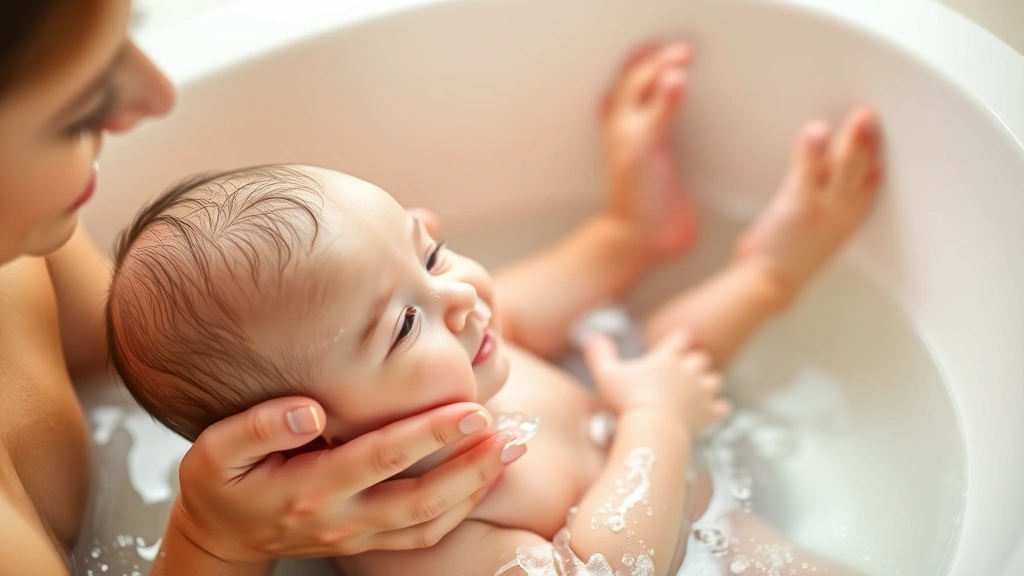
Choosing the right baby body wash is only part of the equation. How you bathe your baby matters tremendously for skin health. Dermatologists recommend these best practices:
Water Temperature and Duration
Use lukewarm water (around 90-100°F) rather than hot water, which can strip natural oils. Keep baths short—5 to 10 minutes is ideal. Long, hot baths are one of the primary causes of dry skin in infants. Check water temperature with your elbow or a bath thermometer rather than relying on your hand, which is less sensitive.
Frequency of Bathing
Newborns don’t need daily baths. In fact, dermatologists recommend bathing babies only 2-3 times per week during the first month, increasing to daily baths only if they become soiled or sweaty. Over-bathing removes protective oils and can lead to dryness and irritation. When you do bathe your baby, use only a small amount of body wash—a pea-sized amount is sufficient for a newborn.
Moisturizing After Bathing
This is critical: apply moisturizer within three minutes of bathing while skin is still slightly damp. This helps lock in moisture. Choose a fragrance-free baby lotion or cream. Many parents find that establishing healthy routines early sets the foundation for good skin care habits throughout childhood.
Gentle Handling
Pat skin dry gently rather than rubbing. Use a soft, clean towel and avoid any vigorous drying that could irritate delicate skin. Pay special attention to skin folds where moisture can trap and cause irritation.
Special Considerations
If your baby has eczema or sensitive skin, consult your pediatrician about using a gentle cleanser even less frequently. Some dermatologists recommend using just warm water for most baths and reserving body wash for areas that truly need cleansing, like diaper area and hands.
Frequently Asked Questions
When can I start using body wash on my newborn?
You can use a gentle, dermatologist-recommended baby body wash from birth. However, many pediatricians suggest using just warm water for the first few weeks, then introducing a mild cleanser. Always consult your pediatrician, especially if your baby has sensitive skin or was born prematurely.
Can I use regular body wash on my baby?
No, dermatologists strongly advise against using adult body wash on babies. Adult formulations contain ingredients too harsh for developing skin and are formulated for a different skin pH. Always choose products specifically designed for infants.
What should I do if my baby develops a rash after using a new body wash?
Stop using the product immediately and switch to a different dermatologist-recommended option. If the rash persists for more than a few days or worsens, contact your pediatrician. Some babies may have specific sensitivities to certain ingredients, and your doctor can help identify triggers.
Is “natural” always better for baby body wash?
Not necessarily. While natural ingredients can be gentle, the term “natural” is not regulated and doesn’t guarantee safety or mildness. What matters is the specific formulation and how it’s been tested. A synthetic ingredient that’s been rigorously tested may be safer than a natural ingredient that hasn’t. Look for dermatologist recommendations rather than relying on marketing terms.
Should I use the same body wash for my baby’s face and body?
Most dermatologist-recommended baby body washes are safe for the face, but some parents prefer using an even gentler facial cleanser. Read product labels—if it says “wash and shampoo,” it’s typically safe for the entire body including face. Never use body wash intended only for the body on the face.
How do I know if a baby body wash is truly hypoallergenic?
Hypoallergenic means the product has been formulated to minimize allergens and has typically undergone testing to verify this claim. However, no product is completely allergen-free since individual sensitivities vary. Look for products that specify they’ve been tested on sensitive skin and carry certifications from dermatological associations.
Can I use the same body wash from newborn through toddlerhood?
Yes, most dermatologist-recommended baby body washes are formulated to be gentle enough for newborns while remaining appropriate through toddlerhood. However, as your child grows, you may notice their skin changes. If irritation develops, it may be time to switch products. Continue prioritizing gentle, fragrance-free formulations.
What’s the difference between baby body wash and baby shampoo?
While formulations are similar, baby shampoo is specifically designed not to sting eyes, while body wash may not have the same tear-free guarantee. Many brands offer combination products that work for both body and hair. If you prefer separate products, ensure both are dermatologist-recommended and specifically formulated for infants.
As you prepare for parenthood or navigate the early months with your newborn, remember that choosing the right baby body wash is an investment in your child’s long-term skin health. The dermatologist-recommended products we’ve discussed represent the gold standard in gentle, effective cleansing for delicate infant skin. When in doubt, consult your pediatrician or a pediatric dermatologist—they can provide personalized recommendations based on your baby’s individual skin type and any specific concerns.
For additional guidance on caring for your baby, explore our ParentPath Daily Blog for more expert parenting advice. And if you’re looking for thoughtful gifts for new parents, check out our guide to best baby shower gifts that includes practical items like quality body wash products.