What Is a Baby Hawk Called? Discover the Answer
If you’ve ever spotted a young hawk perched on a branch or soaring awkwardly through the sky, you might have wondered what to call it. The answer is simpler than you’d think, yet it opens up a fascinating world of raptor biology and behavior. Understanding what a baby hawk is called isn’t just trivia—it’s a gateway to appreciating these magnificent birds and the incredible journey they take from helpless chick to skilled hunter.
Whether you’re a nature enthusiast, a parent looking to educate your children about wildlife, or simply curious about avian terminology, this guide will walk you through everything you need to know about baby hawks and their remarkable development. We’ll explore the terminology, lifecycle, and behaviors that make these young raptors so captivating.
Like many animal babies, hawks have specific names at different stages of their lives, and each term tells a story about their development and capabilities. Let’s dive into the world of these young predators and uncover what makes them so special.
What Is a Baby Hawk Called?
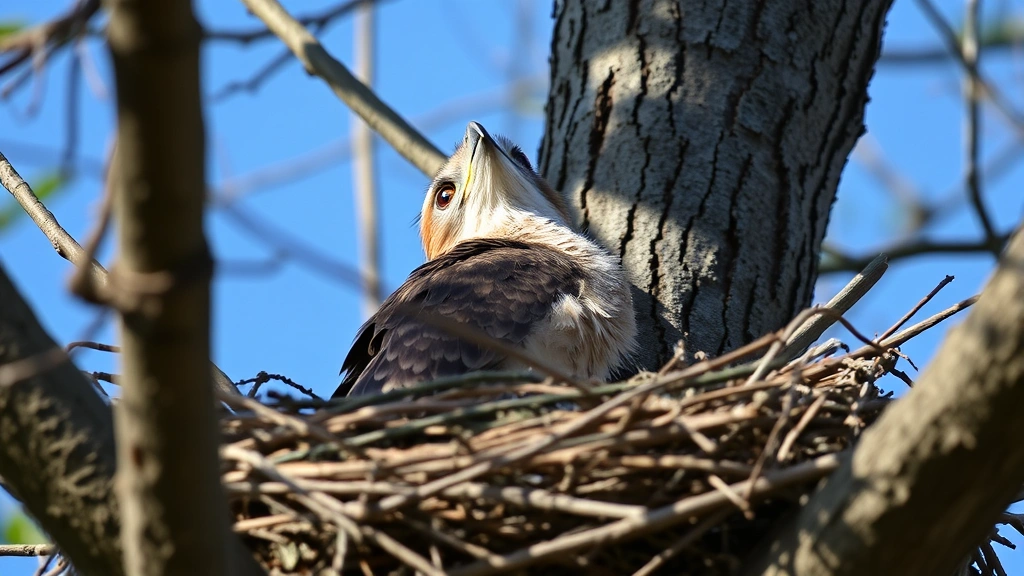
A baby hawk is called a nestling or eaglet (though the term eaglet typically refers to baby eagles). However, the most accurate and commonly used term is eyass—a word that comes from falconry traditions and refers to any young hawk or falcon that hasn’t yet fledged from the nest.
The term “eyass” might sound peculiar, but it has deep historical roots in the sport of falconry, dating back centuries. Falconers developed precise terminology to describe different stages of raptor development, and these terms remain the standard in ornithology today. When a hawk is still in the nest and dependent on its parents, it’s an eyass. Once it leaves the nest and begins flying, it transitions to a fledgling.
If you’re exploring the broader world of baby birds, you’ll notice that different species have their own unique names. Hawks are part of the raptor family, and like other baby eagles, they follow specific developmental patterns that are fascinating to observe.
Hawk Terminology Explained
Understanding the vocabulary surrounding hawks helps us appreciate their development more fully. Here’s a breakdown of the key terms:
- Eyass: A young hawk or falcon still in the nest, completely dependent on parental care
- Nestling: A general term for any bird still in the nest, including hawks
- Fledgling: A young hawk that has left the nest but isn’t yet fully independent
- Juvenile: A hawk that has learned to fly and hunt but hasn’t reached sexual maturity
- Immature: A young hawk in its first year, still developing adult plumage and skills
- Adult: A hawk that has reached sexual maturity and developed full adult plumage
Each stage represents not just a change in location or appearance, but a significant shift in the hawk’s capabilities and independence level. The progression from eyass to adult is a remarkable transformation that takes months of dedicated effort from both the young hawk and its parents.
While you’re learning about hawks, you might be curious about other fascinating young animals. For instance, a baby cardinal develops quite differently from a hawk, showcasing nature’s incredible diversity.
The Lifecycle of a Baby Hawk
The lifecycle of a hawk begins long before the egg hatches. Hawks typically breed in spring, with females laying between one and five eggs depending on the species and environmental conditions. The incubation period lasts about 30 to 35 days, during which the female remains on the nest while the male provides food.
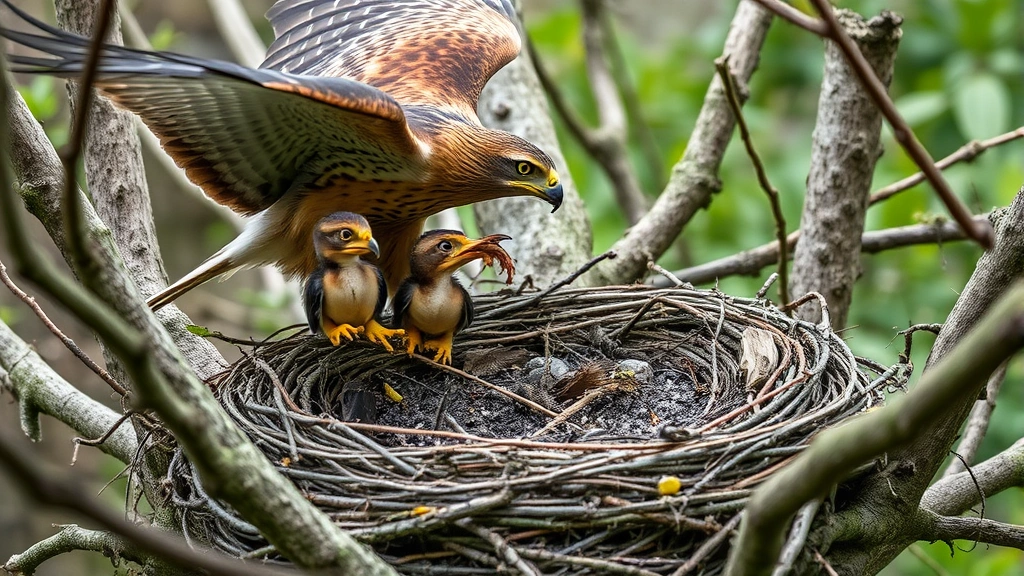
Once the eggs hatch, the tiny eyas emerges into a world of complete vulnerability. Newborn hawks are covered in fuzzy down feathers, their eyes are barely open, and they’re entirely dependent on their parents for warmth, food, and protection. This stage is called the brooding period, and it typically lasts two to three weeks.
During the brooding period, the mother hawk rarely leaves the nest, maintaining body heat and protection for her young. The father hawk becomes the primary hunter, bringing prey back to the nest. This division of labor is crucial for survival, as the eyasses are extremely vulnerable to predators, weather, and starvation during this critical time.
As the nestlings grow, they develop juvenile plumage—their first real feathers. By three to four weeks old, they begin to look more like hawks, though they’re still far from ready to leave the nest. Their appetite grows exponentially during this stage, and both parents must work tirelessly to bring enough food to satisfy their demanding offspring.
Nesting and Early Development
Baby hawks spend considerable time in their nests, which are often massive structures built high in trees or on cliff faces. These nests, called eyries, can be used year after year, growing larger as the hawks add new material. Some eyries can reach over six feet in diameter and weigh hundreds of pounds.
The nest serves as the hawk’s home and classroom. Within its safety, the eyass learns crucial lessons about being a hawk. Siblings compete for food, teaching them dominance hierarchies. They practice wing movements and balance, preparing their muscles for flight. They observe their parents’ hunting techniques and listen to their vocalizations, absorbing information that will be vital for survival.
Interestingly, hawk eyasses are often born asynchronously—meaning eggs hatch at different times rather than all at once. This can lead to significant size differences between siblings, and sometimes the largest, oldest chick may outcompete or even kill its younger siblings. While this seems harsh by human standards, it’s a natural survival mechanism that ensures at least one strong hawk survives when food is scarce.
The nest environment is surprisingly messy and unpleasant. Parents don’t remove waste, so the nest accumulates droppings, food scraps, and debris. This creates an unsanitary environment that hawks seem immune to—a trait that researchers believe may have evolved to help them survive in harsh conditions.
The Fledging Process
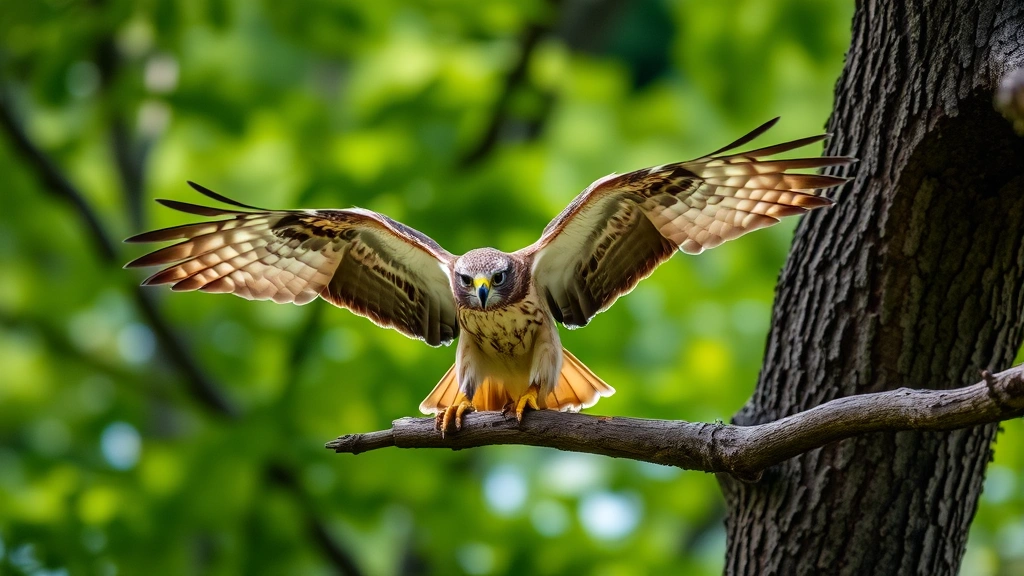
Fledging is the pivotal moment when a young hawk leaves the nest for the first time. This typically occurs between 6 to 12 weeks after hatching, depending on the species. The process isn’t a single event but rather a gradual transition that can take several weeks.
As the eyass approaches fledging age, its wing feathers fully develop and strengthen. The hawk begins flapping vigorously within the nest, building muscle strength and coordination. Parents may deliberately withhold food, encouraging the young hawk to be more active and motivated to leave the nest in search of meals.
The first flight is rarely graceful. Young hawks often tumble through the air, crash-landing in nearby trees or bushes. They may spend days perched on branches near the nest, calling out to their parents for food. The parents continue feeding them during this period, gradually encouraging independence.
This fledgling stage is perilous. Many young hawks don’t survive their first few weeks of independence. They’re clumsy hunters, easily injured, and vulnerable to predators. Some starve because they haven’t yet mastered hunting techniques. Others are hit by cars or collide with buildings as they navigate their surroundings.
Parents remain vigilant during the fledgling stage, protecting their young and continuing to provide meals. Gradually, they reduce the frequency of food deliveries, forcing the young hawk to improve its hunting skills or go hungry. After several weeks to a few months, most fledglings become independent, though some remain in their parents’ territory through the fall.
Learning to Hunt
One of the most critical skills a baby hawk must develop is hunting. Unlike some birds that instinctively know how to hunt, young hawks must learn through observation, practice, and often, trial and error.
Parent hawks model hunting behavior, sometimes bringing live prey back to the nest so young hawks can practice catching and killing. A parent might bring an injured bird or small mammal, allowing the eyass to practice its strike and grip. These lessons are invaluable—they teach the young hawk how to position its talons, how to deliver a killing bite, and how to handle struggling prey.
Early hunting attempts are spectacularly unsuccessful. A fledgling hawk might chase a bird for minutes only to fail at the crucial moment. It might miss easy targets or struggle to kill prey it manages to catch. Success rates improve gradually as the hawk gains experience and refines its techniques.
Different hawk species hunt different prey, and young hawks learn what’s available in their environment. Red-tailed hawks might focus on small mammals like mice and voles. Cooper’s hawks pursue smaller birds. Sharp-shinned hawks hunt songbirds in suburban areas. The prey available in a hawk’s territory shapes its hunting specialization.
By late fall or early winter of their first year, most young hawks have developed sufficient hunting skills to survive independently. However, they’re not yet as efficient as adult hawks, and their success rates remain lower. This is one reason why young hawks suffer higher mortality rates than adults during their first year of life.
How Baby Hawks Compare to Other Raptors
Hawks aren’t the only raptors in the sky. Falcons, eagles, kestrels, and owls are all raptors with their own unique characteristics. Understanding how baby hawks compare to these other species provides insight into raptor diversity.
A baby eagle develops similarly to a baby hawk, though eagles tend to be larger and have longer development periods. Eagle eyasses may spend 10 to 14 weeks in the nest compared to 6 to 12 weeks for many hawk species. Eagles are also more powerful hunters, capable of taking larger prey like fish and waterfowl.
Baby falcons, or eyas falcons, develop more quickly than hawks in some ways. Peregrine falcons, for instance, are incredibly fast and agile, and their young must develop these skills rapidly to survive. Falcons are more specialized hunters than hawks, often focusing on birds captured in mid-air.
Owls, another raptor family, have entirely different hunting strategies from hawks. Owls hunt primarily at night using exceptional hearing and silent flight. Baby owls develop differently, with longer nestling periods and different dietary needs.
Interestingly, while researching different young animals in nature, you might encounter fascinating comparisons. A baby penguin develops in a completely different environment but shares some developmental principles with hawks, such as parental feeding and gradual independence. Even a baby flamingo demonstrates how diverse bird development can be across species.
Hawks occupy a unique ecological niche. They’re medium-sized raptors with incredible maneuverability, making them efficient hunters in diverse habitats from forests to urban areas. Their development reflects this versatility—they’re generalist hunters capable of adapting to various prey and environments.
Frequently Asked Questions
What do you call a baby hawk?
A baby hawk is called an eyass when it’s still in the nest. Once it leaves the nest and begins flying, it becomes a fledgling. The term “eyass” comes from falconry traditions and is the most precise ornithological term for a young, nest-bound hawk.
How long do baby hawks stay in the nest?
Most baby hawks remain in the nest for 6 to 12 weeks, depending on the species. Red-tailed hawks typically stay around 7 to 8 weeks, while smaller hawk species might fledge in 5 to 6 weeks. Larger species may take up to 12 weeks or longer.
What do baby hawks eat?
Baby hawks eat whatever their parents bring them—typically small mammals, birds, and insects. Parents hunt and bring whole prey back to the nest, where they tear it into manageable pieces for their young. As the eyasses grow, they begin tearing apart prey themselves, developing hunting-related skills.
How do baby hawks learn to hunt?
Young hawks learn to hunt through observation and practice. Parents model hunting behavior and bring live or recently killed prey back to the nest, allowing young hawks to practice catching and killing. After fledging, parents continue bringing food while gradually reducing provisions, forcing the young hawk to hunt independently.
Are baby hawks dangerous?
Baby hawks in the nest are not dangerous to humans, though parents may become aggressive if they feel their nest is threatened. Fledgling hawks are also not dangerous, though they may appear aggressive when defending themselves. Adult hawks pose no threat to humans under normal circumstances, though they may attack if protecting their nest.
Can you keep a baby hawk as a pet?
No, it’s illegal in most places to keep a wild hawk as a pet. In the United States, hawks are protected under the Migratory Bird Treaty Act, and it’s illegal to capture, harm, or keep them without specialized permits. If you find an injured hawk, contact a licensed wildlife rehabilitator.
What’s the difference between a baby hawk and a baby eagle?
While both are raptors with similar development patterns, baby eagles (eaglets) are typically larger and take longer to develop. Eagles have longer nestling periods and develop more slowly than many hawk species. Eagles also grow to be larger, more powerful predators capable of hunting larger prey.
How can I help baby hawks in my area?
The best way to help baby hawks is to protect their habitat and nesting sites. Avoid disturbing nests, keep cats indoors to prevent predation on fledglings, and provide safe spaces where hawks can hunt. If you find an injured or grounded fledgling, contact a local wildlife rehabilitator for guidance before intervening.