What Is a Baby Pukeko? Nature’s Curious Chick
If you’ve ever wondered about the quirky characters of the avian world, the baby pukeko might just be one of nature’s most delightful surprises. These vibrant little creatures, native to New Zealand, represent a fascinating blend of personality, resilience, and charm that captivates anyone fortunate enough to encounter them. Whether you’re a bird enthusiast, a parent seeking to expand your child’s wildlife knowledge, or simply curious about the wonders of nature, understanding what makes a baby pukeko special opens a window into the remarkable diversity of our planet’s creatures.
The pukeko itself is already an intriguing bird—a large, colorful rail with striking blue and purple plumage, distinctive red facial markings, and an unmistakable presence in New Zealand’s wetlands. But it’s the young pukekos that truly capture hearts with their endearing appearance and spirited behavior. These chicks emerge into the world with downy plumage and an innate curiosity that rivals many other bird species, making them subjects of genuine wonder for families and nature lovers alike.
In this comprehensive guide, we’ll explore everything you need to know about baby pukekos—from their appearance and development to their behavior, habitat, and the conservation efforts that protect them. Whether you’re planning a New Zealand adventure, teaching your children about native wildlife, or simply satisfying your curiosity about nature’s lesser-known treasures, this article will provide you with engaging, authentic insights into these remarkable birds.
What Exactly Is a Baby Pukeko?
A baby pukeko is the juvenile form of Porphyrio melanotus melanotus, commonly known as the pukeko or swamphen. These chicks represent the early life stage of one of New Zealand’s most iconic wetland birds. Understanding baby pukekos requires context about their species—they belong to the rail family, a diverse group of birds known for their adaptability and distinctive characteristics.
When we talk about baby pukekos, we’re referring to chicks from hatching until they reach juvenile plumage, typically around 8-12 weeks of age. During this period, these birds undergo remarkable transformations, developing from downy, relatively helpless chicks into increasingly independent young birds. They’re part of a fascinating family of baby birds that showcase nature’s incredible diversity and adaptation strategies.
Pukekos are particularly interesting because they’re not solitary nesters like many bird species. They exhibit complex social structures, often living in small groups or families that work together to raise their young. This cooperative breeding approach means baby pukekos benefit from multiple caregivers, creating a nurturing environment that increases survival rates. It’s a parenting strategy that wildlife experts find endlessly fascinating—much like how human families operate with extended support networks.
The species has become increasingly visible in New Zealand over recent decades, expanding beyond their traditional wetland habitats to urban parks and gardens. This adaptation has made baby pukekos more accessible to observation and study, allowing researchers and enthusiasts to better understand their development and behavior patterns.
The Distinctive Appearance of Young Pukekos
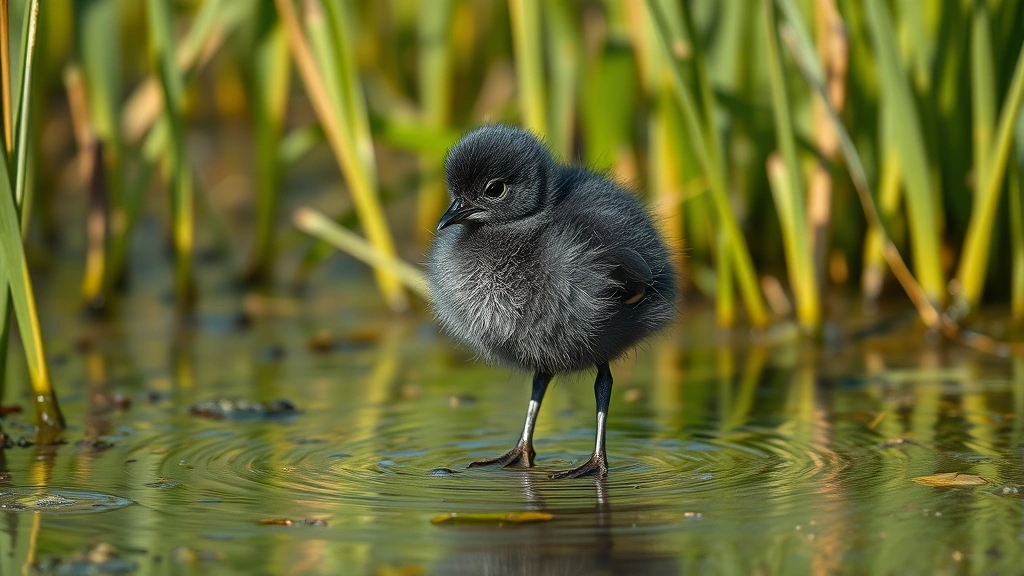
Baby pukekos present a striking contrast to their vibrant adult counterparts, offering a visual journey through avian development that’s genuinely captivating. When first hatched, baby pukekos are covered in dark, fluffy down feathers that provide insulation during their vulnerable early days. This downy plumage is predominantly dark gray or charcoal, giving them an adorably fuzzy appearance that belies their actual toughness.
As chicks progress through their early weeks, they begin developing their juvenile plumage—the feathers that will gradually transition into adult coloring. This intermediate stage shows mottled patterns of dark and lighter tones, creating a somewhat camouflaged appearance that helps protect them from predators. Their eyes are proportionally large and dark, giving them an alert, intelligent expression that observers find particularly endearing.
One of the most notable features of juvenile pukekos is their bill, which starts as a relatively dull color compared to adults but gradually develops the characteristic red coloring as they mature. Similarly, their facial shield—the bare, unfeathered area around their eyes—develops more intense coloring over time. Young pukekos also display the characteristic long legs and large feet that define their species, proportionally quite prominent on their still-developing bodies.
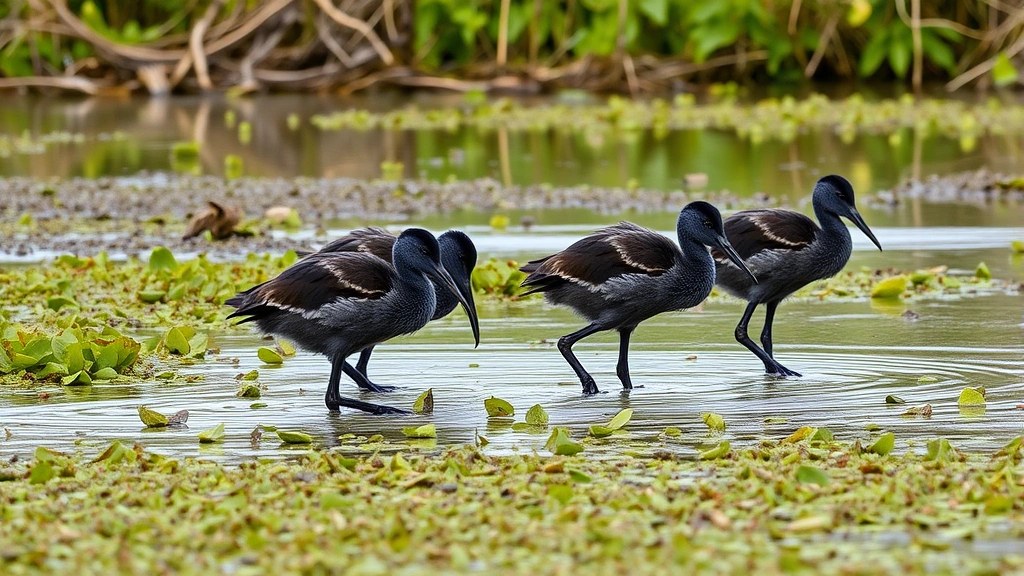
In comparison to other young baby animals in the bird world, baby pukekos occupy an interesting middle ground. They’re larger and more developed than many songbird chicks but smaller and more vulnerable than precocial species like ducklings. This semi-altricial development pattern means they’re born relatively helpless but mature relatively quickly under parental care.
The size progression of baby pukekos is quite remarkable. Upon hatching, chicks weigh only about 20-30 grams—roughly the weight of a golf ball. By the time they fledge at 8-12 weeks, they can weigh 400-600 grams, representing a dramatic growth spurt fueled by constant feeding and development.
Growth and Development Stages
The journey from egg to independent juvenile pukeko spans several distinct developmental stages, each marked by specific physical and behavioral changes. Understanding these stages provides insight into how these remarkable birds transition from fragile chicks to capable young birds ready to navigate their wetland world.
The Hatchling Stage (Days 1-7)
Baby pukekos emerge from their eggs after an incubation period of approximately 24-26 days. Newly hatched chicks are wet, exhausted, and entirely dependent on parental care. Within hours, their down feathers dry and fluff up, providing essential insulation. During this first week, chicks remain close to the nest, venturing out only briefly under parental supervision. Their primary activities involve eating, sleeping, and thermoregulation—maintaining their body temperature with help from parents.
The Early Growth Phase (Weeks 2-4)
As baby pukekos enter their second and third weeks, they become increasingly active and curious. Feather development accelerates during this period, with juvenile plumage beginning to emerge through the downy coat. Chicks start spending more time exploring their immediate surroundings, learning to forage with parental guidance. Their coordination improves noticeably, and they begin practicing behaviors they’ll need as adults, such as wading through shallow water and investigating vegetation.
During this phase, chicks also develop more sophisticated vocalizations. While they began with simple peeping sounds, they now produce more varied calls that help them communicate with family members and maintain group cohesion. These vocalizations serve multiple purposes—alerting parents to hunger, signaling distress, and maintaining contact within the family unit.
The Juvenile Development Phase (Weeks 5-8)
By week five, baby pukekos are noticeably larger and considerably more independent. Most of their juvenile plumage has emerged, though they still retain some downy feathers. Their facial shield begins showing the characteristic coloring that will intensify as they mature. During this phase, chicks spend substantial time foraging independently, though they still rely on parents for protection and supplemental feeding.
Behavioral development accelerates during weeks 5-8. Young pukekos practice running, jumping, and swimming with increasing confidence. They engage in play behavior that strengthens muscles and develops skills essential for survival. Sibling interactions become more complex, with chicks establishing social hierarchies and learning appropriate behaviors within their family group.
The Fledgling Stage (Weeks 9-12)
By week nine or ten, most baby pukekos have achieved full juvenile plumage and are capable of sustained flight. While they may still receive some parental care and supplemental feeding, they’re essentially independent. This stage represents the transition from chick to young bird, though they won’t develop their full adult coloring and characteristics until several months or even a year of age.
Throughout all these stages, baby pukekos demonstrate remarkable plasticity in their development, adjusting their growth rates and behaviors based on environmental conditions, food availability, and family dynamics. This adaptability is one reason pukekos have successfully expanded their range beyond traditional wetlands.
Behavioral Characteristics and Social Dynamics
Baby pukekos exhibit fascinating behavioral patterns that reflect both their species’ evolutionary history and their individual personalities. These behaviors develop progressively throughout their early weeks, shaped by genetics, parental influence, and environmental experience.
Social Structure and Family Dynamics
Unlike many bird species where chicks are raised by a mated pair alone, baby pukekos often grow up in more complex family groups. Pukekos frequently engage in cooperative breeding, where older offspring or other adults assist in raising new chicks. This arrangement means baby pukekos benefit from multiple caregivers, each contributing to feeding, protection, and behavioral guidance.
The social environment profoundly influences chick development. Chicks raised in larger family groups often show different behavioral patterns than those in smaller units. They learn social skills more rapidly, develop stronger vocalizations for group communication, and exhibit greater confidence in exploring their environment. This social complexity mirrors the importance of family structures in human development—a concept parents intuitively understand.
Feeding and Foraging Behavior
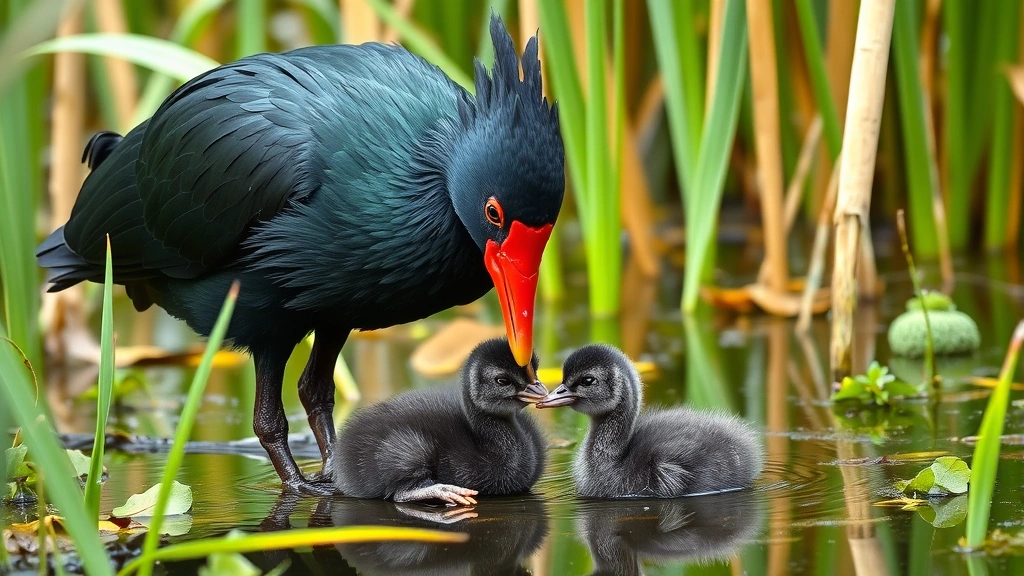
Baby pukekos begin learning foraging skills almost immediately after hatching. Parents demonstrate feeding techniques by picking up food items and either consuming them or presenting them to chicks. Young pukekos quickly learn to follow parents to productive feeding areas and attempt to forage independently, initially with limited success.
The learning curve for foraging is steep but manageable. By week four, most chicks can find and consume soft vegetation, insects, and small aquatic invertebrates with reasonable efficiency. By week eight, their foraging success rates rival adults in many situations. This rapid skill acquisition reflects the selective pressure for chicks to become independent quickly—a survival advantage in unpredictable wetland environments.
Vocalizations and Communication
Baby pukekos are surprisingly vocal birds, producing a diverse array of calls that serve different communicative purposes. Newly hatched chicks produce simple, high-pitched peeps that signal hunger or distress. As they develop, their vocalizations become more complex and purposeful.
By week three or four, chicks produce distinct calls for different situations: alarm calls when threatened, contact calls to maintain group cohesion, and begging calls to solicit food. These vocalizations aren’t learned in the way human language is learned, but they’re refined through practice and social interaction. Chicks raised in larger groups often develop more sophisticated vocal repertoires than those in smaller family units.
Exploration and Play Behavior
Play behavior is particularly evident in baby pukekos during weeks 4-8. Chicks engage in running, jumping, and mock-fighting with siblings, behaviors that strengthen muscles and develop coordination. They practice diving and swimming movements, sometimes with humorous awkwardness that’s genuinely delightful to observe.
Exploration intensifies as chicks grow more confident. They investigate vegetation, probe through soft substrate, and test their boundaries within the family territory. This exploratory behavior is crucial for learning about their environment and identifying food sources, shelter, and potential hazards. Parents guide this exploration, occasionally calling chicks back if they venture into dangerous areas.
Natural Habitat and Environment
Baby pukekos develop in diverse wetland and semi-aquatic environments throughout New Zealand, each presenting unique opportunities and challenges for growing chicks. Understanding these habitats provides context for the behaviors and adaptations young pukekos develop.
Traditional Wetland Habitats
Historically, baby pukekos were found primarily in extensive wetland systems featuring shallow water, dense vegetation, and abundant invertebrate life. These traditional habitats remain ideal for pukeko reproduction and chick rearing. Swamps, marshes, and reed beds provide dense vegetation that offers protection from predators while supporting the invertebrate populations that chicks require for proper nutrition and growth.
In these natural wetlands, baby pukekos learn to navigate complex aquatic and semi-aquatic environments. They develop skills for moving through water, foraging in vegetation, and responding to the dynamic conditions that characterize wetland ecosystems. The density of cover in traditional habitats provides excellent protection during the vulnerable early weeks of life.
Urban and Suburban Adaptations
Over recent decades, pukekos have increasingly colonized urban and suburban environments—parks, gardens, golf courses, and areas around human settlements. Baby pukekos raised in these modified habitats face different challenges and opportunities than their wetland-dwelling counterparts. They encounter human activity more frequently, must navigate artificial structures, and often find abundant food sources in gardens and parks.
This urban adaptation demonstrates remarkable behavioral flexibility. Baby pukekos raised in suburban environments learn to tolerate human presence, understand traffic patterns, and exploit food sources unavailable in natural wetlands. Some researchers suggest this adaptability may reflect an evolutionary advantage—the ability to adjust to changing environmental conditions and exploit novel resources.
Seasonal Considerations
Baby pukekos are born at different times depending on their location and environmental conditions. In northern New Zealand, breeding often begins earlier than in southern regions, with chicks hatching from September through December. This timing aligns with the availability of invertebrate food sources and optimal growing conditions.
Seasonal environmental changes directly influence chick development rates and survival. Chicks born early in the breeding season benefit from longer daylight hours and peak invertebrate availability, supporting rapid growth. Late-season chicks may face more challenging conditions, though they still typically fledge successfully if food remains available.
Feeding Habits and Nutrition
Proper nutrition is absolutely crucial for baby pukeko development, and their dietary needs change dramatically as they grow from helpless chicks to independent juveniles. Understanding what baby pukekos eat provides insight into their ecological role and their dependence on healthy wetland ecosystems.
Early Chick Nutrition
Newly hatched baby pukekos depend entirely on food provided by parents. During the first few days of life, chicks eat soft invertebrates—primarily aquatic insects, their larvae, and small crustaceans. Parents select small, easily digestible food items appropriate for chick development. This early diet is rich in protein and essential nutrients necessary for rapid growth and feather development.
The frequency of feeding during this early stage is intense. Parent birds may feed chicks dozens of times daily, each feeding session involving multiple food items. This constant feeding schedule ensures chicks receive adequate nutrition for their explosive growth rates. By week two, chicks may have doubled their body weight, a growth rate that demands substantial caloric and nutrient intake.
Progressive Dietary Expansion
As baby pukekos mature, their diet progressively expands to include larger invertebrates and increasing quantities of plant material. By week three or four, chicks begin consuming soft vegetation—aquatic plants, clover, and tender shoots. They also tackle larger invertebrates as their digestive systems mature and their beaks strengthen.
By week six or seven, juvenile pukekos consume a diet remarkably similar to adults—a diverse mix of invertebrates, aquatic plants, seeds, and occasionally small vertebrates. This dietary diversity ensures they receive balanced nutrition across the full spectrum of micronutrients and macronutrients necessary for continued development and eventual independence.
Foraging Independence and Parental Guidance
The transition from complete parental feeding to independent foraging represents a critical developmental milestone. This process doesn’t happen abruptly but progresses gradually over several weeks. Parents continue providing food even as chicks demonstrate increasing foraging success, ensuring chicks receive adequate nutrition during the learning phase.
Parental guidance during foraging is subtle but effective. Parents may lead chicks to particularly productive feeding areas, demonstrate feeding techniques by consuming food near chicks, or directly hand-feed items to guide chicks’ attention. This combination of active instruction and environmental guidance accelerates the learning process, ensuring chicks develop competent foraging skills before independence becomes necessary.
Conservation Status and Protection Efforts
Baby pukekos represent important components of New Zealand’s natural heritage, and understanding their conservation status provides valuable perspective on broader ecosystem health and biodiversity protection efforts. The story of pukeko conservation is one of encouraging recovery following historical declines.
Historical Decline and Current Status
Pukekos experienced significant population declines following European settlement of New Zealand, primarily due to wetland loss and introduced predators. By the mid-20th century, populations had contracted dramatically, with the species nearly extirpated from large portions of its historical range. Conservation efforts over recent decades have resulted in remarkable population recovery, particularly in areas with active habitat restoration and predator control programs.
Today, pukekos are classified as “Not Threatened” in New Zealand, representing a conservation success story. This recovery has been facilitated by wetland protection legislation, habitat restoration projects, and public appreciation for these distinctive birds. Baby pukekos born today benefit from conservation frameworks that didn’t exist fifty years ago.
Habitat Protection and Restoration
The most significant factor in pukeko conservation is wetland protection and restoration. Protected wetland areas provide safe breeding habitat where baby pukekos can develop with minimal human disturbance and reduced predation pressure. Restoration projects that recreate traditional wetland habitat—including water management, native vegetation planting, and predator control—directly benefit breeding pukekos and their young.
Many conservation organizations work specifically to improve conditions for breeding pukekos and their chicks. These efforts include establishing predator-proof sanctuaries, managing water levels to optimize breeding conditions, and removing invasive plant species that degrade wetland quality. Each of these interventions directly improves survival rates for baby pukekos.
Predator Control and Chick Survival
Introduced predators—particularly rats, stoats, and feral cats—pose significant threats to baby pukekos. Predator control programs in protected areas substantially improve chick survival rates. In areas with intensive predator management, pukeko breeding success rates can exceed 80%, whereas unmanaged areas often see much lower success rates.
Some conservation projects employ innovative approaches to protect vulnerable chicks. These may include temporary fencing around nesting areas, artificial nest structures designed to exclude predators, or intensive monitoring programs that allow rapid response to predation threats. These targeted interventions have proven remarkably effective at improving outcomes for baby pukekos.
Public Education and Community Involvement
Conservation success for baby pukekos depends substantially on public understanding and support. Educational programs that highlight the ecological importance of pukekos and their chicks help build community commitment to protection efforts. Many New Zealanders actively participate in habitat restoration projects, predator control initiatives, and citizen science monitoring programs that contribute to pukeko conservation.
Schools increasingly incorporate pukekos into environmental education curricula, helping young people understand native species and wetland ecosystems. This educational foundation builds long-term support for conservation initiatives, ensuring that baby pukekos and their habitats receive protection for generations to come.
Frequently Asked Questions
How long does it take for a baby pukeko to become fully independent?
Baby pukekos typically achieve independence around 8-12 weeks of age, though they may continue receiving supplemental feeding and parental guidance for several additional weeks. Full behavioral and physical maturity—including the development of adult plumage coloration—takes several months to a year. The timeline varies based on environmental conditions, food availability, and family group dynamics.
What do baby pukekos eat in their first few weeks of life?
Newly hatched baby pukekos eat soft invertebrates provided by parents, primarily aquatic insects and their larvae, small crustaceans, and other soft-bodied creatures. Parents select appropriately sized food items for chick development. As chicks mature, their diet progressively expands to include larger invertebrates and increasing quantities of plant material.
How many eggs do pukekos typically lay, and how many chicks survive?
Pukekos typically lay 6-10 eggs per clutch, though clutch sizes vary. Survival rates for chicks depend heavily on environmental conditions, predation pressure, and food availability. In protected habitats with active predator management, survival rates can exceed 70-80%, whereas unmanaged areas often see lower success rates. Cooperative breeding in some family groups can improve overall chick survival.
Where can I see baby pukekos in New Zealand?
Baby pukekos can be observed in protected wetland areas, particularly during breeding season (September-December in most regions). Popular locations include Lake Miranda, various Department of Conservation wetland reserves, and some urban parks where pukekos have established populations. Early morning or late afternoon typically offers the best viewing opportunities, as pukekos are more active during these times.
How do baby pukekos compare to other young baby penguin species and other native New Zealand birds?
Baby pukekos develop quite differently from penguins, which are seabirds with entirely different breeding strategies and environments. Compared to other native New Zealand birds like baby flamingo species or other wetland birds, baby pukekos show intermediate development patterns—more precocial than songbirds but more altricial than ducks or other dabbling waterfowl. Each species reflects unique evolutionary adaptations to their specific ecological niche.
What threats do baby pukekos face?
The primary threats to baby pukekos include introduced predators (rats, stoats, feral cats), wetland loss and degradation, water pollution, and human disturbance. Chicks are particularly vulnerable during their first few weeks when they remain near nests. Climate change may impact food availability and breeding timing. Conservation efforts focus on addressing these threats through habitat protection, predator control, and water quality management.
Can baby pukekos be kept in captivity or as pets?
In New Zealand, native wildlife including pukekos is protected by law, and keeping wild birds as pets is illegal without specific permits. Some zoos and wildlife facilities maintain pukekos for educational and research purposes under appropriate permits. For most people, appreciating baby pukekos in their natural habitat represents the most ethical and rewarding way to connect with these remarkable birds.
How do baby pukekos learn their species-specific behaviors?
Baby pukekos learn behaviors through a combination of innate instincts and environmental experience. Parents provide direct instruction through demonstration and guidance, while chicks learn through observation and practice. Social interactions with siblings and other family members also contribute to behavioral development. This combination of genetic predisposition and learned behavior ensures chicks develop appropriate skills for their specific environment and family group.
For more information about native New Zealand wildlife and bird conservation, explore resources like Department of Conservation bird information, Birdlife Aotearoa New Zealand, and New Zealand Birds online. These authoritative sources provide comprehensive information about pukekos and other native species.
How has climate change affected baby pukeko populations?
Climate change presents emerging challenges for baby pukekos, including shifting breeding seasons, altered food availability, and increased frequency of extreme weather events. Warmer temperatures may benefit pukekos in some regions while creating challenges in others. Wetland ecosystems that support pukekos are particularly vulnerable to climate-related changes in water availability and timing. Research into climate impacts on pukekos remains ongoing, with conservation strategies increasingly incorporating climate resilience considerations.