Golden Retriever Baby Watch: A Complete Guide to Introducing Your Furry Friend to Your New Baby
There’s something uniquely nerve-wracking about bringing a newborn home when you already have a beloved Golden Retriever waiting at the door. Your golden pup has been the center of your world, and suddenly there’s a tiny human demanding attention at all hours. The good news? Golden Retrievers are remarkably gentle, patient, and adaptable dogs—qualities that make them excellent companions for families welcoming a new baby. But “excellent” doesn’t mean “automatic,” and preparing your retriever for this life-changing transition requires thoughtfulness, planning, and patience.
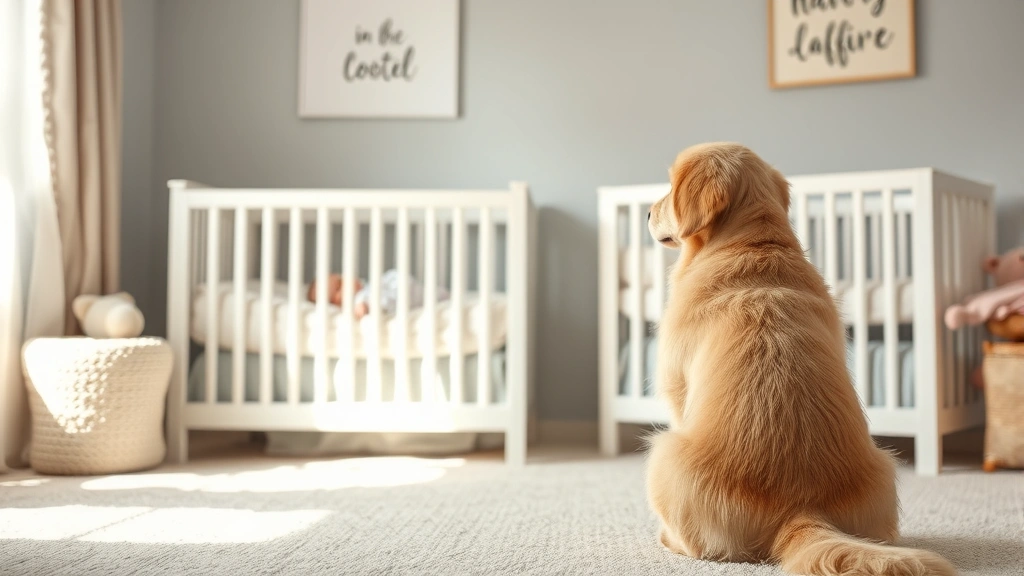
The concept of a “golden retriever baby watch” goes beyond simply letting your dog observe the nursery. It’s about creating a structured, compassionate introduction that honors your dog’s emotional needs while ensuring your baby’s safety. Golden Retrievers thrive on routine, clear expectations, and feeling like valued members of the family. When managed well, your dog won’t just tolerate the baby—they’ll become a protective, loving presence in your child’s life. This guide walks you through every step of that journey.
Whether you’re expecting your first child or adding to your family, understanding how your Golden Retriever will adapt is essential. These intelligent dogs respond beautifully to preparation, and the effort you invest now will pay dividends for years to come.
Preparing Your Golden Retriever Before Baby Arrives
The months before your baby’s arrival are golden (pun intended) opportunities to set your retriever up for success. Start by honestly assessing your dog’s current temperament and behavior. Is your Golden Retriever already well-socialized? Do they respond reliably to basic commands? Are they comfortable around children, even if they haven’t lived with one before? These questions help you identify where your dog might need additional training or desensitization.
Begin introducing your retriever to baby-related sounds and scenarios now. Play recordings of crying babies at low volumes while your dog eats or plays, gradually increasing the volume over weeks. This prevents the shock of sudden, unfamiliar sounds triggering anxiety or protective responses. Similarly, practice having your dog remain calm while you simulate baby care—holding a doll, making diaper changes, or moving around the house with a carrier. Golden Retrievers are observant creatures, and familiarizing them with these new routines reduces stress when the real baby arrives.
Consider enrolling your Golden Retriever in a dog training class focused on impulse control and obedience. Commands like “leave it,” “down,” and “settle” become invaluable when managing interactions with a baby. A well-trained retriever isn’t just safer—they’re also more confident and less anxious about the changes ahead. Training reinforces their sense of structure and gives them a job to do, which Golden Retrievers genuinely enjoy.
If you’re considering purchasing baby items, research options like the best baby swing or reviewing baby registry must haves to ensure everything is dog-friendly. Some baby gear can create barriers between your dog and your baby, which actually helps everyone adjust more smoothly.

Essential Behavioral Training for New Parents
Golden Retrievers are naturally friendly and eager to please, but they still need clear guidance about appropriate baby interaction. Before your baby arrives, focus on strengthening three critical behaviors: gentle mouth control, boundary respect, and impulse inhibition.
Gentle mouth control is non-negotiable. Golden Retrievers have soft mouths (historically bred for retrieving game without damaging it), but they still need to understand that even gentle mouthing isn’t acceptable around a baby. Practice with your dog by rewarding them for taking treats gently and redirecting any nibbling. Use the command “soft” paired with rewards to reinforce appropriate behavior.
Boundary respect means your dog understands they can’t approach the baby without permission. Teach your retriever to wait at a distance before approaching, to sit calmly while you handle the baby, and to accept being moved away if they’re in the way. This prevents the common scenario where a well-meaning dog crowds the baby or tries to “help” during feeding or diaper changes.
Impulse inhibition training addresses the “I can’t help myself” moments. Use games like “wait” and “release” to help your Golden Retriever practice self-control. Reward them heavily for resisting impulses—not jumping when excited, not eating dropped food from the floor, not following the baby into restricted areas. These skills translate directly to safer baby interactions.
Many parents find value in exploring baby shower gift ideas that include training tools or resources. Some thoughtful friends might contribute training aids or books that help you prepare your retriever.
Managing the First Introduction
The moment you bring your baby home is emotionally charged enough without worrying about your Golden Retriever’s reaction. Plan this introduction carefully, and remember that the first meeting sets the tone for your entire relationship moving forward.
Before entering your home with the baby, have a partner or family member take your retriever for a long walk or play session. A tired dog is a calmer dog, and burning off excess energy helps your Golden Retriever approach the introduction with a relaxed mindset. While you’re out, leave a blanket or piece of clothing with your baby’s scent around the house so your dog becomes familiar with the new smell.
When you arrive home, enter without the baby first. Greet your Golden Retriever normally—they’ve missed you, and they deserve acknowledgment. Let them outside for a bathroom break and some calm play. This prevents the reunion excitement from overwhelming the introduction moment.
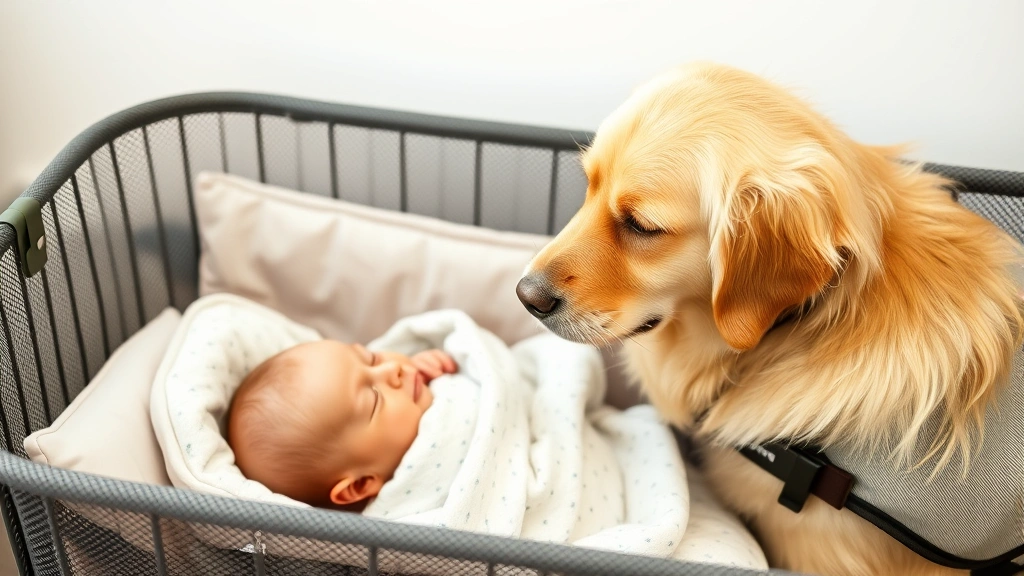
For the actual introduction, have your partner hold the baby while you sit on the floor with your retriever. Keep your dog on a leash initially, not because you expect problems but because it gives you control and your dog confidence. Speak in calm, reassuring tones. Let your dog sniff the baby from a respectful distance. Watch for signs of stress—excessive panting, yawning, lip licking, or attempts to escape—and take breaks if needed.
Reward your Golden Retriever heavily for calm behavior around the baby. Treats, praise, and gentle petting create positive associations. Your dog should learn that the baby’s presence means good things happen. This is conditioning at its finest, and it’s remarkably effective.
Creating Safe Spaces and Boundaries
Safety isn’t just about preventing problems—it’s about giving everyone peace of mind. Establish physical and behavioral boundaries that protect both your baby and your Golden Retriever.
Create a dedicated space where your dog can retreat when they need a break. This might be a comfortable dog bed in a quiet corner, a crate they love, or a specific room where they feel secure. This isn’t punishment; it’s sanctuary. Your retriever should never feel cornered or forced to interact with the baby when they’re overwhelmed. Many parents use baby gates to create zones where the dog can observe without direct access, which works beautifully for Golden Retrievers who want to be part of the action but need boundaries.
Establish a “no unsupervised interaction” policy. Even the gentlest Golden Retriever should never be left alone with a baby. This protects both of them and eliminates scenarios where accidents happen. As your child grows, this rule remains crucial—not because your dog is dangerous, but because supervision is responsible parenting.
Designate certain areas as off-limits to your dog. The nursery might be one such space, or at least the crib area. Use baby gates strategically to prevent your retriever from accessing the changing table or baby’s sleep space without permission. This establishes respect for boundaries and gives you control over interactions.
Teach your baby (as they grow) to respect your dog’s space too. A Golden Retriever’s tail, ears, and paws aren’t toys. Setting these expectations early prevents the common problem of toddlers accidentally hurting dogs, which can trigger defensive responses even in the gentlest retrievers.
Maintaining Your Dog’s Routine
New babies disrupt everything, but your Golden Retriever thrives on routine. Maintaining their schedule as much as possible helps them feel secure during this chaotic transition. Consistency is calming.
Keep feeding times consistent. Your retriever’s meals should happen at the same times they did before the baby arrived. If you previously fed them at 7 AM and 5 PM, maintain that schedule. This gives your dog something predictable to count on, and it makes managing mealtimes around baby feeding easier.
Preserve exercise routines. Golden Retrievers need regular physical activity to stay balanced emotionally and physically. A tired dog is less anxious, less reactive, and better able to handle the stresses of a new family member. If your pre-baby walks were 30 minutes, keep that commitment. This might mean timing walks around the baby’s naps or sharing responsibilities with a partner, but it’s worth the effort.
Maintain training sessions and play. Your dog still needs mental stimulation and your attention. Even 10-15 minutes of focused training or play daily reminds your retriever that they’re still a valued family member. This prevents the resentment that sometimes builds when dogs feel replaced.
Preserve your bedtime routine. If your Golden Retriever slept in your bedroom before the baby, consider where they’ll sleep now. If the baby will be in your room initially, your dog might need to adjust to a different sleeping arrangement. Make this transition gradually, before the baby arrives, so it’s not another shock on top of everything else.
Navigating Different Baby Growth Stages
Your Golden Retriever’s relationship with your baby evolves as the baby grows. Each stage presents different challenges and opportunities.
Newborn to 3 months: During this phase, your baby is relatively stationary. Your Golden Retriever might be confused by the crying and unfamiliar routines. They need reassurance that they’re still loved. This is when your dog might benefit from free baby stuff communities where you find interactive toys to keep them engaged while you’re managing newborn care.
3 to 6 months: Your baby starts making more interesting sounds and movements. Your retriever’s curiosity increases. Maintain boundaries and continue rewarding calm behavior. Your dog might develop protective instincts during this phase—this is normal and actually reassuring, as long as it doesn’t translate to aggression.
6 to 12 months: Your baby becomes mobile. Crawling and pulling themselves up are exciting developments that might trigger your dog’s prey drive or cause accidental roughness. Increase supervision and reinforce commands like “leave it” and “settle.” Your retriever needs to understand that the moving baby is still off-limits without permission.
Toddler years: Now your child becomes a real playmate. Your Golden Retriever might finally get the interactive companion they’ve been waiting for. However, toddlers can be unpredictable and sometimes painful (grabbing tails, pulling ears). Teach your child gentle handling and watch for signs that your dog is overwhelmed. Many Golden Retrievers develop remarkable patience with toddlers, but they still need breaks.
Preschool and beyond: By this point, many Golden Retrievers and children develop genuine friendships. They play together, sleep near each other, and provide mutual comfort. Your job shifts from managing the relationship to facilitating it while maintaining safety boundaries.
Common Challenges and Solutions
Even with perfect preparation, challenges emerge. Understanding common issues and their solutions helps you navigate them confidently.
Regression in house training: Some dogs regress when stressed, having accidents indoors despite being previously housetrained. This typically reflects anxiety, not defiance. Return to basics—frequent outdoor breaks, praise for successful elimination, and patience. Avoid punishment, which increases anxiety. This phase usually passes within weeks.
Excessive attention-seeking: Your Golden Retriever might bark, whine, or paw at you constantly while you’re caring for the baby. Resist the urge to give in immediately, as this rewards the behavior. Instead, reward calm behavior with attention. When your dog is quiet and settled, that’s when you offer interaction. It’s counterintuitive but effective.
Food guarding or resource protection: Some dogs become protective of toys or food when stressed. Never punish this behavior—it usually worsens it. Instead, manage the environment by feeding your dog separately and securing toys. Consider consulting a certified professional dog trainer if this escalates.
Jumping or rough play: Your retriever might jump on you while you’re holding the baby or play too roughly with older children. Redirect this energy with commands like “sit” or “down.” Reward calm behavior. Provide appropriate outlets for their energy through toys and exercise.
Separation anxiety: Some dogs struggle when their family members are separated or when routines change. If your dog develops anxiety, consult your veterinarian. They might recommend training adjustments, environmental modifications, or in some cases, anti-anxiety medication to support your dog through this transition.
Building a Lasting Bond
When managed thoughtfully, a Golden Retriever and baby relationship becomes one of the most beautiful aspects of family life. These dogs have an almost magical ability to sense a child’s emotions and respond with comfort.
Research shows that children who grow up with dogs develop stronger empathy, better social skills, and increased confidence. Golden Retrievers, with their gentle nature and patient temperament, are particularly beneficial companions. Your retriever teaches your child about responsibility, unconditional love, and the importance of caring for another being.
Encourage appropriate interaction by supervising play, praising gentle moments, and creating opportunities for positive connection. As your child grows, they can participate in your dog’s care—helping with feeding (under supervision), learning to brush their coat, and understanding their dog’s needs and preferences.
Take photos and videos of these moments. The image of your toddler sleeping against your Golden Retriever, or your school-age child reading to their dog, becomes a cherished family memory. These moments represent the successful integration of your beloved pet into your expanding family.
Remember that the bond between your dog and child develops over time. There’s no rush. Some of the strongest relationships take months or even years to fully flourish. Your job is simply to create safe, positive opportunities for connection and let the relationship unfold naturally.
Frequently Asked Questions
Can Golden Retrievers be trusted around babies?
Golden Retrievers are among the most trustworthy dog breeds around babies, thanks to their gentle temperament and patience. However, “trusted” doesn’t mean “unsupervised.” Even the gentlest dog should never be left alone with a baby. The combination of supervision and proper training makes Golden Retrievers excellent family dogs for homes with young children.
How long does it take for a Golden Retriever to adjust to a new baby?
Most Golden Retrievers adjust within 2-4 weeks, though some take longer. The adjustment depends on your dog’s age, temperament, previous socialization, and how well you’ve prepared them. Older dogs sometimes take longer than younger ones. Be patient—the investment in this adjustment period pays off for years to come.
What if my Golden Retriever seems jealous or resentful?
Some jealousy is normal. Your dog’s world has changed dramatically. Address this by maintaining their routine, giving them dedicated attention time, and rewarding calm behavior around the baby. Never punish jealous behavior—instead, redirect it and create positive associations with the baby’s presence. If jealousy escalates to aggression, consult a professional trainer immediately.
Is it safe for my baby to touch my Golden Retriever?
With supervision and guidance, yes. Teach your baby (as they grow) gentle handling. A baby’s random grabbing can startle or hurt a dog. Supervise all interactions and teach your child appropriate touch. Similarly, teach your retriever to tolerate handling by rewarding calm behavior when your baby reaches for them.
Should I crate my Golden Retriever when the baby is home?
Crating shouldn’t be punishment or a permanent solution. However, using a crate strategically—such as during particularly chaotic times or when you can’t supervise—is reasonable. Make sure your dog views the crate as a safe haven, not a prison. Many dogs appreciate having a secure space during the stress of a new baby.
How do I know if my Golden Retriever is stressed?
Signs of stress include excessive panting, yawning, lip licking, tail tucking, withdrawal, or behavioral changes like regression in housetraining. Some dogs become clingy; others become distant. If you notice these signs, reduce stressors where possible, maintain routine, and consider consulting your veterinarian. They might recommend behavior modification or, in some cases, temporary anti-anxiety support.
Can I still take my Golden Retriever to the dog park once the baby arrives?
Yes, though logistics become more complex. If your dog benefits from dog park socialization, continue it. You might need to arrange for a partner to stay home with the baby, or find times when the baby is napping. Exercise and socialization remain important for your retriever’s mental health, so finding a way to maintain these activities is worthwhile.
What training should I prioritize before the baby arrives?
Focus on impulse control (“wait,” “leave it”), gentle greeting behavior (no jumping), and boundary respect. Also work on desensitizing your dog to baby sounds and scenarios. These foundational skills matter more than teaching fancy tricks. A dog who can sit calmly while you change the baby is infinitely more valuable than one who knows twenty commands but can’t settle.