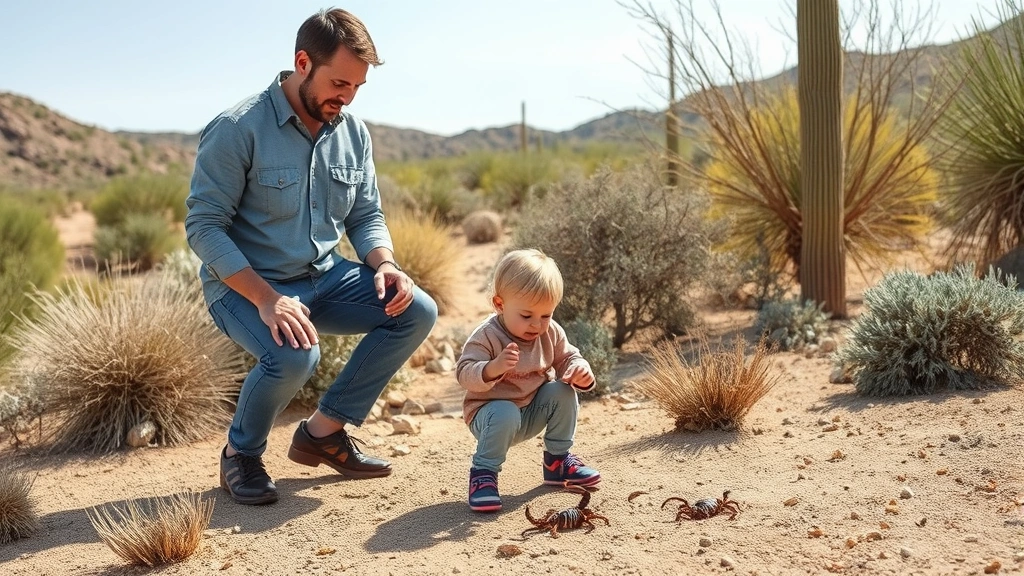
Are Baby Scorpions Dangerous? Expert Insights for Parents
As a parent, protecting your children from household hazards is a top priority. While most families worry about common dangers like sharp objects or electrical outlets, those living in warmer climates face a unique concern: scorpions. Baby scorpions, also called scorplings, are particularly alarming to many parents because of their small size and the misconception that they’re more venomous than adults. Understanding the actual threat level these creatures pose can help you respond appropriately and keep your family safe without unnecessary panic.
The question “Are baby scorpions dangerous?” deserves a nuanced answer. While baby scorpions can deliver stings, the reality is more complex than popular myths suggest. This comprehensive guide draws on expert entomological research and pediatric safety recommendations to help you understand scorpion behavior, identify species in your area, and implement effective prevention strategies that work alongside your broader parenting advice for new parents regarding household safety.
Whether you’re relocating to Arizona, Texas, or another scorpion-prone region, or you’ve simply encountered one in your home, this guide provides evidence-based information to help you make informed decisions about your family’s safety.
Table of Contents
- Understanding Baby Scorpions: Basic Facts
- Is Baby Scorpion Venom More Dangerous?
- Most Dangerous Scorpion Species
- Symptoms and Treatment After a Sting
- Prevention Strategies for Your Home
- Frequently Asked Questions
Understanding Baby Scorpions: Basic Facts
Baby scorpions are born live, not from eggs, which surprises many people. Female scorpions carry their young on their backs until they’re old enough to hunt independently, typically for several weeks. During this vulnerable period, baby scorpions remain attached to their mother for protection and nourishment. Once they disperse, these tiny arachnids—often just a quarter-inch long—begin hunting insects and small invertebrates.
The lifecycle of scorpions is fascinating from an educational standpoint. Baby scorpions are born pale or whitish in color and gradually darken as they mature. They molt multiple times before reaching adulthood, and each molt represents a developmental stage. Despite their small size, baby scorpions possess the same anatomical features as adults: pedipalps (pincer-like appendages), eight legs, and a curved tail equipped with a stinger and venom gland.
One critical distinction exists between scorpion species found across North America. The American Academy of Pediatrics and regional poison control centers emphasize that not all scorpions pose equal danger. Understanding which species inhabit your region is essential for accurate risk assessment. In the United States, the bark scorpion found in Arizona represents the primary medically significant species, while most other species cause only minor reactions similar to wasp stings.

Is Baby Scorpion Venom More Dangerous Than Adults?
The persistent myth that baby scorpions deliver more potent venom than adults is largely unfounded according to entomological research. This misconception likely stems from the fact that baby scorpions can’t regulate venom delivery as effectively as mature scorpions. When a baby scorpion stings, it may inject a higher percentage of its venom payload relative to body size, but the absolute quantity of venom is substantially less than what an adult delivers.
Toxicologists explain that venom potency—measured by how much toxin is needed to cause harm—doesn’t significantly differ between babies and adults of the same species. However, babies pose a different risk profile: they’re more likely to sting defensively because they’re more vulnerable and lack the confidence of larger scorpions. This defensive behavior might create the impression of greater danger, but it’s actually a survival mechanism.
For children, the concern about baby scorpion stings relates more to body mass than venom strength. A child weighing 40 pounds experiences different effects from a scorpion sting than an adult weighing 180 pounds, simply because the venom distributes across a smaller body. This is why pediatric medical professionals recommend immediate medical attention for any scorpion sting in young children, regardless of the scorpion’s age or size.
According to poison control resources, most scorpion stings in the United States cause localized reactions: pain, redness, and swelling at the sting site. Systemic reactions—affecting the entire body—occur in less than 5% of scorpion stings nationally, and severe reactions requiring hospitalization are even rarer. The exception is the Arizona bark scorpion, which causes systemic symptoms in approximately 25% of stings.
Most Dangerous Scorpion Species to Know About
Understanding which scorpion species inhabit your area transforms you into an informed parent capable of assessing genuine risk. The United States hosts approximately 40 scorpion species, but only a handful pose medical concerns.
Arizona Bark Scorpion (Centruroides sculpturatus)
This species represents the only scorpion in the United States capable of causing severe systemic reactions. Measuring just 2-3 inches long, the Arizona bark scorpion is small but medically significant. They’re pale brown or tan, nocturnal, and often found in homes seeking moisture and cooler temperatures. Stings from this species can cause numbness, muscle twitching, difficulty swallowing, and respiratory distress in severe cases. Children are at higher risk for serious complications due to their smaller body size.
Striped Bark Scorpion (Centruroides vittatus)
Found throughout the southern and central United States, this species rarely causes severe reactions. Stings typically produce localized pain and mild swelling comparable to a wasp sting. The striped bark scorpion is recognizable by the dark stripes running along its body.
Northern Scorpion (Paruroctonus boreus)
Common in Nevada, California, and Utah, this species causes minor local reactions only. Despite their larger size compared to bark scorpions, northern scorpions are far less medically concerning.
For parents seeking comprehensive household safety information alongside pest management, resources like your parenting advice for new parents guide should include regional pest awareness.
Symptoms and Treatment After a Sting
Recognizing scorpion sting symptoms enables appropriate response. Immediate reactions include sharp pain at the sting site, followed within minutes by localized effects.
Localized Reaction Symptoms (Most Common)
- Immediate sharp pain or burning sensation
- Redness and swelling around the sting area
- Numbness or tingling at the site (may last hours)
- Mild warmth in the affected area
Systemic Reaction Symptoms (Arizona Bark Scorpion Stings)
- Muscle twitching or involuntary muscle movements
- Numbness in the mouth and throat
- Difficulty swallowing or speaking
- Restlessness or agitation
- Difficulty breathing (in severe cases)
- Vision problems or eye movements
- Hypersalivation
First Aid Steps
- Remove your child from the area to prevent additional stings
- Wash the sting site with soap and water
- Apply a cold compress for 10-15 minutes to reduce swelling
- Elevate the affected limb if possible
- Avoid applying tourniquets or ice directly to skin
- Monitor for symptom progression over the next 2-4 hours
Contact poison control immediately at 1-800-222-1222 or seek emergency care if your child experiences systemic symptoms. The CDC provides guidance on managing animal bites and stings that healthcare providers reference. In Arizona, where severe reactions are possible, some hospitals stock scorpion antivenom (Anascorp), which can be administered for serious cases.
Most localized reactions resolve within 24 hours without specific treatment beyond pain management. Over-the-counter pain relievers appropriate for your child’s age can help manage discomfort. Antihistamines may reduce itching if present.
Prevention Strategies for Your Home and Family
Preventing scorpion encounters is far more effective than managing stings. These practical strategies significantly reduce the likelihood of scorpions entering your home or encountering your children.
Outdoor Prevention
- Seal cracks and crevices in exterior walls, especially around doors and windows
- Install door sweeps and weather stripping to eliminate gaps
- Remove rock piles, wood stacks, and debris where scorpions hide
- Keep vegetation trimmed away from your home’s exterior
- Use exterior lighting that attracts fewer insects (yellow “bug lights”), reducing scorpion prey
- Seal gaps around utility lines entering your home
Indoor Prevention
- Caulk interior cracks and crevices, particularly in bathrooms and kitchens
- Reduce humidity by fixing leaky pipes and using dehumidifiers
- Store children’s clothing and bedding in sealed containers
- Shake out shoes, clothing, and bedding before use (standard precaution in scorpion regions)
- Use sticky traps in corners and along baseboards to monitor for scorpion activity
- Maintain clutter-free spaces where scorpions can hide
Family Safety Practices
- Educate children about scorpions without creating excessive fear
- Establish a “look but don’t touch” policy regarding unknown creatures
- Teach children to shake out shoes and check bedding before getting in
- Supervise outdoor play during dawn and dusk when scorpions are active
- Wear protective footwear and long pants when hiking in scorpion-prone areas
For families managing multiple household safety concerns, integrating scorpion awareness into your broader safety plan works well. Consider how you might discuss scorpion safety alongside other regional hazards during family meetings or when reviewing home safety with children.
Professional pest control services can assess your specific situation and recommend targeted interventions. Many pest control companies in scorpion regions offer scorpion-specific treatments and monitoring programs designed specifically for families with children.
Frequently Asked Questions
Can a baby scorpion sting kill a person?
In the United States, fatal scorpion stings are exceptionally rare. The Arizona bark scorpion is the only species capable of causing life-threatening reactions, and even these are uncommon with modern medical care. Children are at higher risk for severe complications due to body mass, but fatalities remain extremely rare. Immediate medical attention for any concerning symptoms ensures proper treatment.
What should I do if I find a baby scorpion in my home?
Don’t panic or crush the scorpion, as this might cause it to sting. Instead, carefully contain it using a broom and dustpan or a glass and paper, then release it far from your home. Wear gloves if comfortable doing so. Wash your hands afterward. If you’re uncomfortable handling it, contact a local pest control professional. Document the location where you found it and check for entry points to seal.
How do I know if a scorpion sting is serious?
Most scorpion stings cause localized pain and swelling that resolve within 24 hours. Contact poison control (1-800-222-1222) or seek emergency care if your child develops systemic symptoms like numbness in the mouth, difficulty swallowing, muscle twitching, or breathing problems. When in doubt, err on the side of caution with young children and contact poison control for guidance.
Are baby scorpions more common in homes than adults?
Baby scorpions aren’t necessarily more common indoors, but they’re more noticeable because they’re often found with their mother. Female scorpions seeking safe spaces to birth and protect their young may enter homes more readily than solitary males. If you find one scorpion, particularly a female with babies, this indicates favorable conditions for scorpion habitation that should prompt environmental modifications.
Should I use pesticides to kill scorpions?
While pesticides can kill scorpions, they’re generally not the first-line solution for family homes with children. Environmental modifications—sealing entry points, reducing moisture, removing harborage—are safer and often more effective. If pesticides are necessary, hire a licensed professional who can apply treatments in child-safe ways. Inform them that young children live in your home so they can recommend appropriate products and application methods.
What regions have the most dangerous scorpions?
Arizona, particularly the Phoenix metropolitan area, has the highest concentration of medically significant scorpions in the United States due to the Arizona bark scorpion. Southern California, southern Nevada, and parts of New Mexico also have populations of this species. Most other U.S. regions have scorpion species that cause only minor reactions. Check with your local poison control center or extension office to learn about scorpion species in your specific area.